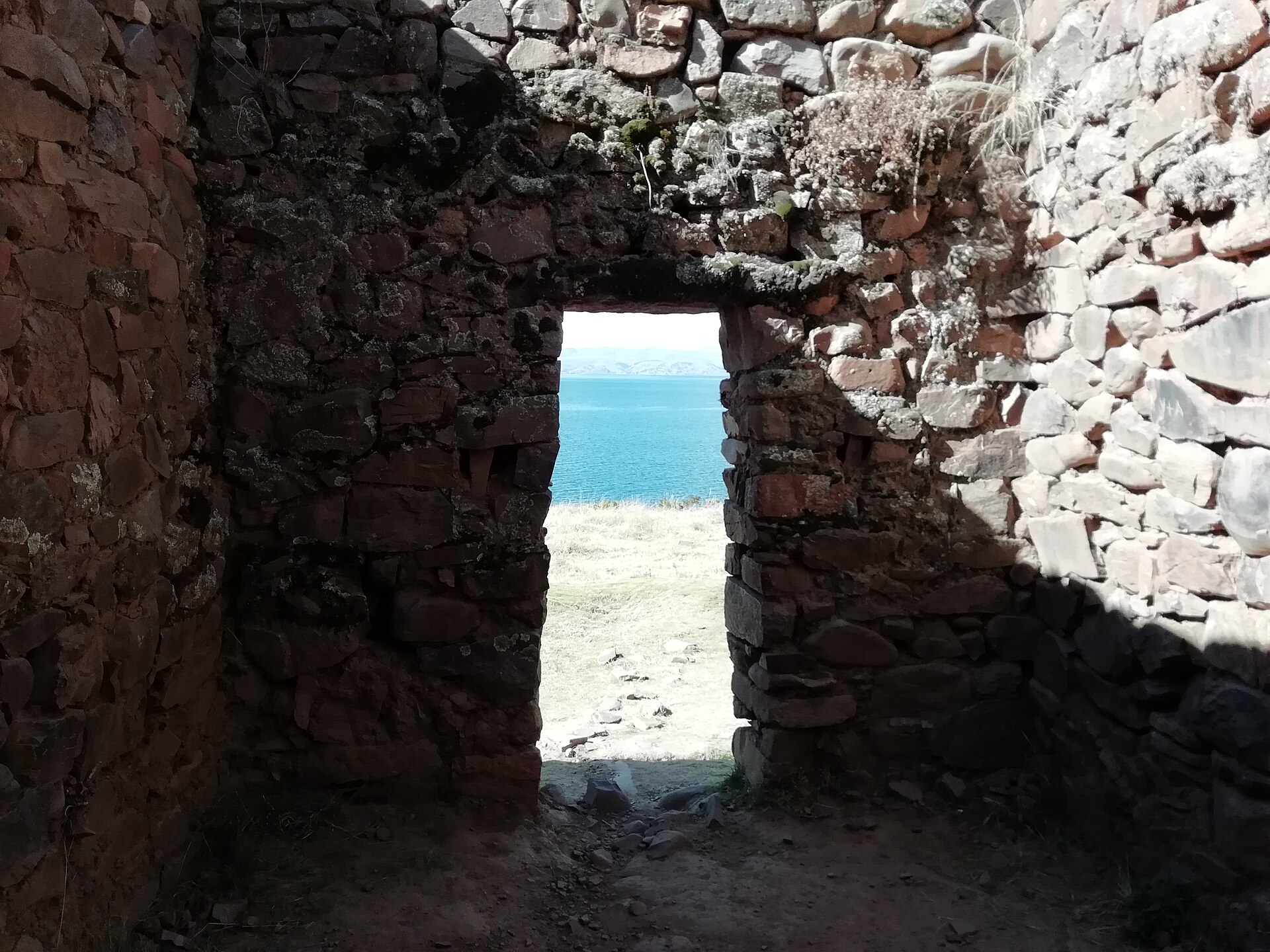
Perched on a hillside overlooking Lake Titicaca, Iñaq Uyu feels like a quiet conversation with the past. The site sits just outside Copacabana, where the thin mountain air carries the scent of wild herbs and the distant sound of waves lapping against the shore. Unlike the grand ruins that draw crowds elsewhere in the Andes, this place doesn’t announce itself. There are no towering walls or intricate carvings, just a modest arrangement of stones that have stood here for centuries, shaped by human hands and softened by time.
The name Iñaq Uyu translates to House of Women, a nod to its connection with feminine deities in Andean cosmology. Archaeologists believe the site served as a ceremonial space, possibly linked to rituals of fertility and the cycles of nature. The stones are fitted together without mortar, a technique characteristic of Inca construction, though the origins of the site may stretch back even further, to the earlier Tiwanaku culture. The central feature is a circular platform that might have functioned as an altar, where offerings were made or ceremonies conducted under the open sky.
What makes Iñaq Uyu special is its unassuming presence. It doesn’t demand attention like Machu Picchu or the ruins of Tiwanaku, yet there’s a quiet power in its simplicity. The site is rarely crowded, and visitors often find themselves alone with the wind and the view. The lake below shimmers in the sunlight, its vast surface stretching toward the horizon, while the surrounding hills roll away in gentle waves. The absence of modern interventions—no signs, no barriers, no reconstructed walls—allows the imagination to fill in the gaps, to picture how this place might have looked when it was alive with ritual and meaning.
Copacabana itself is a town where the sacred and the everyday intertwine. Nestled on a narrow peninsula jutting into Lake Titicaca, it has long been a spiritual crossroads. The Incas revered the area, and later, Spanish colonizers built the Basilica of Our Lady of Candelaria, which remains a major pilgrimage site. Even today, the town retains a sense of reverence. Locals leave offerings for Pachamama, the Earth Mother, and traditional ceremonies blend seamlessly with Catholic processions. The streets are lined with stalls selling handwoven textiles and small charms, while the scent of grilled trout drifts from open-air kitchens.
Reaching Iñaq Uyu requires a short but steep climb from Copacabana. The altitude makes the ascent feel more strenuous than it might at lower elevations, but the effort is rewarded with sweeping views. Along the way, the landscape shifts from the bustle of the town to the quiet of the hills, where small adobe houses dot the slopes and herds of llamas graze on the sparse vegetation. The path is well-trodden but unmarked, and there’s a sense of discovery in following it, not knowing exactly what you’ll find at the top.
Once there, the ruins reveal themselves gradually. The stones, weathered by centuries of wind and rain, are arranged in low walls and terraces. Some sections have collapsed, while others remain surprisingly intact. The circular platform at the center is the most striking feature, its purpose still open to interpretation. Without explanatory plaques or guided tours, visitors are left to piece together the site’s history from what they see and feel. The silence is profound, broken only by the rustle of grass and the occasional cry of a bird.
Iñaq Uyu isn’t a place for those seeking grand monuments or polished tourist experiences. It’s a site for contemplation, for those willing to slow down and listen. The lack of modern infrastructure means there’s nothing to distract from the raw beauty of the landscape—the way the light changes over the lake, the way the stones seem to hum with the weight of time. It’s easy to imagine the rituals that once took place here, the voices of priests or villagers rising into the thin mountain air.
For anyone exploring the region, Iñaq Uyu is best visited as part of a broader journey through Copacabana and its surroundings. The town itself is worth lingering in, with its mix of colonial architecture and indigenous traditions. A climb to El Calvario offers another perspective on the lake, while a boat trip to Isla del Sol provides a deeper dive into Inca mythology. The local market is a good place to pick up handmade textiles or sample fresh trout, a staple of the region’s cuisine.
What lingers after a visit to Iñaq Uyu isn’t a specific image or fact, but a sense of connection—to the land, to the people who once gathered here, to the quiet rhythms of a place untouched by the rush of the modern world. It’s a reminder that history isn’t just found in museums or guidebooks, but in the spaces between the stones, in the wind that carries stories from the past. If you find yourself in this part of Bolivia, take the time to walk up the hill. Sit for a while. Let the silence speak.