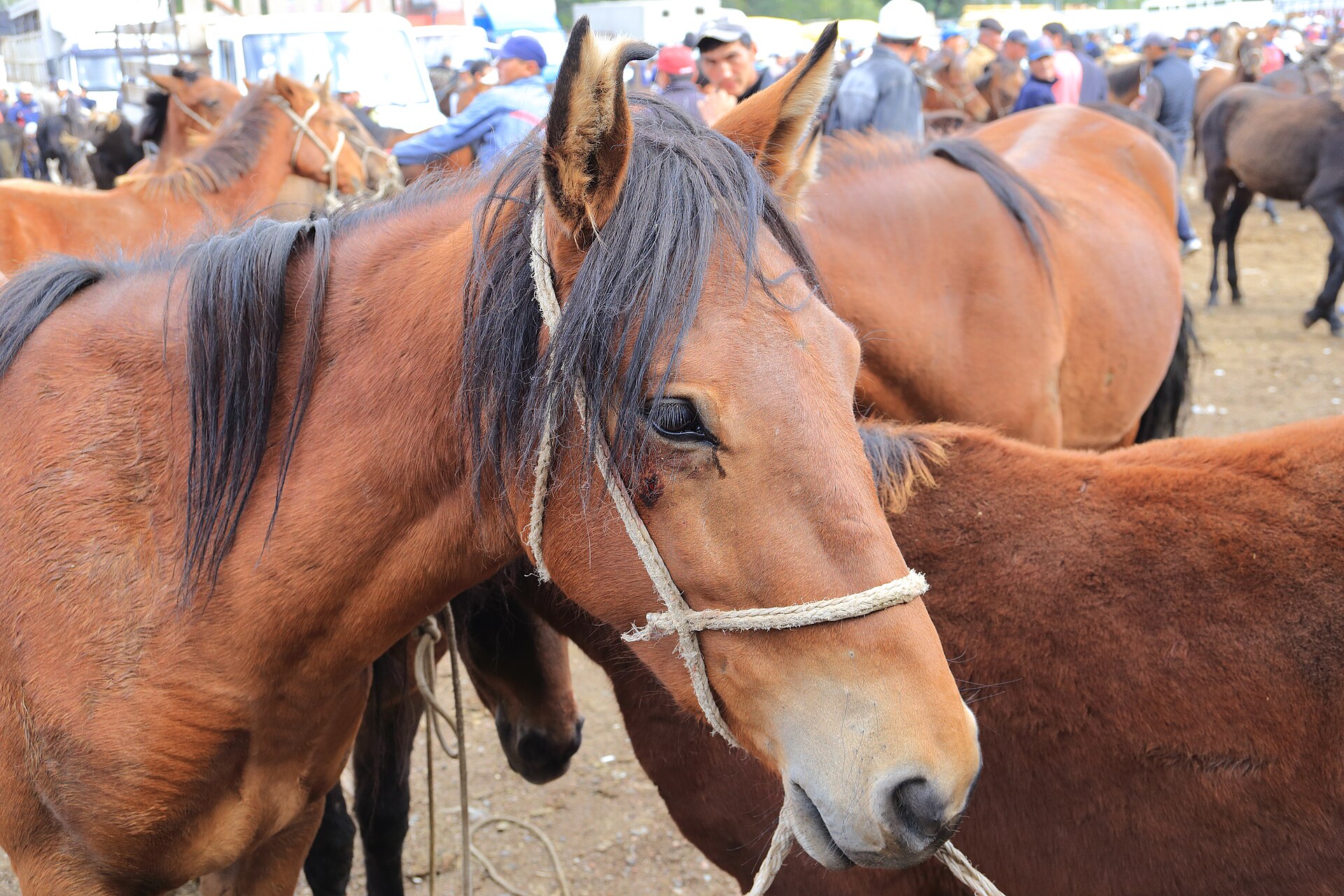
Kochkor Market is where Kyrgyzstan reveals itself in its most unfiltered form—not polished for visitors, but alive with the rhythms of daily life. There are no tourist traps here, no pushy guides or souvenir stalls catering to passing travelers. Instead, you find a rural bazaar that operates on its own terms, feeding the community, connecting neighboring villages, and drawing in nomads who descend from the mountains for a few hours to trade wool for flour or buy a new harness for their horses.
The market sits on the edge of Kochkor, a small town in Naryn Province where the mountains begin to close in around the valley and roads branch off toward Issyk-Kul, Bishkek, or the Chinese border. Kochkor itself isn’t the kind of place that would make you detour from your route, but its market is something else entirely. It’s not just a place to buy and sell—it’s a social hub where lives, news, and traditions intersect.
On market days, people stream in from surrounding villages, sometimes from much farther away. Shepherds from high-altitude pastures, farmers, and artisans all gather here, some to trade, others just to talk. The layout is simple but telling: long rows of stalls and wooden sheds stretch along a dusty road, their goods arranged in an unspoken order. Near the entrance, you’ll find food—fresh bread, flatbreads, smoked meat, cheeses, milk in plastic bottles, and vegetables and fruits brought in from warmer regions. Farther in, there’s clothing, shoes, household items, and traditional Kyrgyz goods like felt carpets, knitted socks, and wool hats. A separate section is dedicated to livestock—sheep, goats, cows, and occasionally horses, brought straight from the pastures.
One of the most striking parts of the market is the section for craftsmen. Here, artisans work by hand, making saddles, bridles, whips, and other horse tack. The leather is often tooled with intricate patterns, and the wooden parts of the saddles are carved with elaborate designs. Nearby, women spin wool or weave it into ropes, their hands moving with a speed and precision passed down through generations. Sometimes a customer will sit down to commission a bag for a summer trip to the jailoo or a sheath for a knife.
The atmosphere is unhurried, almost familial. People know each other, greeting one another and catching up on news. Sellers don’t push their goods, and buyers don’t haggle aggressively—it’s all part of the rhythm of the place. Conversations drift between topics like mountain weather, grazing conditions, or the price of fuel. The air is thick with the scent of fresh bread, smoked meat, wool, and the herbs carried down from the hills.
The market operates year-round, whether it’s sweltering and dusty in summer or bitterly cold in winter. For outsiders, it’s a rare chance to see Kyrgyzstan through the eyes of its people. There’s no tourist gloss, just an authenticity in every gesture and word. You can wander the rows, examine the goods, listen to the conversations, and sample local food. One of the most fascinating things to watch is the livestock trading—buyers inspecting animals, feeling their wool, checking their teeth, while sellers extol the virtues of their sheep or cows. A deal might take time to negotiate or happen in an instant, but it’s a scene you won’t find in any supermarket.
Kochkor Market is a living organism, reflecting the pulse of the region. Here, roads, lives, and cultures converge, and traditions that have faded elsewhere still hold strong. For locals, it’s an ordinary part of life; for visitors, it’s a glimpse of something real, unvarnished, and deeply memorable. That’s why it lingers in the mind long after you’ve left.