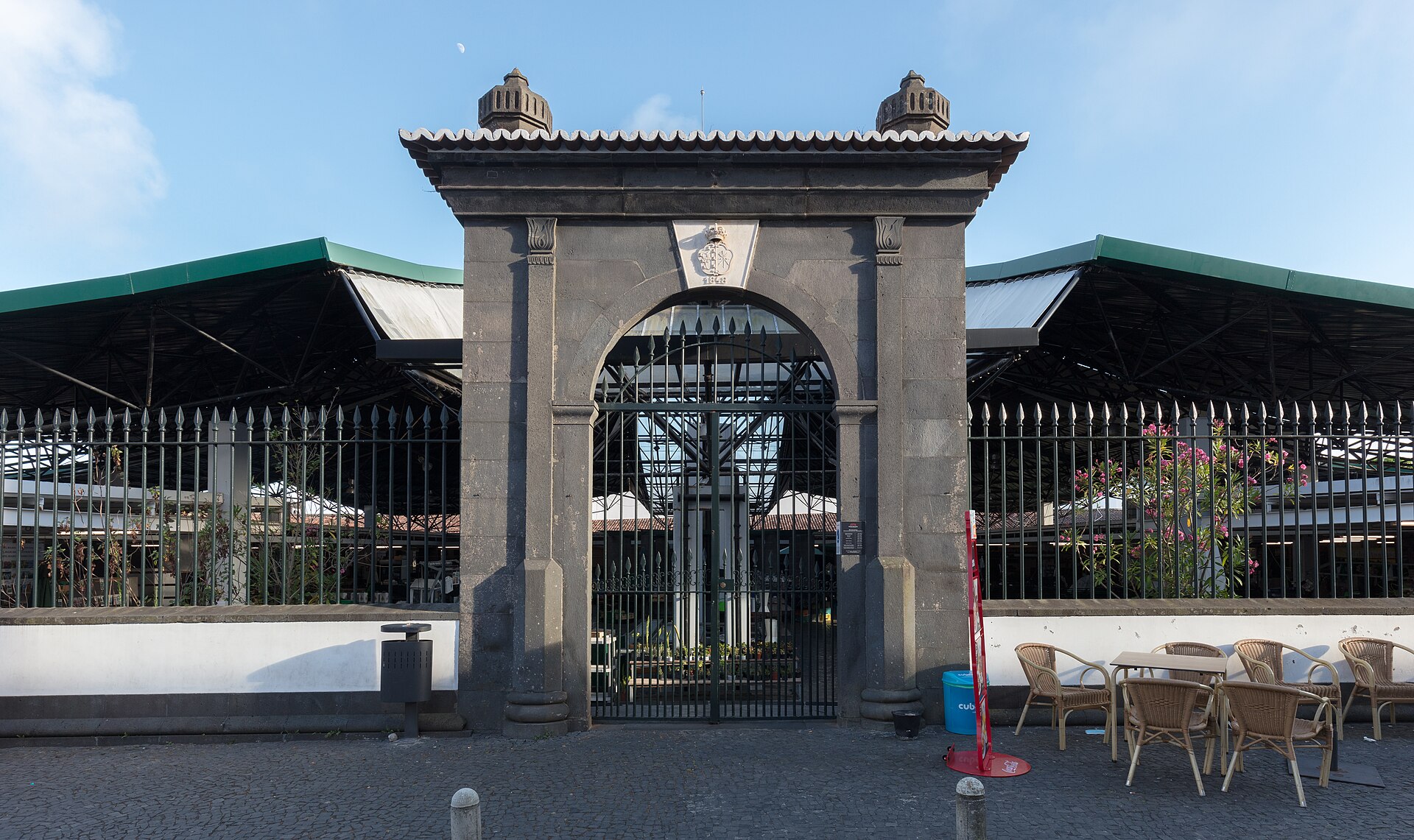
Ponta Delgada’s Mercado da Graça is one of those places where the soul of the Azores reveals itself not through grand gestures, but in quiet, everyday moments. Tucked away in the heart of the city, it has been a fixture of local life for over a century, long before tourism became part of the island’s rhythm. Unlike the polished markets of bigger cities, where commerce often feels staged for visitors, here the trade is unhurried, the conversations unscripted. The building itself, with its low arches and generous windows, lets in the soft Atlantic light, while the tiled walls and sturdy wooden beams hint at a time when goods from distant shores passed through these halls. It’s a place where architecture and atmosphere work together to create something unassuming yet deeply real.
What draws people here isn’t just the promise of fresh produce, though that’s certainly part of it. The market is a living catalog of São Miguel’s land and sea—fish pulled from the ocean that morning, fruits that thrive in the island’s humid microclimate, cheeses aged in ways that have barely changed in generations. The famous São Jorge cheese makes an appearance, but so do lesser-known local varieties, each with its own story. The vendors, many of whom have been coming here for decades, don’t just sell; they explain, recommend, and sometimes even argue over the best way to prepare something. For them, the market isn’t just a workplace—it’s a continuation of family traditions, a place where knowledge is passed down as naturally as the goods themselves.
The rhythm of the market shifts with the hours. Mornings are lively, with farmers unloading crates of vegetables, fishermen hawking their catch, and locals filling their baskets for the day ahead. By midday, the crowds thin, and the space takes on a different character—quieter, more intimate. This is when the small eateries tucked into the corners come into their own, serving simple meals that taste like they’ve been cooked the same way for a hundred years. There’s no menu in five languages, no fusion dishes or Instagram-worthy plating. Instead, you’ll find grilled fish still smelling of salt and smoke, bread baked in wood-fired ovens, and tea grown in the nearby fields, its leaves dried under the island sun. It’s the kind of food that doesn’t need embellishment.
What makes Mercado da Graça special isn’t just what’s sold here, but who comes. This is still very much a local market, where the same faces appear day after day. Elderly women shop with grandchildren in tow, fishermen debate the day’s catch over coffee, and young chefs pick through the stalls, looking for the perfect ingredient. Tourists wander through, but they’re not the main event. The atmosphere is warm, almost familial, and it’s easy to feel like you’ve been welcomed into a space that exists as much for the community as for commerce. There’s no pressure to perform, no sense that you’re observing something staged. The market simply is—unapologetically itself.
In recent years, there have been subtle changes. A few stalls now sell souvenirs alongside the usual produce, and a couple of trendy cafés have opened their doors. Some vendors have started catering more to visitors, offering pre-packaged goods or speaking a little more English. But these shifts haven’t erased the market’s essence. The families who’ve been trading here for generations still set up their stalls, the same recipes are still followed, and the same stories are still told. Perhaps that’s because the market isn’t just a place—it’s a habit, a way of life that resists being tidied up or repackaged for outsiders.
If you want to understand what makes the Azores different from other island destinations, Mercado da Graça is a good place to start. Come early, when the light is still soft and the air smells of coffee and fresh bread. Wander the aisles without a plan, let yourself be drawn to whatever catches your eye—a bundle of herbs you’ve never seen before, a cheese that’s been aged in a cave, a conversation between strangers that turns into an invitation to try something new. There’s no script here, no must-see checklist. Just the slow, unhurried pulse of a place where time moves differently. And if you’re lucky, you might leave with more than just a bag of groceries—maybe a sense of what it means to live at a pace that feels almost forgotten elsewhere.