Ponta Delgada’s Church of São Sebastião is the kind of place that doesn’t announce itself. Tucked away on a quiet square, surrounded by low-slung houses with the characteristic basalt facades of the Azores, it feels less like a monument and more like a natural part of the city’s fabric. There’s nothing grand about its exterior, and that’s precisely what makes it interesting. It doesn’t demand attention; it simply exists, as it has for centuries, woven into the history of São Miguel Island.
Built in the late 16th century, the church was one of the first major religious structures in Ponta Delgada after the city became the administrative heart of the Azores. Its construction reflected the growing importance of the town as a commercial and political hub, as well as the spread of devotion to Saint Sebastian, who was believed to protect against epidemics. In an era when plague and disease were constant threats, the church served as both a place of worship and a symbol of hope for the community.
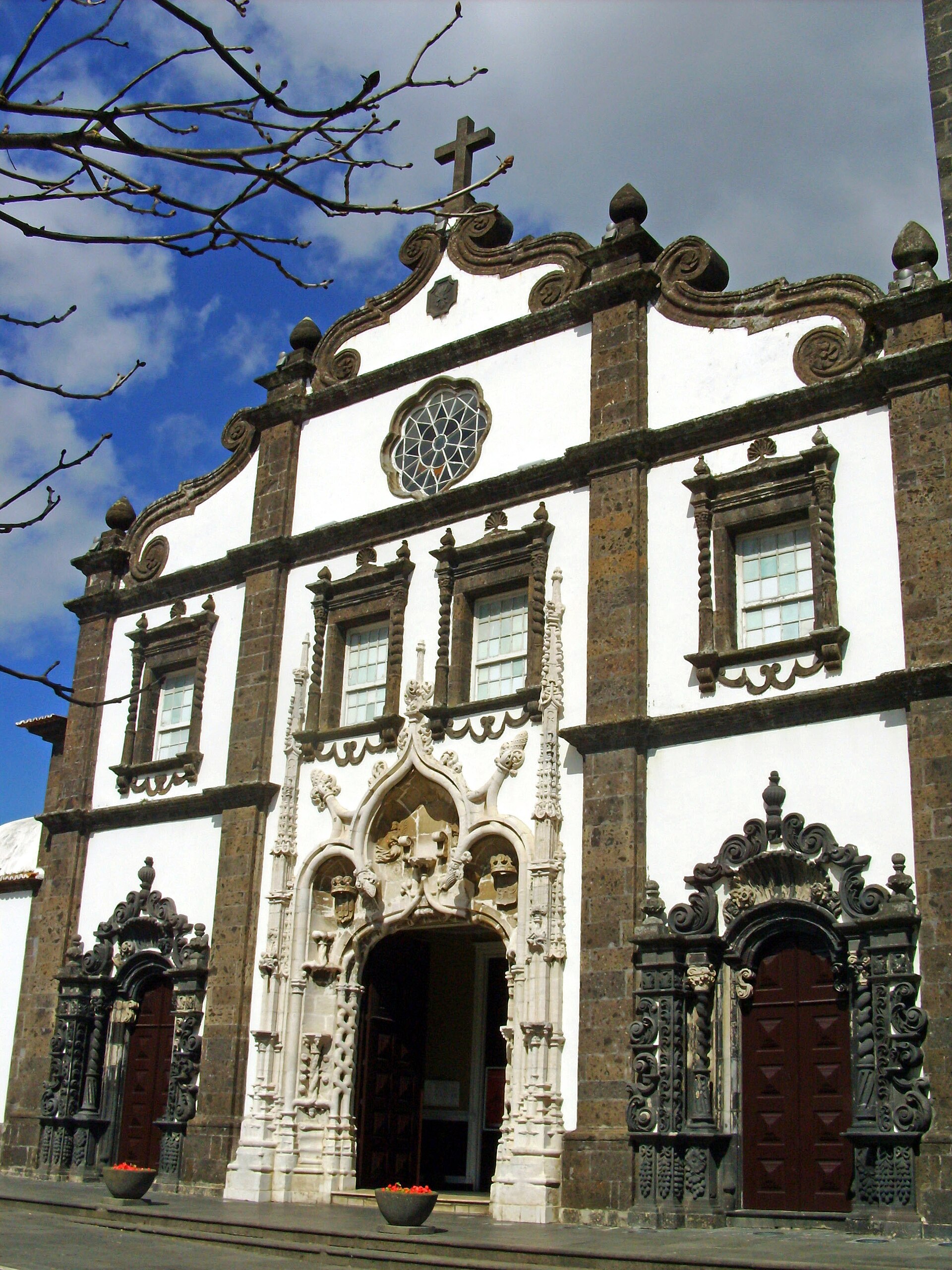
The architecture blends late Gothic and Mannerist elements, a style typical of Portuguese design during that period. The facade is made of dark basalt, a volcanic stone native to the Azores, which contrasts sharply with the white detailing—a signature look for the islands. The main portal is adorned with intricate carvings, and above it rises a modest bell tower. Inside, the church is just as compelling. Massive columns support the vaulted ceilings, while the walls are lined with azulejos, the traditional Portuguese tiles depicting scenes from the lives of saints.
One of the most striking features is the Chapel of Saint Sebastian, located in the left aisle. Here, a 17th-century statue of the saint is kept, one of the most revered on the island. Every January, during the annual festival in his honor, the church becomes the center of celebrations—processions, prayers, and street festivities draw locals and visitors alike. Even outside of the festival, the atmosphere lingers. The quiet, the flicker of candlelight, the faint scent of wax and aged wood—all of it feels like a quiet conversation with the past.
The church has endured its share of hardships. In the 18th century, it was severely damaged by an earthquake, a common occurrence in the Azores, but was rebuilt. By the 19th century, its interior had been enriched with new elements, including a Baroque-style carved altarpiece. Today, stepping inside feels like entering a place where time moves differently. The air is always cool, even on the warmest days, and the light filtering through the stained glass casts a soft glow over the space.
For those interested in the history of the Azores, the Church of São Sebastião is more than just a landmark—it’s a living record of the past. It tells the story of how the city took shape, how architectural tastes evolved, and how faith helped people endure hardship. Within its walls, you can see traces of different eras, from the austere lines of Gothic design to the ornate flourishes of Baroque. Yet it doesn’t feel like a museum. It remains an active place of worship, and on any given day, you might find locals attending mass or praying quietly in the pews.
Ponta Delgada is a city where the old and the new coexist seamlessly, and the Church of São Sebastião is one of those quiet anchors that help you sense that balance. It’s just a short walk from the main square, near the market and historic mansions, making it an easy stop on any stroll through the city. If you find yourself here, take a moment to step inside. Sit on one of the benches, listen to the silence, and let the place settle around you. Sometimes, it’s in these unhurried moments that a city reveals itself most fully.