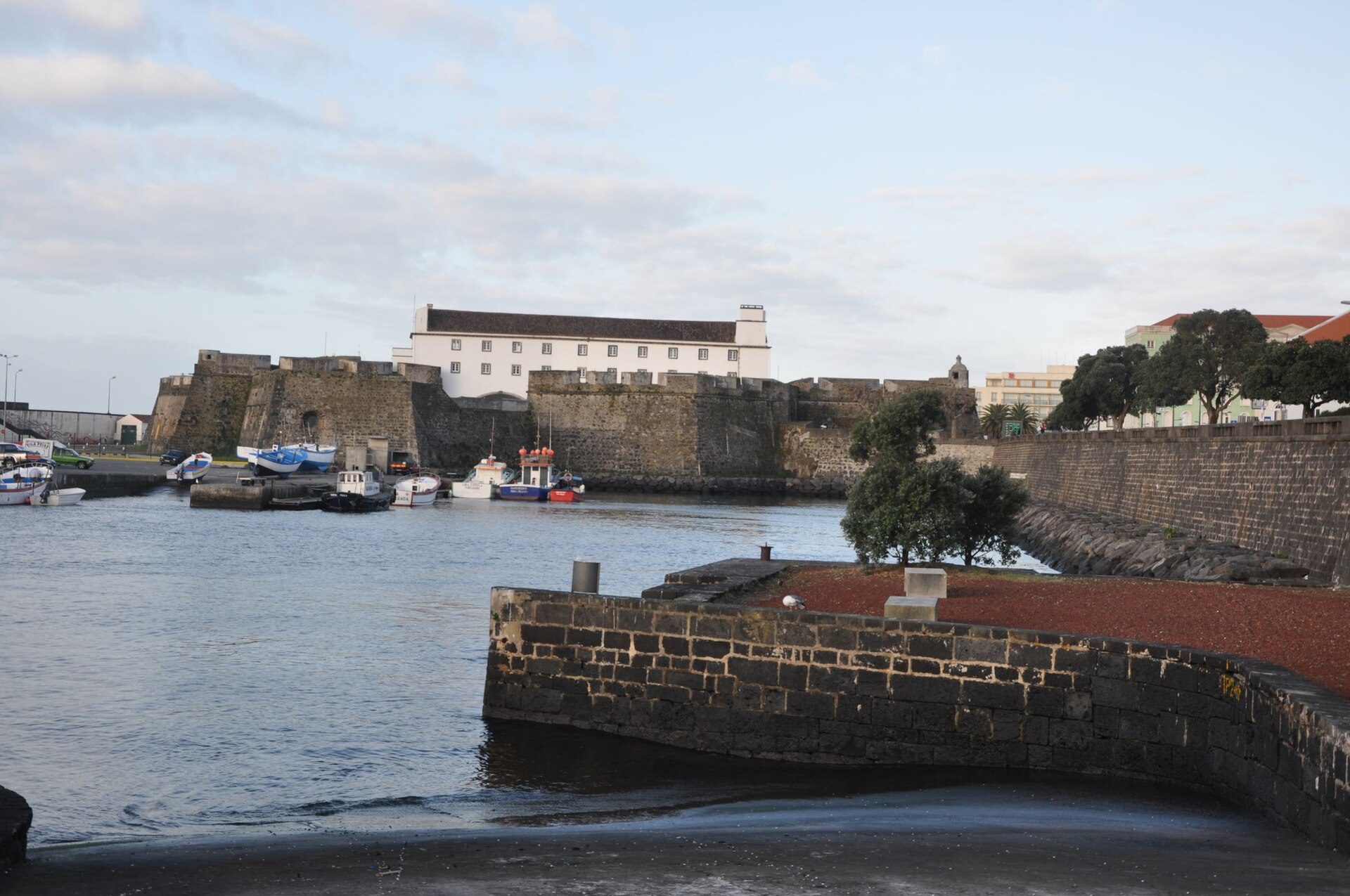
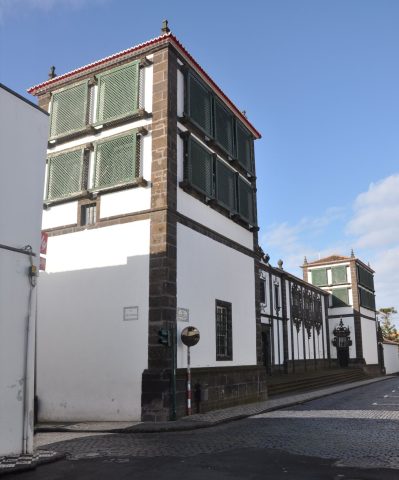
Perched on the eastern edge of Ponta Delgada, the Fort of São Brás watches over the Atlantic like a silent sentinel, its dark basalt walls bearing witness to centuries of history. Built in the late 16th century, it was part of a network of defenses that protected the Azores from seafaring threats at a time when the islands were a vital stopover for treasure-laden galleons crossing between Europe and the New World. Pirates and privateers often lurked in these waters, and the fort’s cannons were meant to deter them—or at least hold them off until reinforcements arrived.
The architecture of São Brás is unmistakably military: thick, low walls designed to withstand cannon fire, wide embrasures for artillery, and narrow passageways that would have slowed down any invading force. Inside, the casemates where gunpowder and supplies were once stored now stand empty, their purpose long forgotten. The small chapel dedicated to Saint Blaise, the patron saint of soldiers, remains one of the few original structures still in use. Its modest presence is a quiet reminder that even in times of war, faith endured.
By the 19th century, the fort had outlived its strategic importance. Left to decay, it might have crumbled entirely if not for restoration efforts in the mid-20th century. Today, it serves as both a historical monument and a vantage point, offering sweeping views of the harbor, the ocean, and the terracotta rooftops of Ponta Delgada. The best time to visit is at sunset, when the light softens and the water takes on hues of gold and pink, a stark contrast to the fort’s somber stone.
There’s little left inside to suggest its martial past. The cannons are gone, the barracks are empty, and the only sounds now are the crash of waves and the occasional laughter of visitors. In the summer, small concerts or art displays might take place within its walls, but for the most part, São Brás retains a peaceful atmosphere. It’s a place where you can sit on a bench, listen to the wind, and imagine the shouts of officers and the roar of cannon fire that once filled the air.
What makes the fort particularly interesting is how it fits into the modern city. Surrounded by a park dotted with palm trees and agave plants, it feels like a bridge between past and present. From here, you can easily walk down to the waterfront, stroll along the promenade, or stop for coffee at a nearby café. Yet despite its integration into daily life, the fort remains a relic of another era, a tangible link to Ponta Delgada’s role in the age of exploration and conflict.
For those curious about the Azores’ history, São Brás is a must-visit—not because of any grand exhibits or guided tours, but because the place itself tells its story. There are no plaques or interactive displays, just the weight of centuries in the stones beneath your feet. The wind carries the scent of salt and distant shores, the waves crash against the rocks below, and the cries of seagulls echo as they have for hundreds of years. It’s one of those rare spots where history isn’t just remembered; it lingers in the air, waiting to be noticed.