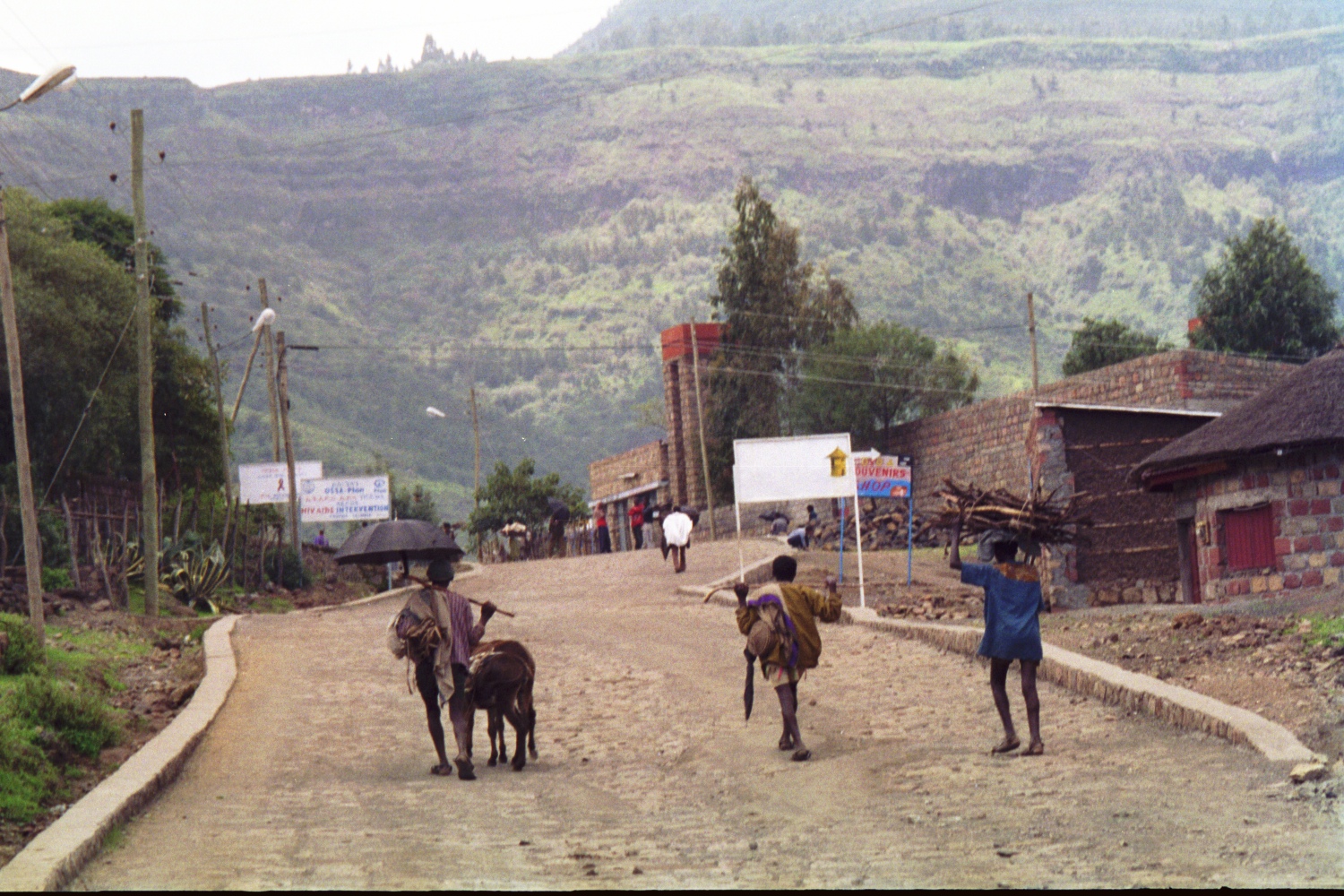
Butajira’s market is the kind of place where time moves differently. It doesn’t have the relentless energy of a city bazaar or the polished efficiency of a tourist attraction. Instead, it follows the unhurried rhythm of life in a small Ethiopian town, where trade is as much about connection as it is about commerce. There’s no fixed schedule here—people arrive when the farmers bring their harvest, when livestock is herded in from the fields, when women carry baskets of fresh vegetables or rounds of homemade cheese. Mornings are the busiest, but even as the sun climbs higher, the market doesn’t quiet down so much as settle into a slower, steadier pace.
Butajira itself is a modest town, and its market is more than just a place to buy and sell. It’s the heart of the community, a crossroads where paths from across the Gurage region converge. Farmers from nearby villages come here, as do traders from farther away, drawn by the promise of everything from grain and spices to handmade tools and clay pots. What makes the market special, though, are the things that can’t be found elsewhere—the coffee grown in the surrounding hills, the wild honey harvested from forest hives, the spices that give Gurage cuisine its distinct flavor. These aren’t just goods; they’re pieces of a way of life.
The market’s layout is simple and practical. There are no grand stalls or permanent structures, just wooden awnings to shield vendors from the sun and dirt paths winding between rows of goods. Spaces aren’t assigned—each morning, people claim their spot, spreading out their wares on mats or directly on the ground. At the center, livestock sellers gather, their cows, sheep, and goats adding to the chorus of voices, bleating, and haggling. Away from the busiest areas, women sell flatbreads and pastries, their stalls quieter but no less essential.
The market’s history is woven into Butajira’s own story. For centuries, this town has been a trading hub, a stop for caravans carrying salt, grain, and other goods between the highlands and the valleys. Over time, the market grew into more than just an economic center—it became a place where deals were struck, disputes settled, and news shared. Even now, with modern supermarkets appearing across Ethiopia, Butajira’s market hasn’t lost its purpose. For many, it’s still the only place to buy or sell without middlemen, where prices are set by mutual agreement rather than fixed tags.
There’s no pressure here, no sales pitches, no rush. People come as much for the company as for the goods. Farmers discuss the harvest, women swap recipes, elders sit in the shade and watch the world go by. Sometimes, a vendor might strum a traditional stringed instrument or hum a folk song. Children dart between the stalls, helping their parents or simply exploring. The market feels alive in a way that’s hard to describe—less like a place and more like a living thing, constantly shifting but always rooted in the same rhythms.
Coffee holds a special place here. Ethiopia is its birthplace, and the drink is treated with reverence. You can buy beans, of course, but the real experience is trying it fresh. Vendors often roast the beans over charcoal right there on the spot, filling the air with a rich, smoky aroma before pouring the brew into small cups. Coffee isn’t just a product; it’s a ritual, a tradition passed down through generations. It’s no surprise that the coffee stalls are always the most crowded.
Butajira’s market isn’t a tourist attraction, nor does it try to be. It doesn’t exist to impress visitors or meet anyone’s expectations. It’s simply a place where life unfolds as it always has, where the past and present blend seamlessly. Here, you can see how people in this part of Ethiopia really live—what matters to them, what they value. It’s not always clean or orderly, and that’s part of its charm. The market doesn’t apologize for its roughness; it just is.
For first-time visitors, the market might feel overwhelming at first. The noise, the crowds, the lack of clear organization can be disorienting. But spend a few hours here, and the details start to emerge—the way vendors wrap goods in banana leaves, the way buyers haggle with good humor, the way children’s eyes widen at unfamiliar sights. It’s these small moments that make the market memorable. It doesn’t need to put on a show; its authenticity is enough.
Modern shopping is creeping into Ethiopia, but markets like Butajira’s endure because they serve a purpose beyond commerce. They’re places where traditions are kept alive, where communities stay connected. For many in the surrounding villages, the market is the only chance to see neighbors, catch up on news, or feel part of something larger. In that sense, it’s irreplaceable—a reminder that some things don’t need to change to remain vital.