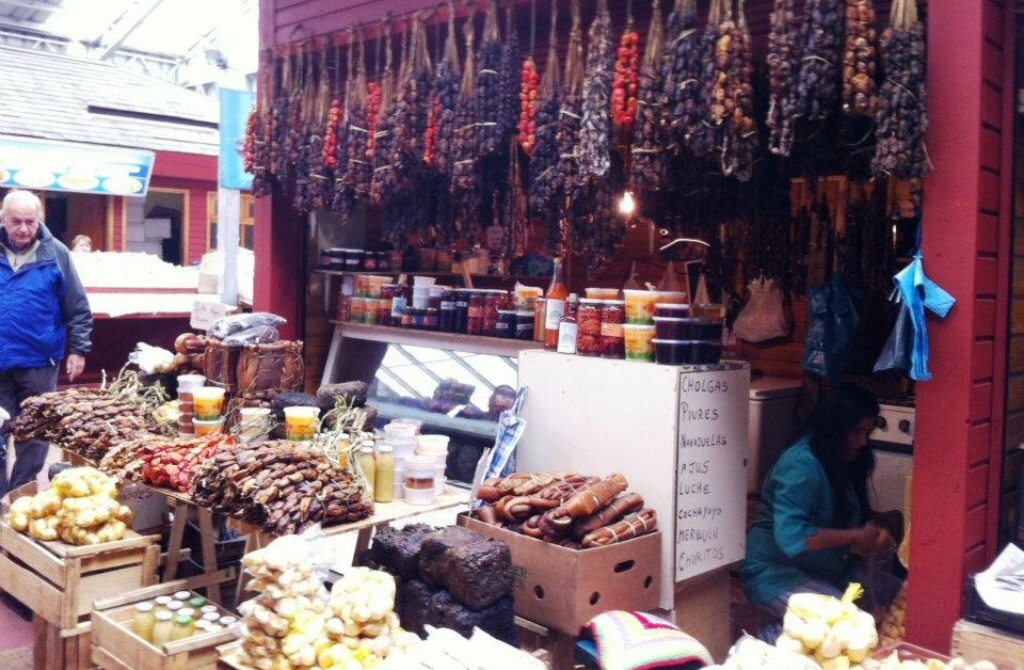
Puerto Montt’s Mercado Angelmó isn’t just a place to buy fish or souvenirs—it’s the city’s beating heart, where the rhythms of daily life, history, and local culture collide in a way that feels both chaotic and deeply human. Nestled in the port district, where the streets slope down toward the bay, the market carries the scent of saltwater, seaweed, and woodsmoke from open grills. There are no orderly aisles or fluorescent lighting here, just a tangle of stalls, weathered boats dragged ashore, and vendors who greet regulars by name. More than a marketplace, Angelmó is an extension of the city itself—a place where commerce, conversation, and even impromptu music sessions unfold side by side.
The market’s roots stretch back to the early 20th century, when Puerto Montt was still a fledgling port town. Back then, fishermen and farmers from nearby villages would gather along the shore to trade their goods, while locals came for fresh catch and produce. What began as an informal exchange gradually took shape, with wooden stalls giving way to more permanent structures. Yet the spirit of Angelmó never changed. It’s still a place where personal connections matter more than price tags, where families have worked the same stalls for generations, and where the line between work and life blurs into something richer.
Architecturally, the market is a study in practicality and happenstance. The main trading areas sit under long metal roofs, shielding vendors and shoppers from the region’s frequent rain. Inside, the aisles are narrow, packed with crates and barrels, forcing people to weave between them. Beyond the covered sections, the market spills into the streets—fishermen lay out their catch on wooden tables or even the ground, while women sell homemade preserves, smoked fish, and fresh bread. Along the waterfront, small eateries serve seafood cooked right in front of you. The buildings are low-slung and worn, their facades bearing the marks of time, but that’s part of the charm. There’s nothing polished about Angelmó, and that’s exactly why it feels real.
The main draw, of course, is the seafood. Chile’s coastline is legendary, and Puerto Montt is one of the best places to experience its bounty. The stalls overflow with everything the Pacific has to offer: salmon, sea bass, Patagonian toothfish, mussels, sea urchins, crabs, and even octopus. Mollusks take center stage—giant loco snails, a local delicacy, share space with mussels and oysters of all sizes. The fish is so fresh it’s often still moving on the ice, brought straight from the boats. Beyond seafood, you’ll find local vegetables, smoked fish, artisanal cheeses, and wild honey from the surrounding forests.
But Angelmó is about more than just shopping. It’s where you can feel the pulse of southern Chile. The market wakes early—by six, fishermen are unloading their night’s catch, and locals are already browsing for the day’s groceries. Tourists trickle in later, but never in such numbers that they disrupt the flow. Weekends are livelier, with music filling the air, vendors calling out to customers, and the smell of grilled fish and shellfish hanging thick. In one corner, you might stumble upon a guitarist playing traditional Chilean folk songs, or even a spontaneous cueca dance, the country’s beloved national dance.
For those who want to eat as well as shop, the market’s small eateries are a must. Seafood dominates the menu, and the options are endless: oysters with lemon, mussels in white wine, grilled salmon, or the famous Chilean chorrillana—a hearty seafood stew spiked with local wine. The real star, though, is curanto, a traditional dish from nearby Chiloé Island. Cooked in a pit with hot stones, it layers fish, meat, potatoes, and shellfish, all seasoned with native herbs. Served in large clay pots, it’s meant to be shared, with portions big enough to feed a crowd.
What makes Angelmó special is its authenticity. There are no luxury boutiques or trendy cafés here, just the raw, unfiltered life of a port town. Locals come not just to shop but to catch up with neighbors, swap stories, or linger over coffee. Visitors often remark on how warm and unpretentious the atmosphere is—vendors happily share tales about their products, and sometimes even offer samples. It’s the kind of place where you might end up in a long conversation about the best way to cook sea urchins or the latest fishing conditions.
Puerto Montt lives by the sea, and Angelmó reflects that reality. The market moves to the rhythm of the tides, the fishing seasons, and the unpredictable weather. In winter, when the wind howls off the bay, the covered stalls feel cozy, warmed by grills and the scent of fresh bread and coffee. Summer brings crowds and noise, especially during festivals when the waterfront hosts concerts and fairs. But no matter the season, Angelmó remains a place where you can touch the real soul of southern Chile—its flavors, its people, and its unshakable connection to the sea. It’s not a museum or a staged experience; it’s a living, breathing part of the city, as dynamic and enduring as the waves that shape its shores.