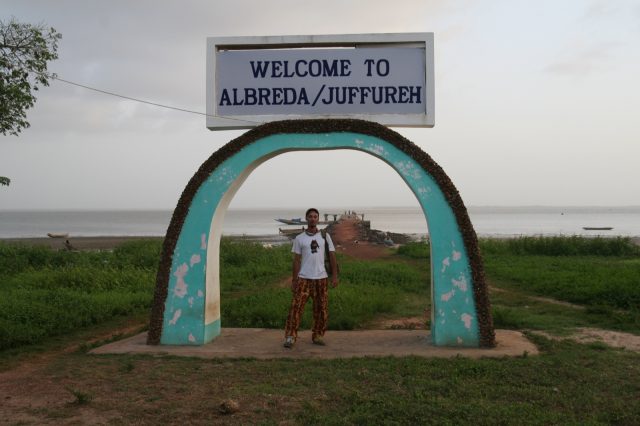
Albreda sits quietly on the northern bank of the Gambia River, a place where time moves to the rhythm of the tides rather than the ticking of a clock. There are no crowded streets, no tourist traps, no vendors pressing souvenirs into your hands. Instead, life unfolds slowly beneath the shade of mango trees, the air thick with the scent of grilled fish drifting from the shore. At the heart of it all is the market—a space that feels more like a village square than a commercial hub. It’s not just a place to buy goods; it’s where history, culture, and daily life intertwine in a way that feels both ordinary and deeply significant.
The market itself is small, but its importance to the community is impossible to overstate. It has stood here for centuries, and if you look closely, you can still see traces of its layered past. Long ago, Albreda was a key stop on the transatlantic slave trade route, and the market was part of that grim history. Later, after slavery was abolished, it became a place where local traders exchanged goods with European merchants. Today, it’s a simple rural bazaar where you can find everything needed for daily life: fresh fish pulled from the river that morning, vegetables and fruits from nearby gardens, spices, handwoven fabrics, and clay pots shaped by local hands.
The architecture of the market is unassuming and practical. Wooden stalls with corrugated iron roofs offer shelter from the sun and sudden downpours. Between the rows, you might spot old stone buildings—perhaps remnants of colonial warehouses or administrative offices—now weathered by time. There’s no polish here, no sterile perfection of modern shopping centers. Instead, the market has a worn-in charm, a sense of authenticity that comes from years of use. The wooden benches are smooth from countless hands resting on them, the ground packed down by generations of footsteps.
Mornings at the market start early. Before dawn, traders from surrounding villages arrive to claim their spots. Women in vibrant dresses arrange peanuts, mangoes, sweet potatoes, and baobab leaves on woven mats, ingredients for the day’s meals. Fishermen bring in their catch—barracuda, Senegalese dorado, shrimp—still glistening from the river. The smell of fresh fish mingles with the aroma of fried flatbreads and spices, creating a scent that lingers in the air. By midday, the market is at its liveliest: voices rise in Mandinka, Wolof, and English, laughter mixes with haggling, and children dart between the stalls, their voices bright against the hum of conversation.
One corner of the market belongs to the artisans. Here, you’ll find craftsmen shaping traditional instruments like the kora or balafon, their fingers moving with practiced ease. Sometimes, a melody drifts through the air as a trader plucks a few notes to draw attention to their wares. Nearby, others weave baskets from palm leaves or carve wooden masks, their designs echoing the shapes once used in rituals. These pieces aren’t flawless—they bear the marks of handmade work, the slight imperfections that come from being shaped by human hands rather than machines. But that’s part of their appeal. Each item carries the weight of tradition, passed down through families and generations.
Beyond commerce, the market is a social hub. It’s where old friends reunite, where news is shared, and where the day’s gossip spreads like wildfire. For many, it’s the only chance to catch up with neighbors from distant villages, to hear how relatives are faring, or simply to spend time in good company. Under the shade of the trees, impromptu tea gatherings take shape. Small glasses of strong green tea, sweetened with mint, are poured and passed around, sipped slowly as conversations meander. Sometimes, someone begins to sing, and soon others join in, their voices weaving together in songs that speak of love, struggle, and hope.
Though modest, the market plays a vital role in the local economy. Many families rely on the income it generates, whether from selling produce, fish, or handmade goods. For farmers and fishermen, it’s often the only place to sell their harvest or catch. For artisans, it’s a chance to showcase their work. In recent years, a few travelers have begun to find their way here, drawn by the market’s authenticity. Yet it hasn’t become a tourist attraction in the usual sense. It remains a place where life happens as it always has, where outsiders are still a rarity. If you visit, expect curious glances, but don’t worry—no one will bother you. The attention is more out of interest than anything else.
Visiting Albreda’s market is like stepping into the everyday rhythm of The Gambia. There are no luxury resorts, no guided tours, no performances put on for visitors. Just the river, the mango trees, the scent of spices, and the people who live much as their ancestors did. That’s what makes it memorable. The market doesn’t try to impress; it doesn’t need to. It simply exists, as it has for generations, and in that quiet persistence lies its beauty. If you ever find yourself in Albreda, take your time. Sit on a bench, listen to the conversations, taste the food. It’s here, in these unassuming moments, that you’ll catch a glimpse of the real Gambia.