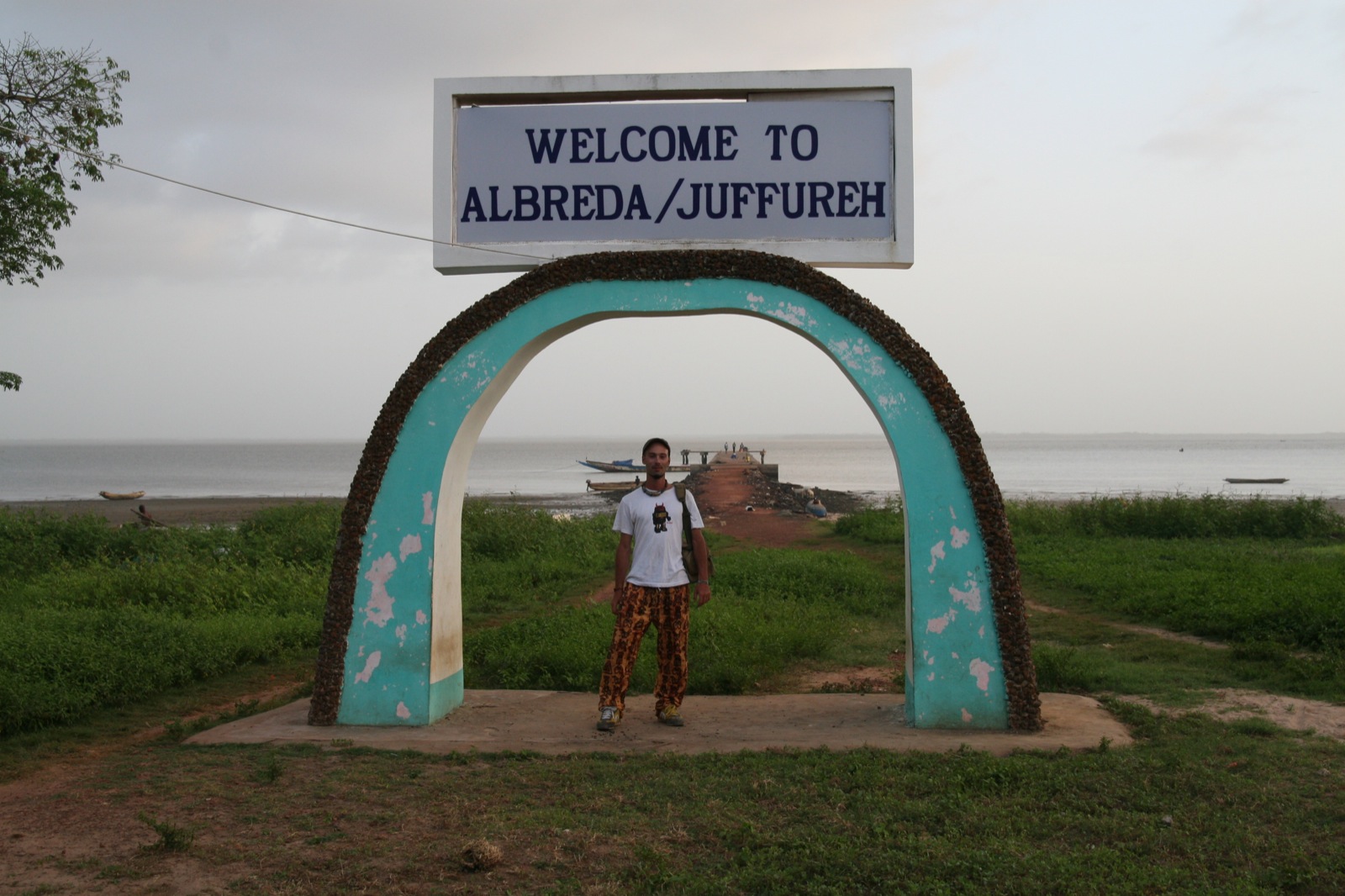
Juffureh is a quiet village on the northern bank of the Gambia River, a short distance from Albreda. It doesn’t appear on most tourist maps, and that’s part of its appeal. For those drawn to the history of the transatlantic slave trade or the rhythms of rural West Africa, this place offers something far more meaningful than a typical stop on a guided tour. The village feels suspended in time, its low clay houses with thatched roofs standing much as they have for generations. Life here moves at the pace of the river, unhurried and unchanging.
The village is best known for its role in the slave trade during the 18th century, when it served as one of the departure points for captives bound for plantations in the Americas. The so-called Slave House, a modest structure of clay and wood, still stands as a reminder of that era. It wasn’t a grand holding facility but a temporary stop, where people were kept before being taken to the waiting ships. Today, the building is more of an open-air exhibit than a preserved historical site. Inside, a small display recounts the grim realities of the trade, though the atmosphere isn’t one of overwhelming sorrow. Instead, there’s a quiet reflection, a sense that this history, however painful, is part of a larger story that continues to unfold.
The people of Juffureh carry this past with a remarkable lack of bitterness. They don’t shy away from discussing it, but neither do they dwell on it. For them, it’s a chapter of their heritage—one that must be remembered but not allowed to overshadow the present. Some families here are descendants of those who were taken away, while others trace their roots to those who remained. The lines between victim and perpetrator blur in a place where history is too intertwined to separate neatly. What remains is a shared understanding that the past, however difficult, is part of who they are.
The architecture of Juffureh is simple and practical, shaped by the environment. Houses are built from local clay mixed with straw, their roofs thatched with palm leaves. These structures stay cool in the heat and withstand the heavy rains of the monsoon season. The village has no paved roads, just narrow paths winding between homes, often shaded by mango trees. At its center stands a small mosque, a testament to the long-standing presence of Islam in the region. Religion here isn’t a spectacle but a quiet part of daily life, woven into the fabric of the community.
Life in Juffureh follows the natural rhythms of the land and the river. Mornings begin with women heading to the water’s edge to collect water, while men tend to fields or set out in wooden pirogues to fish. Children play in the dust near their homes, their laughter blending with the sounds of chickens and goats. Evenings bring the village together around fires, where meals of rice with peanut sauce or freshly caught fish are shared. There are few tourists, and those who visit rarely stay long. That’s part of the village’s charm—it doesn’t exist for outsiders. It simply is, as it always has been.
For many travelers, Juffureh isn’t just a destination but an encounter with history in its rawest form. There are no grand memorials or scripted narratives here, just the quiet weight of the past pressing against the present. The village doesn’t try to impress; it doesn’t need to. Its power lies in its unassuming authenticity, in the way it forces visitors to confront the uncomfortable truths of history without the buffer of polished storytelling.
If you come to Juffureh, don’t expect comfort or entertainment. There are no hotels, no restaurants, no souvenir stalls. What you’ll find instead is a place that demands something of you—a willingness to step outside the familiar, to sit with history rather than just observe it. The river flows as it always has, and the village carries on much as it did centuries ago. It’s not a place for everyone, but for those who are open to its quiet lessons, Juffureh can leave a lasting impression. It doesn’t offer easy answers, but it does offer something rarer: a chance to see the world, and history, as they truly are.