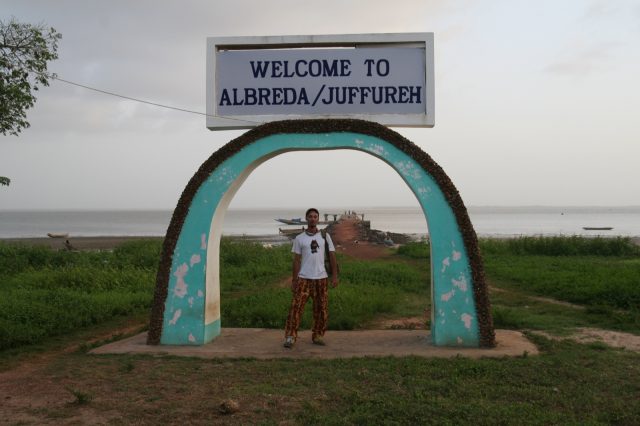
Albreda is a quiet riverside village in The Gambia, where the Gambia River widens into something closer to a sea inlet. The water here is broad and still, reflecting the mangroves on the opposite shore, while the village itself is a scattering of low houses with clay walls and thatched roofs, half-hidden among palm groves. It feels like a place where time moves differently, where the past lingers in the shade of ancient trees and the slow rhythm of daily life. And yet, standing almost unnoticed among the modest homes, there is a small building that carries the weight of centuries—a Portuguese chapel, one of the last tangible traces of Europe’s earliest encounters with this part of Africa.
Built in the late 1400s, the chapel dates back to the first wave of Portuguese explorers who ventured into the Gambia River’s estuary. They came in search of gold, ivory, and slaves, but they also brought their faith, constructing this simple place of worship as both a spiritual refuge and a statement of presence. At the time, Albreda was a bustling trading post, where European merchants bartered with local rulers under the watchful eyes of Portuguese officials. The chapel was more than just a religious site; it was a symbol of influence, a quiet assertion of control in a land that was still largely unknown to the outside world. Its architecture reflects the practicality of the era—thick walls to keep out the heat and humidity, small windows to let in just enough light, and a design that was both unassuming and enduring.
Over the centuries, Albreda’s importance faded. The Portuguese gave way to the Dutch, and later the British, who turned the Gambia into a key hub of the transatlantic slave trade. The chapel survived these shifts, though its original purpose was long forgotten. Its walls bore silent witness to the changing tides of history—slave caravans passing through, flags being raised and lowered over nearby forts, ships arriving and departing with their human cargo. Today, little remains of those times except for fragments of stories passed down through generations and the chapel itself, standing as a mute testament to the layers of history that have shaped this corner of West Africa.
The building is small, almost square in shape, with a low-pitched roof that has weathered the elements for over five hundred years. Inside, there is almost nothing left—no altar, no frescoes, no pews—just bare walls marked by cracks and the slow erosion of time. A few window openings let in slivers of light, the same light that once illuminated the prayers of Portuguese sailors and traders. Outside, the roots of nearby trees have begun to creep around the foundation, as if nature is slowly reclaiming what was once taken from it. Yet despite its age, the chapel doesn’t feel abandoned. The people of Albreda treat it with quiet reverence, sometimes sitting in its shade or bringing children to hear the stories of the past.
Life in Albreda moves at its own unhurried pace. The river, wide and calm, stretches out like a vast mirror, while the surrounding land is dotted with fields of groundnuts and cassava. Mornings often begin with a thin mist rising from the water, and the only sounds are the rustling of leaves and the distant call of birds. Few tourists make their way here, and those who do are usually drawn not just by the history, but by the atmosphere—a sense of authenticity that’s hard to find in more crowded destinations. There are no grand hotels or bustling markets, just the quiet hum of a village that has seen empires rise and fall without ever losing its own rhythm.
The chapel is not Albreda’s only point of interest. Nearby, a small slavery museum offers a sobering look at one of the darkest chapters in Gambian history. But even without it, the village itself tells a story of how deeply the fates of different peoples have intertwined here. Portuguese explorers, British colonizers, and local communities all left their mark, and the chapel stands as one of the few physical reminders of that complex past. It’s a place where the echoes of history feel almost tangible, where the weight of what once was lingers in the air.
Visiting the chapel doesn’t require much effort. A short walk through Albreda’s narrow lanes, past houses with brightly painted shutters, leads to a small rise where the building stands. The surroundings are peaceful—just the whisper of wind through the trees and the occasional ripple of water from the river. Stepping inside, you can run your fingers along the rough stone walls and imagine the voices that once filled this space, the murmured prayers in Portuguese, the creak of wooden benches, the flicker of candlelight casting shadows on the floor. Time seems to slow here, and even a few moments spent within these walls can make the past feel strangely present.
Albreda and its chapel are more than just a stop on a map. They are a place where history doesn’t just exist in books or museums, but in the very air you breathe. There are no grand monuments or dramatic declarations here, just the quiet persistence of the past, a reminder of how much has changed and how much has stayed the same. The river still flows toward the ocean, the palms still sway in the breeze, and the chapel remains, a silent witness to the people who came and went, leaving behind only traces—and the stories that refuse to be forgotten.