Al Khor Market: Where the Past Lives in the Present
Al Khor’s market sits where the past isn’t just remembered—it’s still part of the day. The souqs in Doha feel staged, but here, the market belongs to the people who use it every morning. Fishermen repair nets by the harbor. Women in abayas haggle over spices. Children weave between stalls, fingers sticky from fresh dates. The buildings, made of coral stone and plaster, curve around a courtyard thick with the smell of grilled fish and cardamom coffee. No one designed this for Instagram, but it’s photogenic in its own way. The charm isn’t in some curated authenticity. It’s in the fact that no one bothered to sanitize it for outsiders.
The market’s history is tied to Al Khor’s life as a fishing and pearling town, long before oil changed Qatar. For generations, this was where divers sold their catch after weeks at sea. Merchants from Persia and India unloaded textiles and dried goods. Families came for rice, rope, everything. The layout hasn’t changed much—narrow alleys branch off from the main square, each dedicated to a different trade. One passage sells silver jewelry. Another stacks woven baskets. A third holds barrels of olives and pickles. The architecture follows function: thick walls keep out the heat, high ceilings let air circulate. Summer temperatures here climb above forty degrees.
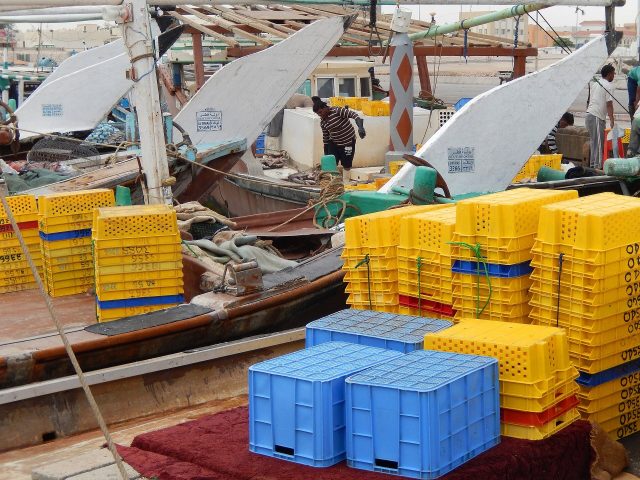
The market’s heartbeat is the sea. The harbor is just steps away. In the early morning, fishermen bring in hammour, kingfish, the occasional shark. The fishmongers don’t just sell—they clean and fillet on the spot, knives flashing. Nearby, shops sell nets, floats, fishing gear. Their owners are often old men who’ve spent their lives on the water. The seafood section is the liveliest part of the market, especially before noon, when the catch is freshest and bargaining is fierce. If you’re lucky, you’ll see a fisherman grilling sardines over an open flame, smoke curling into the rafters.
In the afternoons, when the heat drives most indoors, the older men of Al Khor gather in the courtyard’s shade. They drink tea, play backgammon. Their conversations mix Arabic, Urdu, Farsi—a reminder of the town’s history as a trade crossroads. Women come not just to shop but to meet, voices rising and falling as they catch up while children play nearby. This is one of the few places in Qatar where community life still happens without a script. Transactions here are as much about conversation as they are about commerce.
The food stalls are easy to miss. Tucked into corners or set up on rickety tables, they serve simple dishes that taste of the sea. Machbous—a spiced rice dish with fish or chicken—cooks in large pots over open flames. Balaleet, sweet vermicelli noodles topped with an omelet, feels as at home here as it does in a kitchen. The best way to eat? Follow the locals. If a stall is crowded, it’s worth the wait. Tea comes strong in small glasses, often with mint or dates on the side.
Change has crept in. A few modern shops now sell cheap plastic toys and imported spices in shiny packaging. Some older vendors grumble. But the market has always adapted. What hasn’t changed is the sense that this is still a working market, not a tourist attraction. No signs in English. No guided tours. No one selling a "traditional Qatari experience." If you want to explore, you’ll have to wander the alleys and let the place reveal itself at its own pace.
Al Khor’s market reflects Qatar’s story. Here, old and new coexist without fanfare. A fisherman in a thobe checks his smartphone while waiting for his catch to be weighed. A young woman in a designer abaya haggles over saffron. The market doesn’t romanticize the past or rush toward the future. It just is—a place where people buy, sell, and live.
Visit in the early morning or late afternoon, when the light is soft and the crowds are thinner. Don’t rush. The slower you go, the more you’ll notice. Sunlight filters through wooden slats, casting patterns on the dusty floor. A radio plays an old Arabic song. The air smells different in each section—spicy near the herbs, briny near the fish, sweet near the dates. These small details make the market feel like more than a place to shop. It’s a piece of Al Khor, a town that has held onto its identity even as the world changes around it.
Don’t expect a spectacle. This isn’t a place that announces itself. But if you’re willing to look, it offers something rare—a glimpse into the everyday life of a town shaped by the sea, by trade, and by the quiet resilience of its people. The market doesn’t need to be flashy. It just needs to be real.