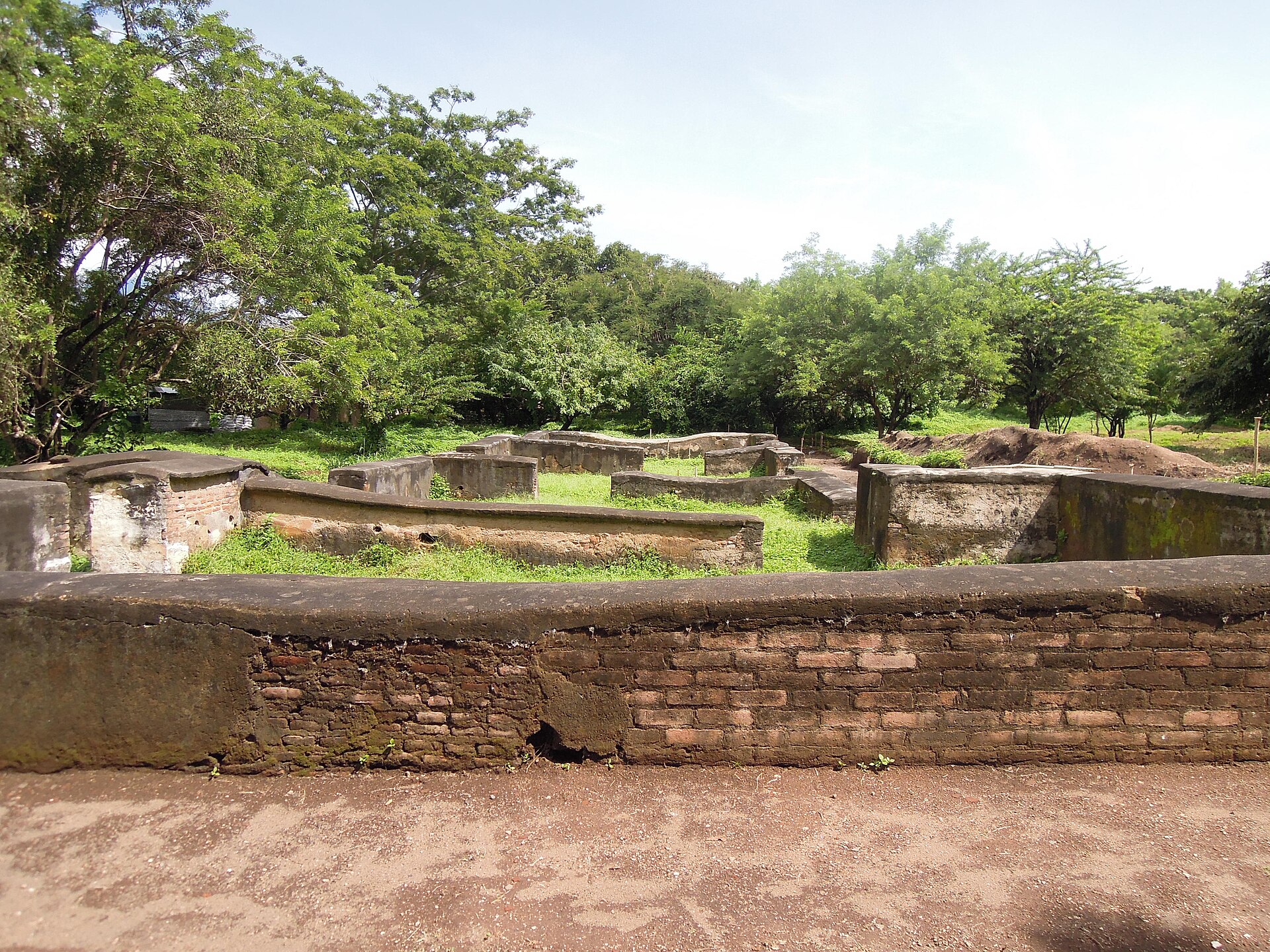
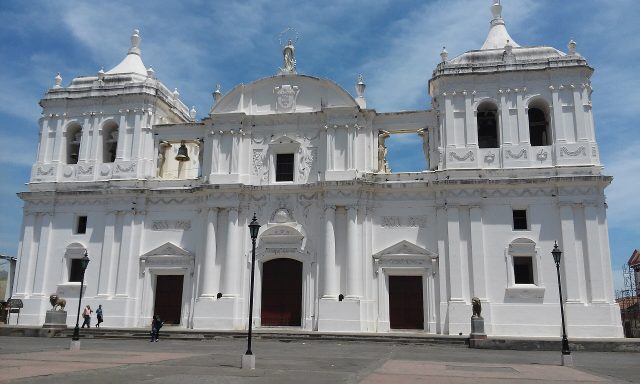
León Viejo, the ruins of Nicaragua’s first colonial capital, sit quietly near the shores of Lake Managua, a place where time seems to have paused. Founded in 1524 by the Spanish conquistador Francisco Hernández de Córdoba, this was once a bustling settlement, the heart of early Spanish rule in the region. But the city’s life was short-lived. By 1610, after a series of natural disasters—earthquakes, volcanic eruptions, and the relentless pressure of the Momotombo volcano—its inhabitants abandoned it, leaving behind a ghostly echo of their world. Today, the ruins offer a rare glimpse into the past, a moment frozen in the 16th century before the city was swallowed by history.
Walking through León Viejo feels like stepping into a different era. The layout of the streets, the foundations of buildings, and the remnants of what were once grand structures tell a story of ambition and fragility. The Spanish built their city in a grid pattern, a common colonial design, with a central plaza surrounded by the most important buildings: the cathedral, the governor’s residence, and the homes of the elite. What remains now are mostly low stone walls, weathered by centuries of rain and wind, but the outlines are still clear. The cathedral’s ruins, in particular, stand as a reminder of the city’s brief but intense religious significance. It was here that the first bishop of Nicaragua, Diego Álvarez de Osorio, was buried, his tomb still visible among the stones.
The site is small, but its historical weight is immense. León Viejo is one of the few places in the Americas where you can see a Spanish colonial city in its original form, untouched by later development. Most other early settlements were either built over or destroyed, their traces lost beneath modern cities. Here, the ruins have been preserved almost exactly as they were left, offering archaeologists and visitors alike a direct connection to the past. The absence of later construction means that what you see is unfiltered history—no reconstructions, no modern additions, just the raw bones of a city that once was.
The natural setting adds to the sense of isolation. The ruins lie in a flat, open area near the lake, with the towering Momotombo volcano looming in the distance. The volcano’s presence is a constant reminder of why the city was abandoned. In 1610, an eruption forced the residents to flee, and though they tried to rebuild, the land itself seemed to reject their efforts. Eventually, they moved to what is now modern León, about 30 kilometers away, leaving León Viejo to the elements. The lake, once a vital resource, now sits calmly nearby, its waters reflecting the sky and the distant mountains.
For those interested in history, León Viejo is a place of quiet revelation. The ruins are not grand in the way of ancient temples or medieval castles, but their simplicity is part of their power. There are no towering walls or intricate carvings, just the humble remains of everyday life—kitchens, workshops, and living quarters. The site includes the foundations of the city’s first hospital, one of the earliest in the Americas, as well as the remains of a convent and several private homes. These were not the palaces of kings or the fortresses of warriors, but the places where ordinary people lived, worked, and died.
The city’s decline was not just the result of natural disasters. León Viejo was also a place of conflict, both among the Spanish and between the colonizers and the indigenous population. The region was home to the Chorotega people, who resisted Spanish rule, and the early years of the settlement were marked by violence and instability. The ruins bear silent witness to these struggles, though the stories are often lost to time. What remains is a sense of resilience—the fact that the city existed at all, however briefly, in such a hostile environment.
In 2000, León Viejo was declared a UNESCO World Heritage Site, a recognition of its unique historical value. The designation has helped protect the ruins from further decay, though the elements continue to take their toll. Visitors today will find the site well-maintained, with informational signs providing context to the ruins. There is no museum on-site, but the simplicity of the place allows the imagination to fill in the gaps. You can stand in the central plaza and picture the market days, the religious processions, the daily rhythms of a city that once thrived here.
The journey to León Viejo is part of the experience. The ruins lie about an hour’s drive from modern León, along a road that winds through small villages and farmland. The landscape is lush and green, a stark contrast to the arid ruins. Along the way, you might pass farmers tending their fields or children playing by the roadside, a reminder that life in this region has continued, even as the old city faded into memory. The road itself is a mix of paved and dirt sections, a reminder of Nicaragua’s rural character.
Visiting León Viejo is not about spectacle. There are no grand monuments or dramatic vistas, just a quiet, reflective space where history feels close enough to touch. It’s a place for those who appreciate the weight of the past, who want to stand where others once stood and imagine what their lives were like. The ruins don’t offer easy answers or dramatic narratives, but they do provide something rare: a direct, unmediated connection to a moment in time that shaped the course of a nation. For anyone traveling through Nicaragua, León Viejo is a detour worth taking—a chance to step off the beaten path and into the shadows of history.