Amatus is one of those rare places in Cyprus where history isn’t just something you read about—it’s something you can almost touch. The ruins of this once-thriving city lie scattered across a quiet stretch of land near Agios Tychonas, where the past lingers in the crumbling walls, the worn foundations of buildings, and the remnants of paved streets. What remains today is only a fraction of what Amatus once was, but even these fragments tell a story of a city that stood at the crossroads of Mediterranean trade, culture, and power.
The city’s origins stretch back to the Bronze Age, but its golden era came much later, during antiquity, when Amatus flourished as a vital port and a center of Cypriot life. Greeks, Romans, and Byzantines all left their mark here, shaping the city’s identity over centuries. The ruins that survive—sections of defensive walls, the outlines of public buildings, and the elevated remains of what was likely an acropolis—hint at a place of significance. From the higher ground, the view still stretches toward the sea, and it’s easy to imagine ships approaching the harbor, laden with goods from distant shores.
Amatus wasn’t always a ruin. In its prime, it was a bustling hub, but as the Byzantine era unfolded, its importance waned. Newer, more strategically placed settlements drew attention away, and a series of earthquakes and invasions further weakened the city. By the Middle Ages, Amatus had faded into obscurity, its stones left to the elements. It wasn’t until the 19th century that European travelers rediscovered the site, and systematic excavations only began in the last hundred years. Today, the ruins are more than just a tourist attraction—they’re a window into how people lived, traded, and built their world on Cyprus thousands of years ago.
Walking through the site, it’s clear how the landscape has changed. The sea, which once lapped at the city’s edges, has retreated, leaving behind salt flats and low shrubs. Olive trees dot the area, their gnarled trunks a testament to the passage of time, while wild thyme and salt-tinged air fill the space between the stones. The modern world feels distant here, its noise muffled, as if time itself moves more slowly among these ruins.
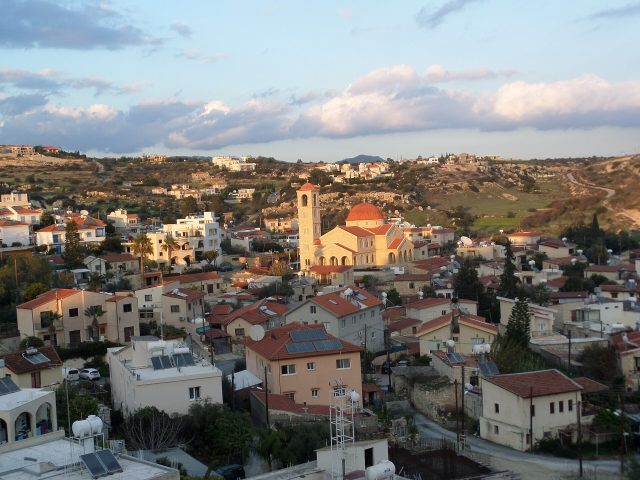
What makes Amatus particularly interesting is how it fits into the present. The ruins lie just outside Agios Tychonas, a small, unhurried village where life follows a quiet rhythm. For the locals, the ancient city isn’t a relic to be revered from a distance—it’s simply part of the land, as natural as the hills or the sea. Nearby, shepherds tend their flocks, and fishermen return with their catch, creating a sense that the past and present aren’t separate but woven together.
Visiting Amatus isn’t like touring a typical historical site. There are no detailed signs, no marked paths, and no guided tours. The ruins are open for exploration, and visitors are free to wander as they please. Some might search for the oldest stones, others try to imagine the city in its heyday, while a few simply soak in the silence and the views. The key is to take your time—only by moving slowly do you begin to grasp the depth of history beneath your feet.
It’s worth remembering that Amatus isn’t a finished museum exhibit but an active archaeological site. Occasionally, researchers work among the ruins, and if you’re lucky, they might share insights into their latest discoveries or the theories they’re testing. Even without their explanations, the stones speak for themselves. Each one carries the weight of centuries, and if you listen closely, you can almost hear the echoes of the past.
For those with an interest in Cypriot history, Amatus is a must-visit. It may not have the fame of Paphos or Salamis, but that’s part of its charm. There are no crowds, no souvenir stalls, no pushy guides—just the quiet, the wind, and the sea. This is a place for those who want to do more than see history; they want to feel it, to stand where ancient traders once stood, and to let their imagination fill in the gaps of a city that was once alive.