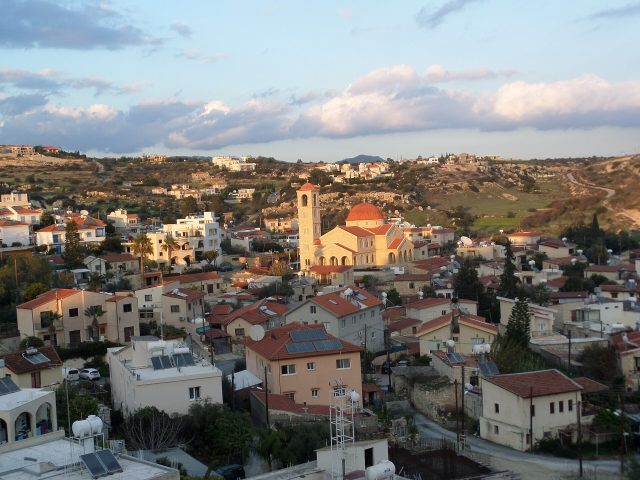
Amathus is one of those quiet places in Cyprus that few people talk about, yet it holds the weight of antiquity in a way few others do. Perched on a gentle hillside near the modern village of Agios Tychonas, its ruins overlook the Mediterranean, scattered like forgotten memories across the landscape. Once a thriving city-state, Amathus has been reduced to fragments—crumbling walls, the foundations of temples, and the faint outlines of streets—but these remnants still carry the echoes of its past. There are no crowds here, no souvenir stalls, just the wind and the occasional visitor wandering through the silence, as if stepping into another time.
The city’s history stretches back to the Bronze Age, when Cyprus was part of the Mycenaean world. By the 12th century BCE, Amathus had already established itself as a significant settlement, later evolving into one of the island’s most important centers. Ancient texts describe it as a hub of trade and religion, a crossroads where goods and ideas flowed between Greece and the Levant. The city minted its own coins, a sign of its wealth and independence, and was home to a sanctuary dedicated to Aphrodite, whose cult was deeply rooted in Cypriot tradition. Over the centuries, Amathus was rebuilt and reshaped—first by earthquakes, then by wars, and finally by the slow march of time, which buried its streets under layers of earth and oblivion.
The most striking remains are the city’s fortifications. Massive limestone blocks, some still standing several meters high, hint at the scale of Amathus in its prime. The main gates, though now reduced to their foundations, must have been imposing in their day, a testament to the city’s strategic importance. Within the walls, the outlines of houses, paved roads, and public buildings emerge from the soil. Among them, the ruins of an early Christian basilica stand out, a reminder that Amathus endured long after the fall of the ancient world, adapting to new beliefs and rulers.
Beyond the city limits, the necropolis sprawls across the hillside. Some of the tombs were excavated in the 19th century, revealing gold jewelry, pottery, weapons, and even chariots—offerings meant to accompany the dead into the afterlife. Today, the tombs remain, carved into the rock with a simplicity that feels almost intimate. There are no grand monuments here, just the quiet dignity of people who once walked these streets, traded in the markets, and worshipped in the temples whose ruins now lie beneath the wild grasses.
From the hilltop, the view of the Mediterranean is endless on clear days. It’s hard to imagine that this serene stretch of water was once a bustling maritime route, with ships arriving and departing, merchants haggling on the docks, and citizens gathering in the agora to celebrate festivals or debate the news of the day. Now, the sea still murmurs below, but the city is long gone, leaving only stones and stories. Olive trees and wildflowers have reclaimed the land, and the only sounds are the wind and the distant voices of visitors who come to wander among the ruins.
What makes Amathus special is its atmosphere. There are no guided tours here, no crowds jostling for the best photo spot—just space, sunlight, and a sense of time moving differently. You can spend hours exploring the hillside, trying to piece together the layers of history: the Mycenaean settlement, the Hellenistic polis, the Byzantine town. Each era left its mark, visible in the changing architecture, the shifting religious practices, and the everyday lives of the people who called this place home.
Unlike the more famous archaeological sites in Cyprus, Amathus remains largely untouched by mass tourism. That’s its greatest strength. There’s no need to rush or follow a scripted itinerary. You can sit on a rock, listen to the wind, and reflect on the generations of people who walked this same ground, leaving behind little more than stones and memories. It’s the quiet places like this that often tell the loudest stories.
If you visit, it’s worth stopping by the Limassol Archaeological Museum afterward. Many of the artifacts unearthed at Amathus are housed there, offering a deeper understanding of the city’s past. But even without the museum, the ruins speak for themselves. The key is to take your time. Here, the past isn’t something to be hurried through—it’s something to be felt, one stone at a time.