Saint-Georges Abbey stands where the past seeps through stones, air, and silence. Founded nearly a thousand years ago, it was a religious house and a part of medieval Normandy’s daily life. What remains are fragments, but they hold centuries of history.
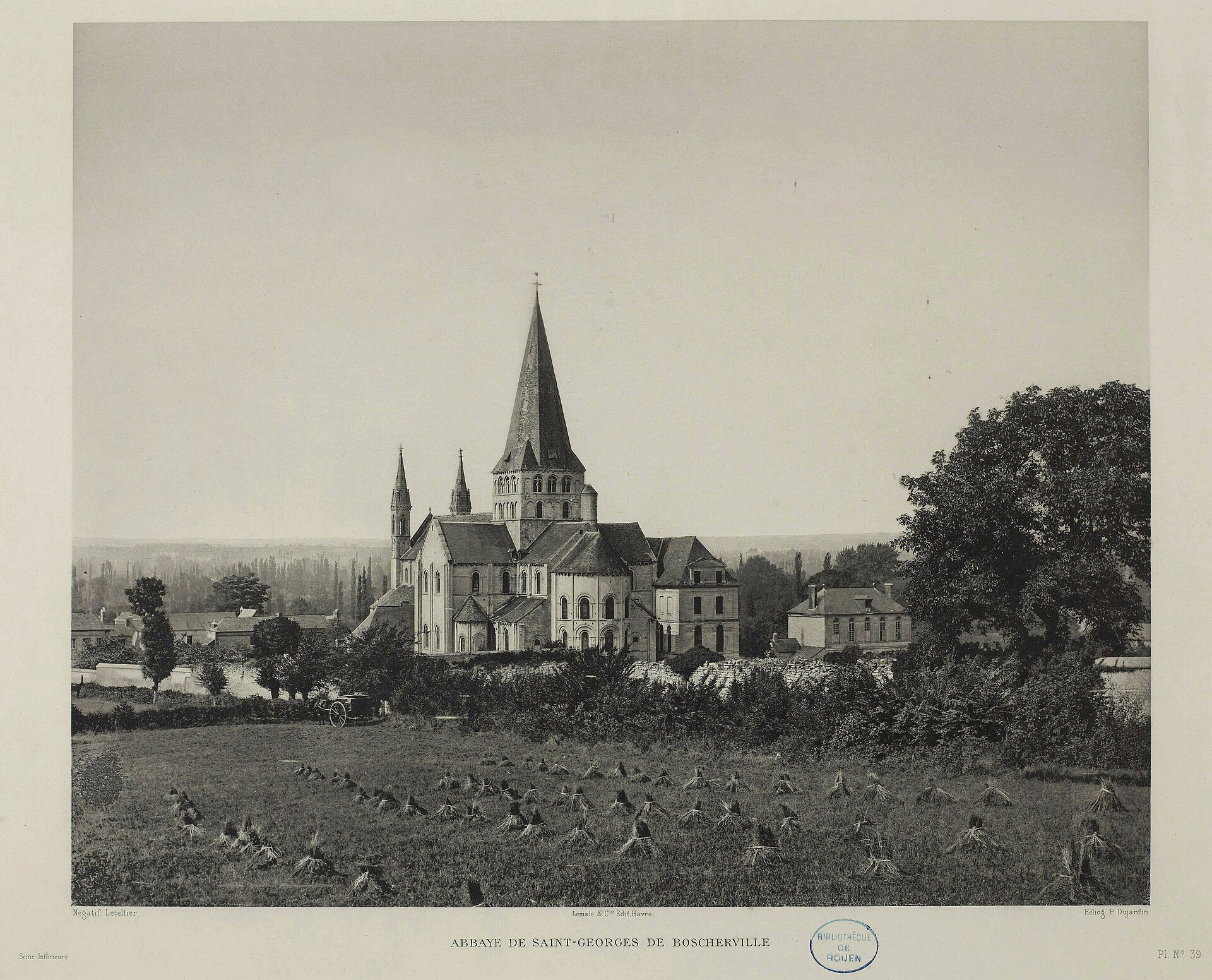
The abbey began in 1030 when Duchess Gunnor, widow of Richard II of Normandy, established it as a convent for noblewomen. Nuns educated young girls from aristocratic families in piety, music, needlework, and writing. Over time, the abbey gained influence, funded by donations from dukes, kings, and local lords. By the 12th century, its church had become a masterpiece of Norman Romanesque architecture, later refined with Gothic elements. The abbey endured wars, fires, and revolutions, rebuilding each time but never fully regaining its former scale.
The church is what survives most intact. Its nave has soaring columns and vaulted ceilings. Inside, faded frescoes cling to the walls, their colors hinting at scenes once vivid. The Chapel of the Virgin Mary preserves some of the region’s finest medieval paintings. Much has been lost—looted, whitewashed, or worn away—but enough remains to picture the abbey in its prime, with candlelight and the voices of nuns in prayer.
The ruins of the monastery buildings tell another story.
The cloister, now reduced to a few arches, was once the center of convent life. Nuns walked here in contemplation or discussed daily affairs.
The chapter house, where decisions were made, still stands in part. Its stone walls echo with the debates of long-dead sisters. The remnants of living quarters show the rhythms of monastic life—simple, disciplined, tied to the land. Ivy climbs crumbling walls, and gardens that once fed the community now grow wild.
Rouen’s history is tied to Saint-Georges Abbey. In the Middle Ages, it was a center of learning, its library holding illuminated manuscripts that drew scholars from across Normandy. During the Hundred Years’ War, the abbey fell under English rule. Later, religious wars brought destruction as Protestant forces ransacked Catholic monasteries. By the French Revolution, the abbey’s lands were seized, its buildings repurposed or left to decay. Even in ruin, it witnessed Rouen’s turbulent past.
Today, the abbey’s stillness sets it apart. Away from Rouen’s busier attractions, it rarely draws crowds. It sits on a gentle rise overlooking the Seine, its gardens a mix of wildflowers and herbs. The river’s presence lingers, its slow current marking time. There are no grand exhibits or guided tours—just stone and earth shaped by hands and left to the elements.
This is a place for those who prefer history without spectacle. No towering spires or gilded altars impress here—just the quiet dignity of a site that has seen empires rise and fall. Walking through the ruins, you can almost see the nuns who lived here, women who prayed, worked, and shaped Rouen’s future. The abbey’s charm is in its imperfections: uneven stones, sunlight through broken arches, the sense that time moves differently here.
Saint-Georges Abbey may not be Rouen’s most famous landmark, but it is one of its most authentic. It doesn’t demand attention; it simply exists, a silent guardian of the city’s medieval soul. For those who look beyond the obvious, it offers a connection to the past that feels personal. In a world that moves too fast, places like this remind us to slow down and listen to the stories stones tell.