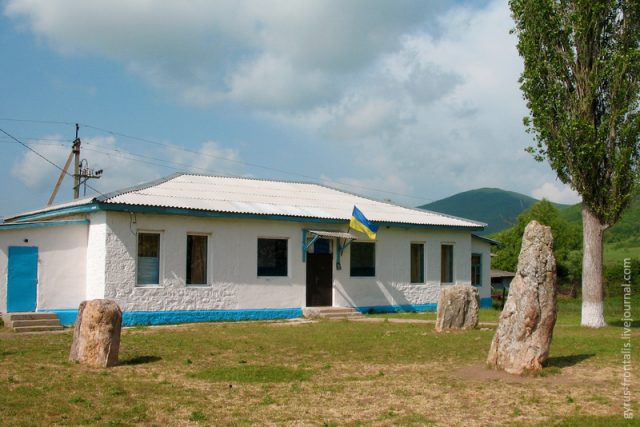
Spring Lake’s House of Culture is the kind of place that doesn’t immediately catch your eye, but once you notice it, you realize how deeply it’s woven into the fabric of this small town. Tucked away at the quiet intersection of two unassuming streets, it stands as a quiet witness to the unhurried rhythm of local life, where everyone knows each other by name. The building isn’t grand like the imposing cultural palaces of the Soviet era, but it has its own understated charm—modest, unpretentious, and very much alive.
The story of this place begins in the mid-20th century, when such institutions weren’t just venues for performances or hobby groups but the beating heart of community life. Back then, the House of Culture was where people gathered for celebrations, lectures, film screenings, and town meetings. It was where local identity took shape, where neighbors learned from one another, and where the connection to the wider world was kept alive. Today, the building still serves that purpose, though perhaps in a quieter, more low-key way.
Architecturally, the House of Culture is simple and functional—a classic example of provincial Soviet modernism. The two-story structure features large windows, a wide entrance, and a small stage inside. There are no ornate columns or elaborate stucco work, just clean lines, symmetry, and practicality. The interior is just as straightforward: a spacious hall with rows of seats, a stage, and a foyer where handmade posters now hang in place of the old wall newspapers. Everything is designed for comfort, not spectacle.
These days, the House of Culture remains a vital part of Spring Lake’s daily life. Local choirs rehearse here, dance groups practice, and occasional exhibitions showcase the work of amateur artists. There are craft workshops, children’s art classes, and music lessons for those who want to learn. Nothing here is flashy or high-profile, but that’s part of its appeal. It’s a place where traditions are kept alive, where people who have no desire to leave for the big city can still feel like they’re part of something meaningful.
What makes this place special isn’t grand events or famous performers—it’s consistency. There are no international festivals or celebrity guests, just the same people coming back year after year. Some come to sing in the choir, others to reminisce or catch up with neighbors. The real value of the House of Culture lies in its quiet persistence. It doesn’t try to be extraordinary; it simply exists as a natural part of everyday life.
In an age of digital connections and globalized entertainment, it’s easy to assume that places like this have become relics of the past. But the House of Culture in Spring Lake proves otherwise. Here, there are no virtual likes or online friends—just real conversations, genuine emotions, and a sense of belonging. For many locals, it’s the only place where they feel like they’re part of a community, where their presence matters. That might be why the building is still in use, its walls echoing with laughter, music, and the hum of daily life.
Of course, it’s not a perfect place. The equipment is outdated, funds for repairs are scarce, and sometimes enthusiasm wanes. But that’s part of its authenticity. These places don’t survive on grants or corporate sponsorship—they endure because of the people who care enough to keep them going. Maybe that’s why they feel so warm and real. There’s nothing forced or artificial about them.
If you ever find yourself in Spring Lake, stop by. Don’t expect luxury or a packed schedule of entertainment. Just sit in the hall for a while, listen to the choir rehearsing, or look at the old photographs on the walls—faces of people who once sang, danced, or simply came here for a moment of connection. You might begin to understand why places like this still matter. They’re not museums of the past; they’re living proof that real culture starts small.