Rizal Park
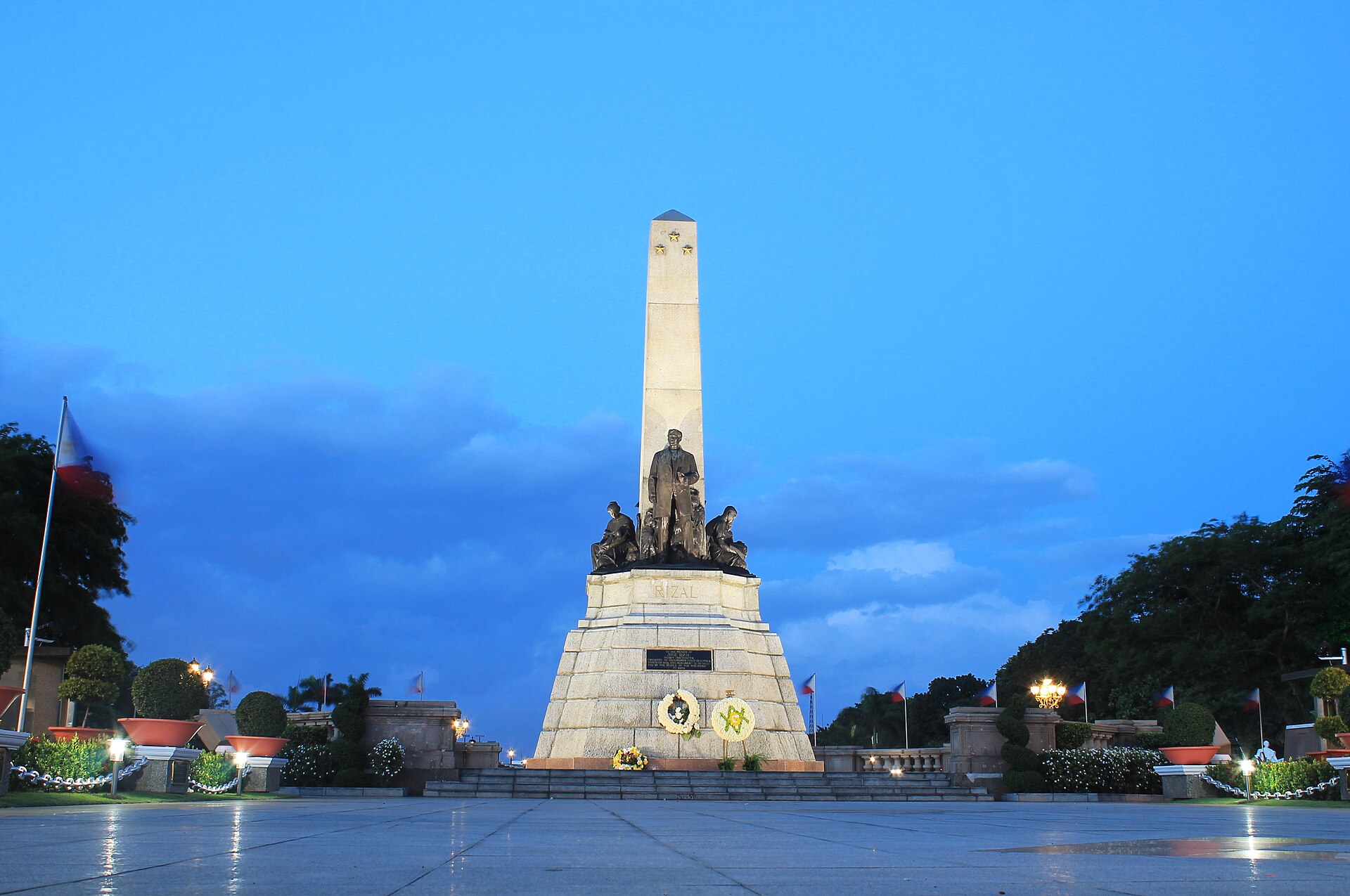
Rizal Park is where Manila’s relentless pace slows just enough to let you breathe. It stretches along Manila Bay, at the heart of the capital, a quiet counterpoint to the noise beyond its borders. For many Filipinos, this is more than a park—it’s a monument to the nation’s past, where history unfolds under old trees, in stone monuments, and along paths walked by those who shaped the country. Named after José Rizal, the national hero executed by Spanish colonial authorities in 1896, the park carries his legacy in every corner, from the bronze statue at its center to the plaques marking moments in the struggle for independence.
The park starts at its grand entrance, where a wide plaza opens, framed by fountains and manicured lawns. At its heart stands the Rizal Monument, a solemn structure of bronze and granite, surrounded by flagpoles bearing the Philippine flag. The base of the monument is etched with reliefs depicting scenes from Rizal’s life. Around it, the plaza hums with activity—tourists taking photos, locals on benches, children chasing pigeons. As evening falls, the lights cast long shadows across the cobblestones, and the monument seems to watch over the city.
Beyond the monument, the park unfolds into a sprawling green space with winding paths. One leads to the Chinese Garden, a serene enclave of pagodas, arched bridges, and koi-filled ponds. Built in the 1960s as a gesture of friendship between the Philippines and China, it remains one of the park’s most tranquil spots. Nearby, the Japanese Garden offers another retreat, its stone lanterns and miniature waterfalls creating a sense of calm.
A short walk from the gardens is the National Museum of Anthropology, once the Legislative Building. The neoclassical structure has grand columns and high ceilings, but inside, artifacts from across the archipelago—ancient pottery, traditional textiles, and ceremonial objects—show the diverse cultures that shaped the Philippines. The museum connects the past to the present, revealing how modern Filipino identity formed. Next door, the National Museum of Fine Arts displays the country’s artistic heritage, from classical paintings to contemporary works.
For those drawn to Rizal’s story, the Rizal Shrine offers a closer look at his final days. The complex includes the house where he spent his last hours before execution, now a museum with his personal belongings, letters, and documents from the era. The walls are inscribed with his words, the gardens blooming with flowers. It’s a place of pilgrimage—school groups, families laying flowers on the anniversary of his death, visitors seeking to understand the man behind the legend.
Rizal Park is also where life happens in real time.
On weekends, families picnic, children fly kites, and teenagers race on bicycles. During festivals, the open spaces become stages for concerts or holiday markets. Along the bay, the promenade offers a stretch of calm where people stroll at sunset, watching ships anchored offshore. Sometimes, the park hosts marathons, yoga sessions, or community events.
The park weaves together different eras. Spanish colonial influence lingers in the gardens and monuments, while the American period appears in the neoclassical architecture of the museums. But above all, it embodies Filipino nationalism, a space where freedom and identity are celebrated. Here, the past isn’t just remembered—it’s lived in the daily rituals of visitors.
In recent years, the park has seen new pathways, restored buildings, and improved lighting, but its essence remains. It’s a place where time moves differently, where a single visit can stretch into hours as you wander from one corner to another. Whether you come for history, quiet, or escape from the city’s energy, Rizal Park reminds you that Manila has a soul—and this is where you’ll find it.