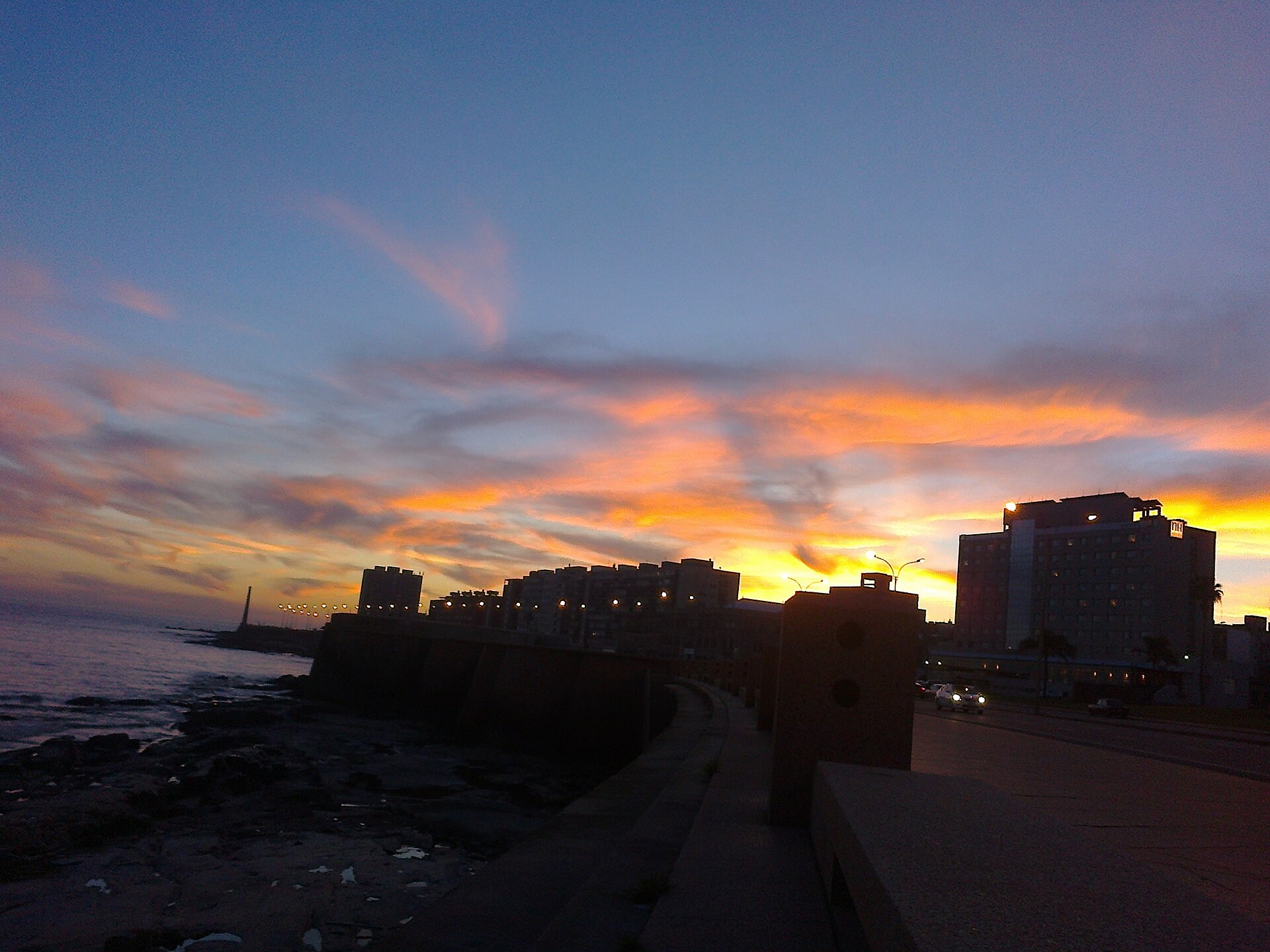
Montevideo’s Rambla is the city’s lifeline, stretching nearly twenty kilometers along the shores of the Río de la Plata. It begins in the historic port district, passes business hubs, quiet residential neighborhoods, and lively beaches, then fades into the leafy calm of Carrasco. Office workers rush to meetings here; retirees watch the sunset with a thermos of mate. The city’s energy and its moments of stillness coexist.
The Rambla’s origins trace back to Montevideo’s rise as a port city in the early 20th century, when Uruguay’s economy was booming. What had once been a neglected stretch of coastline became a public space where the city could breathe. The transformation unfolded over decades, shaped by different architects and engineers. Today, the Rambla is a network of parks, bike paths, lookout points, and beaches, all designed to connect the city with the water.
The architecture is unassuming. Wide tiled sidewalks, laid in geometric patterns, give way to manicured lawns that slope down to sandy beaches. Small cafés line the route, their tables often filled with locals sipping coffee or sharing mate while waves lap at the shore. Old-fashioned streetlamps, some from the mid-20th century, cast a warm glow in the evenings.
The Rambla changes as you move along it. Near Puerto del Buceo, the air carries the scent of salt and fish, and the marina’s yachts reflect Montevideo’s maritime past. At Pocitos Beach, tourists mix with locals, music drifts from beachside bars, and the nightlife hums late. Farther on, in Malvín or Carrasco, the Rambla becomes quieter, lined with low-slung houses and gardens. Each stretch has its own rhythm, yet they all feel connected.
For Montevideo’s residents, the Rambla is where life unfolds. Mornings bring joggers and cyclists along the water’s edge. By midday, families push strollers, while others sit on benches with books or thermoses of tea. Evenings belong to groups of friends sharing wine, the sound of waves filling the gaps between laughter. On weekends, picnics spread on the grass, teenagers play soccer on the sand, and fishermen cast lines from the breakwaters. There’s no script—just the understanding that this is where the city unwinds.
The Río de la Plata isn’t a postcard sea. Its waters are murky, tinged brown by the rivers that feed it, and the horizon often blurs into the sky. Mornings bring mist; afternoons, sunlight turns the water into shifting light. At dusk, the sky takes on shades of pink and violet, and the city’s reflections stretch across the waves.
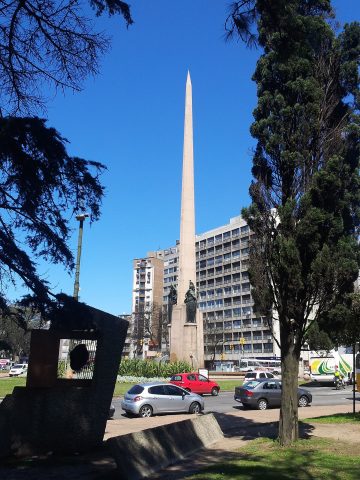
The Rambla carries history. Near Punta Carretas, a memorial honors the victims of Uruguay’s dictatorship. At Ramírez Beach, a sculpture pays tribute to Montevideo’s founders. These markers are subtle but remind you that the Rambla is more than a promenade—it’s part of the city’s identity.
Walking the Rambla lets you see Montevideo as it is. There’s no tourist rush, no pressure. The city moves at its own pace. You might spend a day covering its length or return to the same spot weekly, noticing a hidden bench, a café where the barista remembers your order, or a stretch of sand where the waves sound louder. The Rambla doesn’t dictate how to experience it. It simply exists, and in that, it offers something rare: a place where everyone can belong.