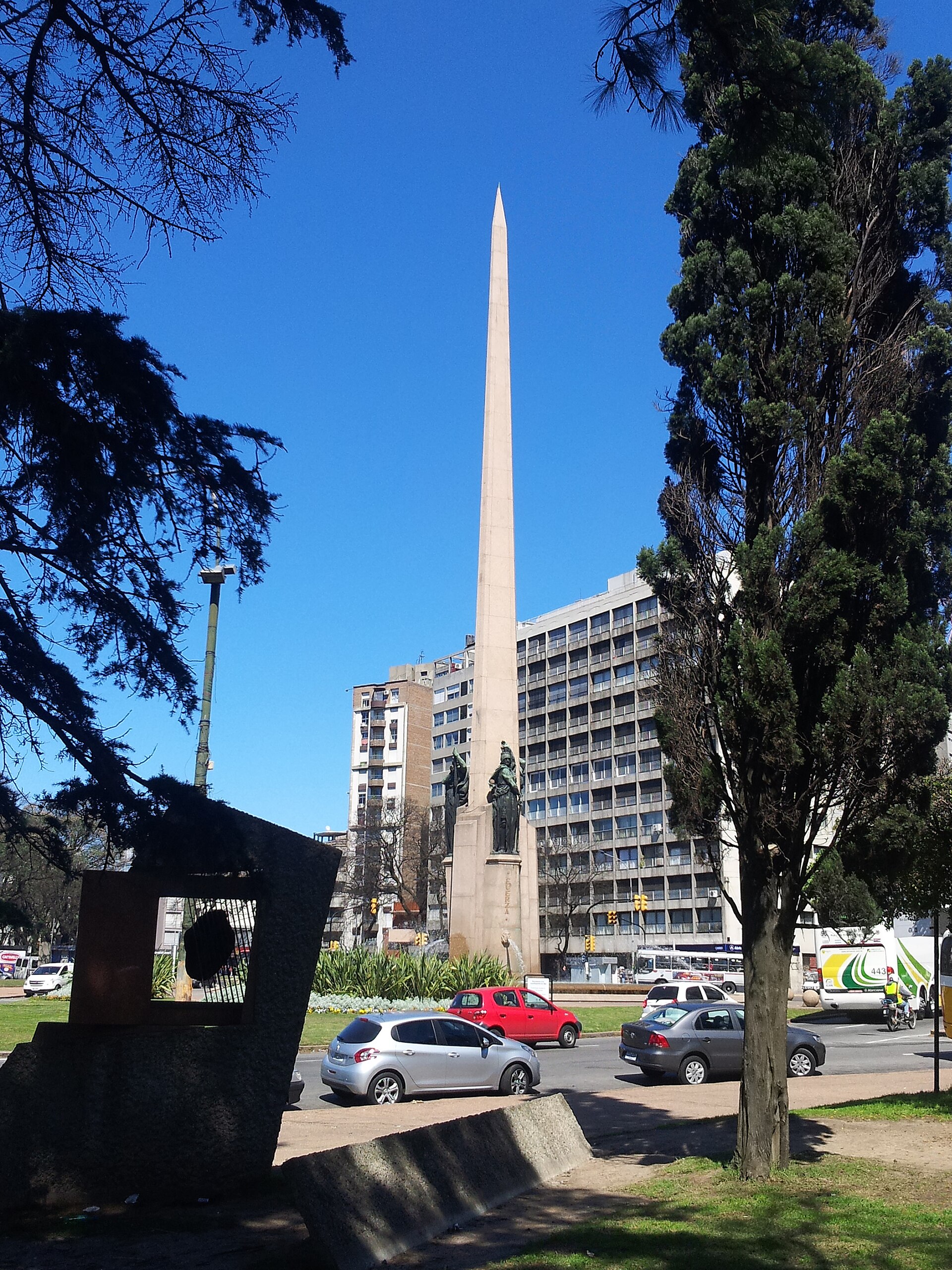
Montevideo’s Obelisk is one of those landmarks most people walk past without a second glance. It stands at the intersection of Avenida 18 de Julio and Bulevar Artigas, a busy corner where the city’s daily rhythm pulses around it. The monument is tall, unassuming—a subtle reminder that Montevideo blends history with modernity.
Built in 1938, the Obelisk marks the centenary of Uruguay’s first constitution, adopted in 1830. That document was a turning point for the young nation, which had recently emerged from decades of struggle for independence. The constitution established the ideals that shaped Uruguay: freedom, democracy, and self-determination. The monument’s construction came as Montevideo expanded, modernizing and leaving its colonial past behind.
The Obelisk’s design is simple, inspired by ancient Egyptian obelisks but without excessive grandeur. Its three granite faces feature bronze bas-reliefs of key figures in Uruguay’s history. One honors José Gervasio Artigas, the revolutionary leader tied to the country’s fight for independence. Another depicts Juan Antonio Lavalleja, the general who led the final push against colonial rule. The third pays tribute to Fructuoso Rivera, Uruguay’s first president. These figures represent the nation’s early development, from revolution to statehood.
The top of the Obelisk holds a bronze statue. Some see it as freedom; others, victory. It reinforces the monument’s theme of resilience and hope. The small plaza around it offers benches where people sit, observe, or take a break from the city’s hustle. The spot is a popular meeting point, easy to find and familiar to everyone.
The Obelisk was originally meant to be part of a larger memorial complex. Plans for additional structures were scaled back, leaving it as the centerpiece. Even so, it hosts official ceremonies and public gatherings. Its understated presence makes it meaningful—it doesn’t demand attention but earns it.
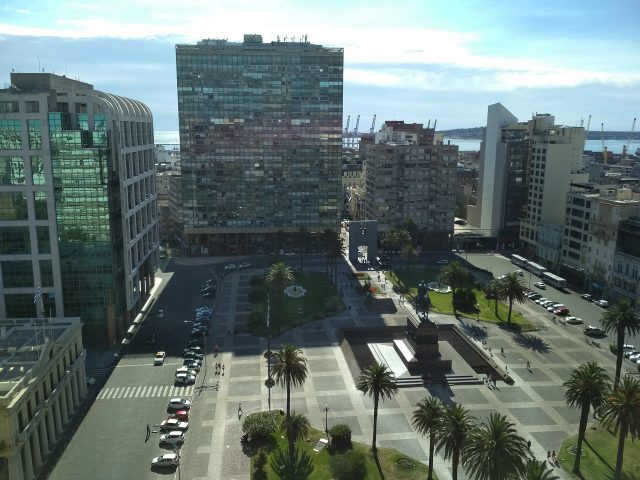
For Uruguayans, the Obelisk symbolizes national identity. It reminds them that independence and democracy were hard-won. It connects to other historic sites in Montevideo, like Plaza Independencia and the Artigas Mausoleum, forming a trail through the city’s history.
Today, the Obelisk is surrounded by modern Montevideo. Trams rattle past, cars hum along the streets, and nearby cafés buzz with chatter. Unlike some monuments, this one is part of daily life. Locals pose for photos in front of it, tourists read the inscriptions, and children play on the grass. History feels alive here.
On national holidays, the Obelisk becomes a focal point. Flags and flowers adorn it during celebrations or reflections. It reinforces the idea that history isn’t just in the past—it’s part of the present.
For visitors, the Obelisk is a starting point. From here, you can explore the historic center, visit museums, or stroll through parks. For those who know the city, it’s a familiar landmark, a place to reconsider the forces that shaped Uruguay. Monuments like this one preserve memory and the stories that define a community.