The Legislative Palace in Montevideo is one of those places that doesn’t immediately demand attention, yet reveals unexpected depth upon closer inspection. More than just a functional space for Uruguay’s lawmakers, it stands as a monument to the country’s history, embodying the ideals of republicanism and democracy that took root in early 20th-century Latin America. Built during a time of optimism and progress, the building reflects both the aspirations of its era and the enduring principles of governance in Uruguay.
From the outside, the palace presents a dignified, understated grandeur. Its neoclassical facade, with its columns and balanced proportions, echoes European architectural traditions while remaining distinctly Uruguayan. The design avoids excessive ornamentation, favoring a sense of order and stability—qualities that resonate with the nation’s political identity. Inside, the layout reinforces this impression of openness, with high ceilings, expansive halls, and ample natural light creating an atmosphere of transparency. Of course, the realities of political life remain behind closed doors, but the architecture itself suggests a commitment to accessibility.
The palace’s construction coincided with a period of remarkable growth for Uruguay. In the early 1900s, the country was one of the most prosperous and progressive in the region, and Montevideo was expanding rapidly. The Legislative Palace wasn’t just an administrative hub; it became a symbol of that progress, a physical representation of the nation’s democratic ambitions. Today, it continues to serve its original purpose while welcoming visitors who want to explore its halls and learn about the workings of Uruguay’s parliament.
One of the most striking spaces inside is the Chamber of Deputies, where every detail carries meaning. The wooden paneling, the weighty chandeliers, and the national coat of arms above the speaker’s podium all reflect the traditions and values that underpin Uruguay’s political system. Yet the atmosphere isn’t overly ceremonial. This is a working government building, not a museum, and the sense of purpose is palpable. Visitors might not find flashy exhibits or dramatic displays, but they will see how a modern democracy functions in practice.
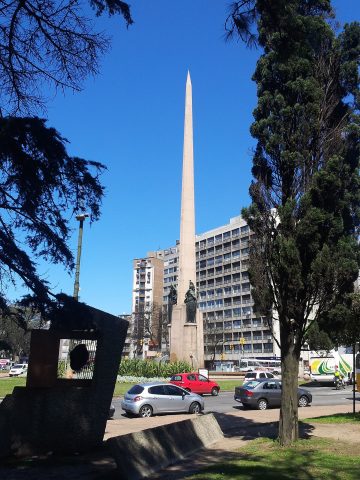
Adjacent to the palace, a small park offers a quiet respite from the city’s bustle. Unlike the crowded waterfront or the historic old town, this area feels distinctly local. There are no tourist crowds, just the occasional passerby or a politician stepping out after a session. It’s a place where Montevideo’s everyday rhythm is on full display, unfiltered and unhurried. The park itself is unremarkable in the best sense—simple, green, and unassuming, much like the palace it borders.
The Legislative Palace isn’t a typical tourist attraction. There are no guided spectacles or interactive experiences, just the opportunity to observe one of the country’s most important institutions in action. For those with an interest in history or politics, it’s a compelling stop, offering insight into how Uruguay’s government operates. For others, it might simply be a chance to reflect on the relationship between architecture and power, and how both shape the life of a city.
Over its more than a century of existence, the building has undergone changes, adapting to new needs while retaining its core character. These modifications haven’t erased its history; instead, they’ve layered it, giving the palace a sense of continuity. It feels like a place that has witnessed the evolution of a nation, from its early democratic experiments to the present day. That quiet resilience is part of its appeal.
If you find yourself in Montevideo, it’s worth taking a moment to appreciate the Legislative Palace, even if you don’t go inside. The building and its surroundings offer a glimpse into Uruguay’s past and present—a reminder of the ideals that shaped the country and the institutions that sustain them. It’s not just a structure of stone and marble; it’s a living piece of history, still very much in use, still very much relevant.