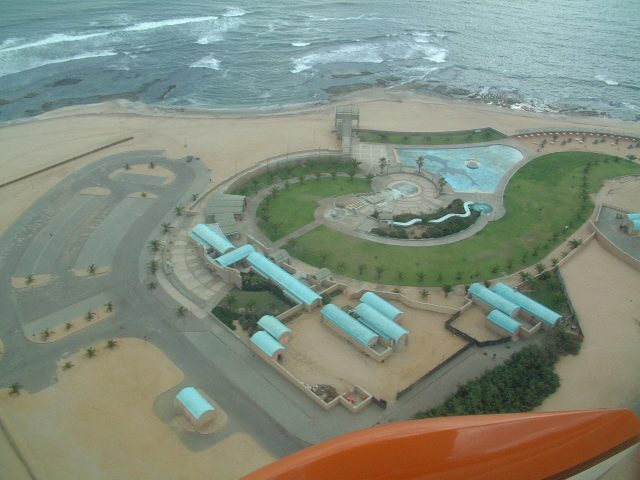
Walvis Bay is a place where the desert meets the ocean, and nowhere is this more evident than in its quiet but remarkable Bird Park. Tucked away near the edge of the lagoon, this small sanctuary feels like a hidden corner of the world, where the rhythms of nature take over. It’s not a grand zoo or a polished tourist attraction, but rather a modest space where birds—both local and migratory—find refuge in an environment that mimics their natural habitat. The park is simple in its design, with shallow pools, sandy patches, and clusters of reeds that provide shelter and nesting spots. There’s no fanfare here, just the steady presence of flamingos, pelicans, and other waterbirds going about their daily routines.
The lagoon itself is the real star of the show. It’s one of the most important wetland areas along the southern African coast, a vital stopover for thousands of migratory birds traveling between Europe and Africa. During the summer months, the water teems with life, drawing flocks of greater and lesser flamingos that paint the shallows pink with their numbers. Their elegant, almost choreographed movements—filtering water through their beaks, wading in slow circles—are mesmerizing to watch. The lagoon is also home to African black oystercatchers, Cape cormorants, and the occasional pair of fish eagles, their sharp calls cutting through the salty breeze.
What makes Walvis Bay Bird Park special is its unassuming nature. There are no grand enclosures or dramatic exhibits, just a few well-placed viewing platforms and benches where visitors can sit and observe. The park feels more like a pause in the landscape than a destination in itself, a place to slow down and notice the details. The air is filled with the sounds of birds—chattering, squawking, the occasional splash of a pelican diving for fish—and the distant hum of the town blending into the vastness of the desert and sea. It’s a reminder that even in a place as stark as the Namibian coast, life thrives in unexpected ways.
The history of the park is tied to the lagoon’s role as a natural sanctuary. Long before it became a designated bird park, the area was a gathering point for birds and a source of sustenance for local communities. The Walvis Bay lagoon has always been a critical feeding ground, its nutrient-rich waters supporting not just birds but also fish, crustaceans, and even seals. Over time, as the town grew, the need to protect this fragile ecosystem became clear. The bird park was established not just to attract visitors, but to serve as a buffer between human activity and the natural world, ensuring that the lagoon’s delicate balance remained intact.
For those who visit, the park offers a chance to see Namibia’s wildlife in a different light. Unlike the dramatic landscapes of Etosha or the Skeleton Coast, this is a place of subtlety. The birds here are not the kind that inspire gasps of awe, but rather quiet admiration. A flock of flamingos lifting off in unison, their wings catching the light as they rise over the water, is a sight that lingers in the memory. The pelicans, with their ungainly but endearing waddles, seem almost comical until they take flight, their massive wingspans making them look like prehistoric creatures. Even the smaller birds—a pied kingfisher perched on a reed, a sandpiper darting along the shore—add to the sense that this is a place where nature is allowed to exist on its own terms.
The park is also a reflection of Walvis Bay’s unique character. The town itself is a mix of industry and wilderness, where fishing boats share the harbor with flamingos and where the desert’s edge is never far away. The bird park sits at this intersection, a small but meaningful reminder of the natural world’s persistence. It’s a place where the desert’s harshness softens into something gentler, where the ocean’s vastness is distilled into the intimate scale of a lagoon. There’s no need for grand gestures here; the beauty lies in the simplicity of the scene.
Visiting the park doesn’t require much planning. There are no guided tours or strict schedules, just the open invitation to wander, sit, and watch. The best time to come is early morning or late afternoon, when the light is soft and the birds are most active. The lagoon’s waters reflect the sky, shifting from pale blue to gold as the sun moves across the horizon. On windy days, the surface ripples with whitecaps, and the birds huddle closer to the shore, their feathers ruffled by the breeze. On still days, the water is a mirror, doubling the world above and below.
For those who take the time to visit, Walvis Bay Bird Park offers more than just a chance to see birds. It’s a place to step out of the rush of travel and into a slower, more contemplative rhythm. The park doesn’t demand attention; it earns it through the quiet persistence of life in an unlikely place. Whether you’re a birdwatcher, a photographer, or simply someone looking for a moment of peace, it’s a reminder that some of the most meaningful experiences are found not in the grand or the spectacular, but in the understated beauty of the natural world.