Walvis Bay is one of those places where the land and sea meet in a way that feels almost accidental, as if the ocean hesitated just long enough to let a sliver of desert settle along its edge. The port here isn’t just a functional hub of cranes and shipping containers—it’s a quiet witness to centuries of trade, conflict, and survival in one of the world’s most unforgiving yet beautiful landscapes. The town itself is small, with a population that barely scrapes past 100,000, but its harbor has always been disproportionately important, a rare deep-water anchorage on a coast otherwise dominated by treacherous shallows and shifting sands.
The history of Walvis Bay is a story of contrasts. For thousands of years, the indigenous Topnaar Nama people lived along this coast, relying on the sea for sustenance and the desert for shelter. Their presence was subtle, marked by shell middens and the occasional footprint in the dunes, but their knowledge of the land was deep. When European explorers arrived in the late 15th century, they saw something else entirely—a natural harbor that could serve as a gateway to the riches of Africa’s interior. The Portuguese were the first to map it, though they never settled, and for centuries, the bay remained a place of passing ships rather than permanent homes.
By the 19th century, the British had claimed Walvis Bay as a strategic outpost, recognizing its value as a coaling station for steamships rounding the Cape of Good Hope. The town that grew around the port was a rough-and-tumble place, built by sailors, traders, and adventurers who saw opportunity in the harsh environment. The architecture still carries traces of that era—low-slung buildings with corrugated iron roofs, warehouses with peeling paint, and the occasional colonial-era structure that has somehow survived the salt air and desert winds. The most striking of these is the old railway station, a relic of a time when Walvis Bay was connected to the rest of Namibia by a narrow-gauge line, a lifeline for goods and people moving between the coast and the interior.
The port itself is a study in practicality. Unlike the grand harbors of Europe or the bustling docks of Asia, Walvis Bay’s waterfront is unadorned, its beauty lying in its functionality. The deep-water channel allows large vessels to dock with ease, a rarity along this stretch of coast, and the cranes that line the quay are a constant presence, loading and unloading cargo with methodical precision. The air here is thick with the scent of salt and diesel, the sound of gulls mingling with the hum of machinery. It’s not a place that invites lingering, but there’s a certain rhythm to it, a pulse that speaks to the steady flow of goods—copper from Zambia, beef from Botswana, manufactured goods from South Africa—passing through on their way to markets around the world.
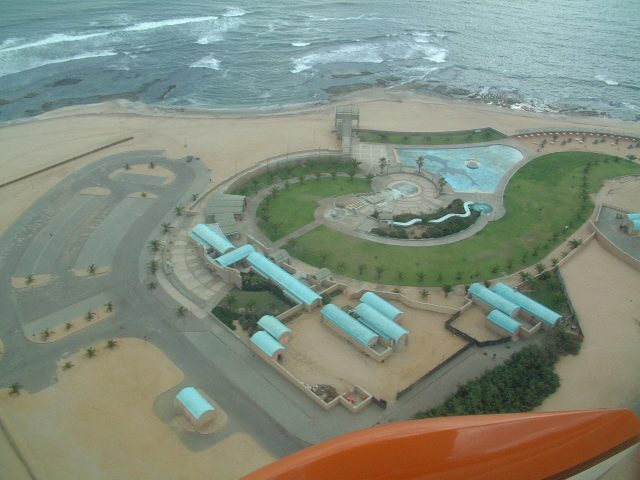
Beyond the port, the town spills out into the desert in a way that feels both deliberate and haphazard. The streets are wide and quiet, lined with palm trees that seem almost out of place in the arid landscape. The buildings are low and spread out, as if reluctant to crowd one another in a place where space is abundant. There’s a sense of transience here, as if the town is still deciding what it wants to be. Some parts feel like they’ve been frozen in time, with old fishing boats rotting on the shore and abandoned warehouses standing sentinel over the water. Others are slowly being reclaimed by the desert, sand creeping in from the dunes that loom just beyond the town’s edge.
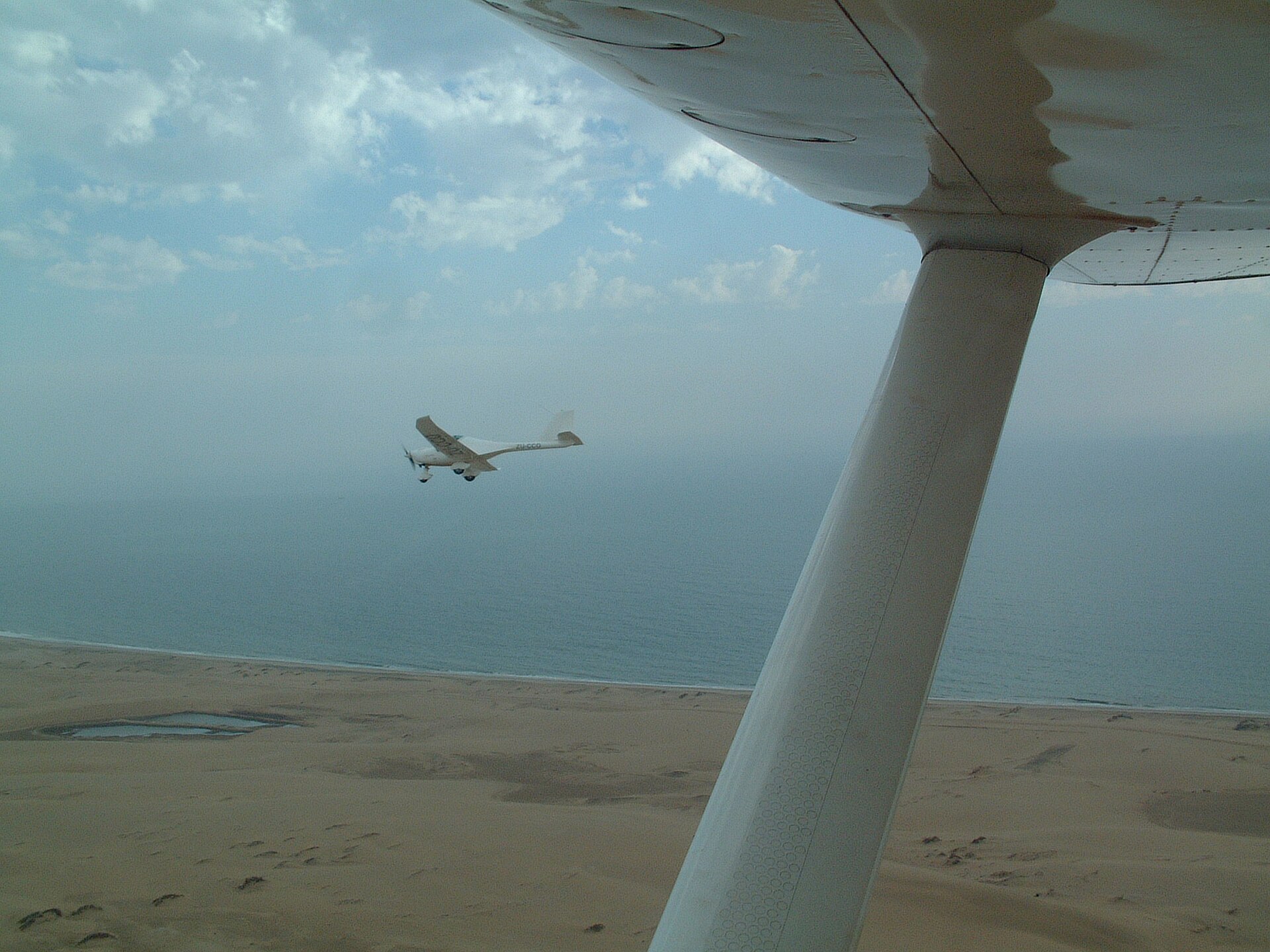
The real magic of Walvis Bay, though, lies in its surroundings. The Namib Desert begins just outside the town, its dunes rising like waves frozen in time. The contrast between the deep blue of the Atlantic and the golden hues of the sand is striking, a reminder of how close the extremes of this landscape are to one another. The desert here isn’t just a backdrop—it’s an active participant in the life of the town. Sandstorms can roll in without warning, turning the air opaque and forcing everything to a standstill. The dunes shift constantly, reshaping the coastline in slow motion, and the wind carries the scent of the ocean far inland, a reminder that the sea is never far away.
For all its industrial grit, Walvis Bay has a way of surprising visitors. The lagoon just north of the port is a haven for birdlife, a place where flamingos wade in shallow waters and pelicans glide low over the surface. The birds are a stark contrast to the heavy machinery of the port, a reminder that nature persists even in places shaped by human industry. The town’s beaches are another unexpected delight—long stretches of sand where the only footprints are likely to be your own. The water is cold, thanks to the Benguela Current, but the solitude is worth the chill. On a clear day, you can see all the way to the horizon, where the ocean meets the sky in a seamless line.
Walvis Bay isn’t a place that demands attention, but it rewards those who take the time to look beyond its utilitarian facade. There’s a quiet dignity to it, a sense that it has always been here, doing its job without fuss. The port may be its reason for existence, but the town has grown into something more—a place where the desert and the sea coexist, where history is written in the rust on old ships and the sand in the streets. It’s not a destination for those seeking grand monuments or lively nightlife, but for those who appreciate the beauty of a place that simply is, it has a charm all its own.