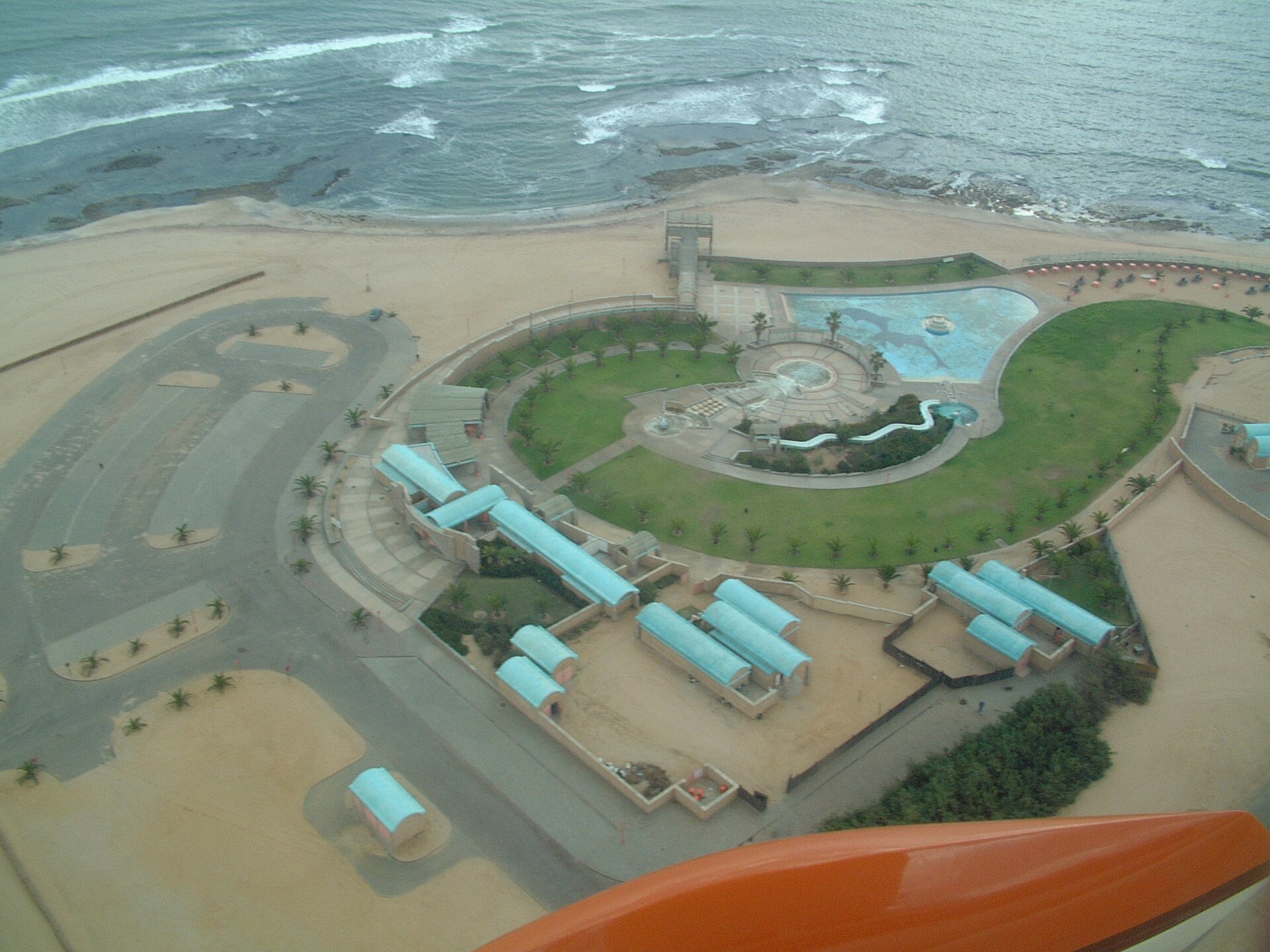
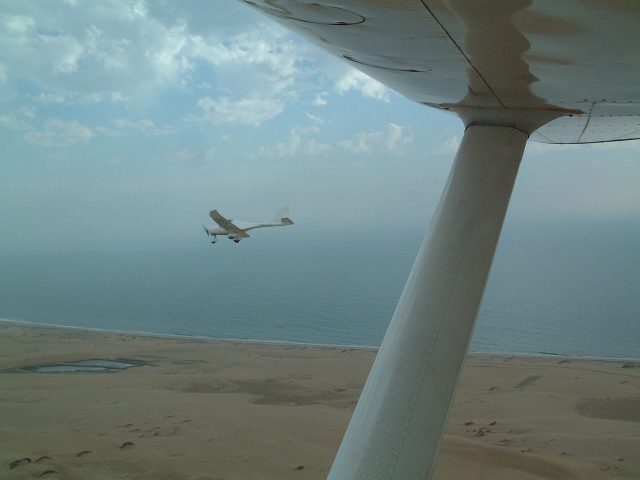
Walvis Bay’s Dolphin Beach is one of those places where the ocean feels closer to the sky than to the land. Stretching along the edge of the Namib Desert, this long, windswept shoreline is where the cold Atlantic meets the dunes in a quiet, almost solemn collision. The beach isn’t the kind of postcard-perfect stretch of golden sand you might expect from a tropical destination—here, the sand is pale, almost silver under the sun, and the water is a deep, shifting blue-gray, often choppy with the wind that sweeps in from the south. It’s a place where the elements feel raw and unfiltered, where the horizon seems to stretch forever, and where the only constant is the sound of waves breaking against the shore.
The name Dolphin Beach isn’t just for show. Bottlenose and Heaviside’s dolphins are frequent visitors, gliding through the waves just beyond the breakers, their dorsal fins cutting through the water in quick, graceful arcs. They’re often spotted from the shore, especially in the early mornings when the light is soft and the wind hasn’t yet picked up. Sometimes, if you’re lucky, you might see them riding the bow waves of fishing boats returning to the harbor, their sleek bodies moving in effortless sync with the water. The dolphins aren’t the only marine life here—seals occasionally haul themselves onto the sand, barking at each other in rough, guttural voices, while flocks of flamingos wade in the shallow lagoons just behind the dunes, their pink feathers standing out against the muted colors of the desert.
The beach itself is wide and open, with few of the usual trappings of a tourist hotspot. There are no beachfront bars, no rows of sun loungers, no vendors selling trinkets or cold drinks. Instead, the landscape is dominated by the natural rhythm of the place: the wind shaping the dunes, the tide carving patterns into the sand, the occasional 4x4 track left by someone who drove too close to the water. The lack of development gives Dolphin Beach a sense of isolation, even though the town of Walvis Bay is just a short drive away. It’s the kind of place where you can walk for miles without seeing another person, where the only footprints in the sand might be your own.
Walvis Bay has long been a working town, its identity tied to the ocean and the industries that depend on it. The harbor is one of the busiest in southern Africa, a hub for fishing vessels, cargo ships, and even the occasional naval vessel. Dolphin Beach lies just to the north of this industrial heart, a quiet counterpoint to the clatter of cranes and the hum of engines. The contrast is striking—on one side, the ordered chaos of the port, with its stacks of containers and the constant movement of trucks; on the other, the slow, unhurried pace of the beach, where the only movement is the drift of sand and the rise and fall of the tide. It’s a reminder that Namibia’s coastline is as much about industry as it is about wilderness, and that the two can exist side by side without one overshadowing the other.
The history of this stretch of coast is one of resilience. The Namib Desert, which meets the ocean here, is one of the oldest in the world, a place where life has adapted to extremes of heat and aridity. The people who have lived along this coast—first the indigenous Topnaar Nama, and later European settlers—have always relied on the sea for survival. The Topnaar, a subgroup of the Nama people, have lived in the area for centuries, their way of life shaped by the rhythms of the desert and the ocean. They harvested !nara, a wild melon that grows in the dunes, and fished the rich waters of the Atlantic, their knowledge of the land and sea passed down through generations. Today, their presence is still felt in the region, though much of their traditional way of life has faded with time.
For visitors, Dolphin Beach offers a chance to step into this quiet, enduring landscape. There are no grand attractions here, no must-see landmarks or guided tours. Instead, the appeal lies in the simplicity of the place—the way the light changes over the water at different times of day, the way the wind carries the scent of salt and seaweed, the way the sand feels cool and damp beneath your feet even on the hottest afternoons. It’s a place for slow walks, for watching the dolphins play in the surf, for sitting on the dunes and listening to the waves. The best time to visit is early morning or late afternoon, when the sun is low and the colors of the desert and ocean are at their most vivid.
The beach is also a gateway to other parts of the Walvis Bay area. Just to the south lies the Walvis Bay Lagoon, a shallow, sheltered body of water that’s a haven for birdlife. Flamingos, pelicans, and cormorants are common sights here, their calls mixing with the sound of the wind. Kayaking in the lagoon is a popular activity, offering a different perspective on the landscape—one where you’re not just an observer, but a part of the scene. To the north, the dunes rise steeply, their slopes carved into dramatic ridges by the wind. Sandboarding down these dunes is a thrill for those who enjoy adventure, though it’s not for the faint of heart.
Dolphin Beach isn’t the kind of place that demands your attention. It doesn’t have the dramatic cliffs of the Skeleton Coast or the otherworldly beauty of Sossusvlei’s dunes. Instead, it has a quiet, understated presence, a sense of being exactly what it is—a stretch of sand and sea where the natural world moves at its own pace. It’s the kind of place that stays with you long after you’ve left, not because of any single moment or spectacle, but because of the way it makes you feel: small, in the best possible way, against the vastness of the ocean and the desert. If you come here expecting excitement or entertainment, you might leave disappointed. But if you come looking for space, for silence, for the simple pleasure of watching the world unfold as it has for thousands of years, then Dolphin Beach might just be the perfect place.