Walvis Bay’s lagoon is one of those places where the land seems to dissolve into the sea without warning. The water here isn’t the deep blue of the open Atlantic but a shifting palette of greens, browns, and silvers, depending on the light and the tides. It’s a shallow, sheltered body of water, separated from the ocean by a long, narrow sand spit that curves like a protective arm around the bay. The lagoon is part of the larger Walvis Bay wetlands, a place where the desert meets the sea in a quiet, almost accidental collision of ecosystems.
The history of the lagoon is tied to the rhythms of the ocean and the movements of people who have passed through this stretch of coast for centuries. Long before European explorers arrived, the Topnaar Nama people lived along these shores, relying on the lagoon’s abundance of fish and shellfish. Later, in the 19th century, Walvis Bay became a key port for whaling ships, and the lagoon provided a natural harbor where vessels could anchor safely. The town that grew around it was rough, functional—a place built for trade and survival rather than beauty. But the lagoon itself remained largely untouched, a quiet counterpoint to the bustle of the port.
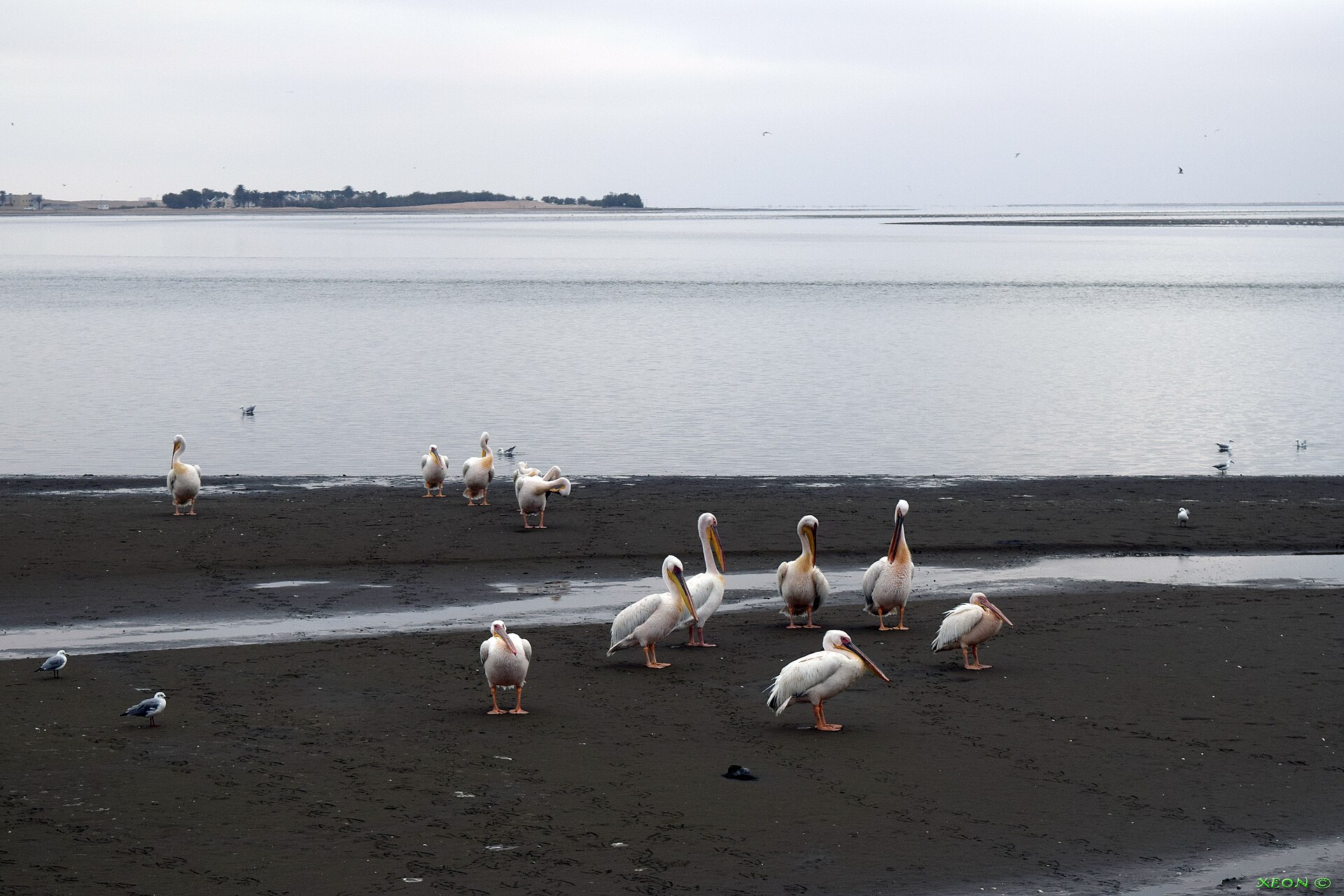
What makes the lagoon unusual is how it feels both wild and accessible at the same time. The water is calm, often mirroring the sky so perfectly that it’s hard to tell where one ends and the other begins. On windless days, the surface is so still that flamingos wading near the shore appear to be standing on glass. The birds are one of the lagoon’s most striking features—thousands of them, their pink feathers bright against the muted colors of the water and sand. Greater and lesser flamingos gather here in large numbers, along with pelicans, cormorants, and a variety of waders. The lagoon is part of the Walvis Bay Ramsar site, recognized internationally for its importance as a stopover for migratory birds traveling between Europe and Africa.
The sand spit that shelters the lagoon is a thin, fragile barrier between the calm waters and the restless Atlantic. On one side, the lagoon stretches inland, its edges lined with salt pans and low dunes. On the other, the ocean crashes against the shore in long, rolling waves. The contrast is striking—the lagoon’s stillness versus the ocean’s constant motion. At low tide, the water recedes to reveal vast stretches of mudflats, where crabs scuttle and small fish dart through the shallows. It’s a place that changes with the hours, the seasons, and the tides, never quite the same from one visit to the next.
The town of Walvis Bay has grown around the lagoon, but it hasn’t swallowed it. The port remains the economic heart of the area, with cargo ships and fishing boats moving in and out of the harbor. Yet the lagoon retains a sense of separation, as if it exists in its own time. There are no grand resorts or tourist traps here—just a few small jetties, a handful of boats, and the occasional fisherman casting a line from the shore. The air smells of salt and damp sand, with a faint tang of fish from the nearby processing plants. It’s not a place that tries to impress; it simply is.
For those who take the time to explore, the lagoon offers a different kind of coastal experience. There are no crowded beaches or loud bars, just the quiet interplay of water, sky, and wildlife. Early mornings are the best time to visit, when the light is soft and the birds are most active. The flamingos, in particular, are a sight to behold—hundreds of them moving in unison, their long legs stirring the shallow water as they feed. The sound of their calls carries across the lagoon, a low, chattering murmur that blends with the rustle of the wind.
The lagoon is also a place of contrasts. On one side, the desert stretches inland, its dunes rising like golden waves against the horizon. On the other, the Atlantic rolls in, its waters cold and dark. The meeting of these two worlds—desert and ocean—gives the lagoon its unique character. It’s a place where life persists in unexpected ways: where fish thrive in brackish water, where birds find refuge in the middle of a vast, arid landscape, and where people have come for centuries to draw sustenance from the sea.
There’s a sense of timelessness here, as if the lagoon has always been this way and always will be. The tides rise and fall, the birds come and go, and the town of Walvis Bay continues its quiet existence on the edge of it all. It’s not a place that demands attention, but for those who pause to look, it offers a glimpse of something rare—a corner of the world where nature still sets the pace.