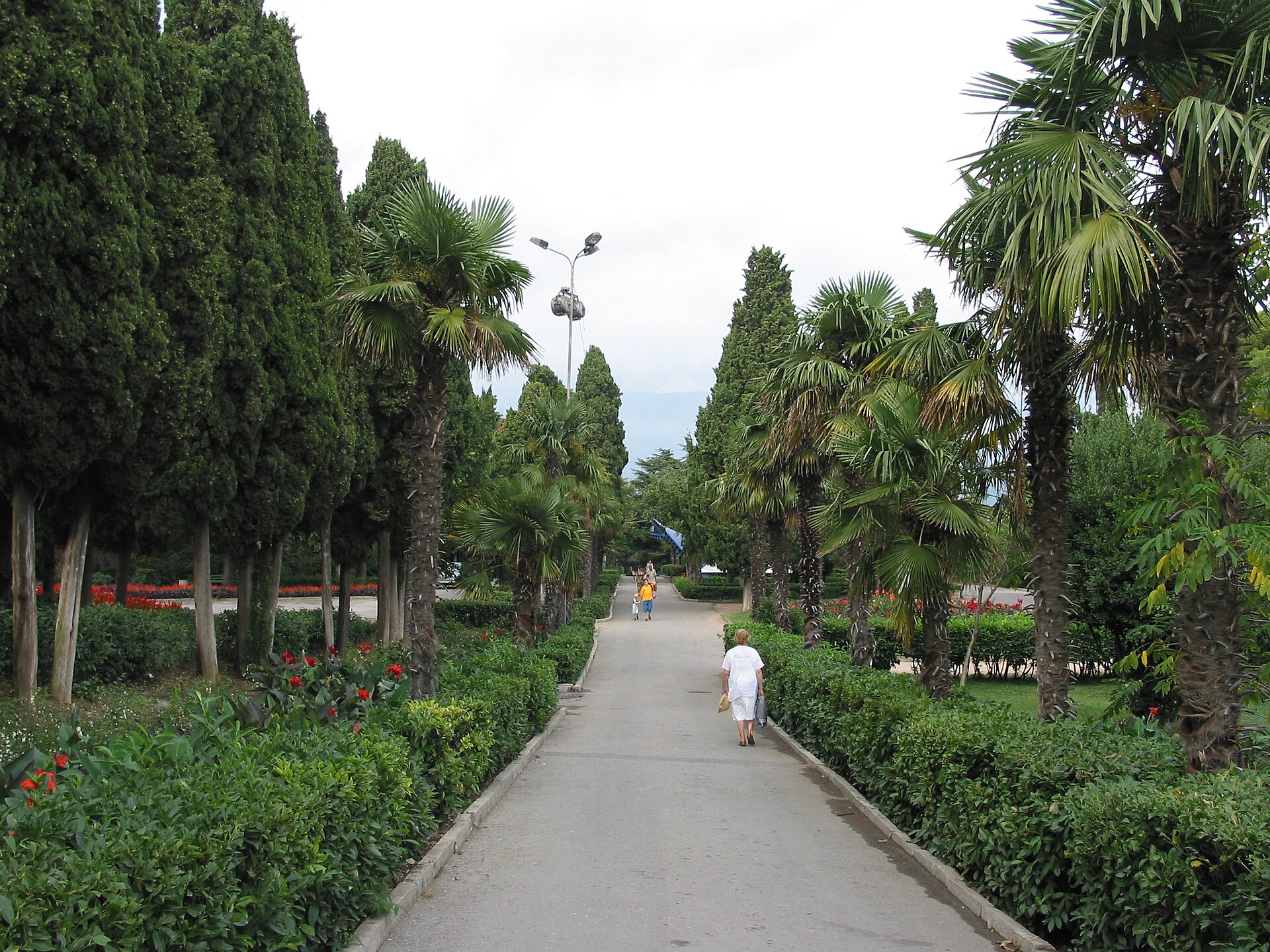
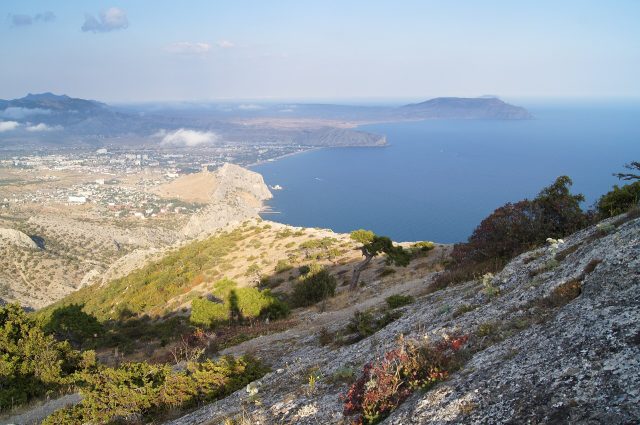
Yalta’s Primorsky Park, named after Yuri Gagarin, is where the city and the sea merge so seamlessly that the line between them blurs. Stretching along the waterfront from the center toward the western edge of town, it has become an inseparable part of Yalta’s landscape. There are no rigidly manicured flowerbeds or overly formal walkways here—just the quiet rhythm of waves and wind, which sometimes brushes gently through the treetops and other times gusts with the force of the nearby mountains.
The park’s origins trace back to the late 19th century, when Yalta was transforming from a modest settlement into a fashionable resort. At the time, this stretch of coastline was occupied by private estates, docks, and warehouses. As the city grew, so did the idea of creating a public space where locals and visitors could relax by the sea. The first trees were planted in the early 20th century, but the park truly took shape during the Soviet era, when it was expanded and landscaped. In the 1960s, it was named after the first cosmonaut, a nod to the era’s enthusiasm for space exploration, though the name has since become simply part of Yalta’s character.
The park’s architecture is understated, designed to complement rather than compete with nature. There are no grand monuments or ostentatious structures—just the natural flow of the coastline. The main attraction is the promenade, which curves along the shore, sometimes hugging the water’s edge and other times veering inland. Wide, paved paths are lined with benches, offering a place to sit with a coffee or watch the waves. Old trees—stone pines, cypresses, and plane trees—provide shade on hot days and fill the air with the scent of resin. Scattered throughout are small pavilions and gazebos from the mid-20th century, their simple design blending effortlessly into the surroundings.
For Yalta, Primorsky Park is more than just a green space—it’s where the city’s daily life unfolds. Locals come here for morning runs, afternoon strolls with children, or evening rendezvous. The park has served as the backdrop for countless photographs, memories, and stories. While it occasionally hosts festivals or open-air concerts, most of the time it exists in a quiet, unhurried rhythm. For residents, it feels like an extension of home; for visitors, it offers a first glimpse into the easygoing pace of life in Yalta.
The park’s atmosphere shifts with the seasons. In summer, it’s lively—cafés hum with activity, music drifts from the promenade, and the sea beckons with its cool embrace. Autumn brings a quieter beauty, as the trees turn gold and crimson, and the air carries the scent of fallen leaves. Winter is hushed, with only the wind and waves breaking the stillness. Spring arrives gradually: first with the bloom of early flowers, then the return of birds, and finally the reopening of seasonal cafés.
One of the park’s defining features is its openness. There are no fences or gates, and it’s accessible at any hour. This creates a sense of shared ownership—anyone can wander in at dawn to watch the sunrise over the water or linger until late, when the promenade lights flicker on and distant ships glow on the horizon. The park doesn’t dictate how it should be experienced; it simply offers space for whatever you bring to it.
Though named after Gagarin, the park doesn’t feature any monuments or memorials to the cosmonaut. The name is more a reflection of its time, when such dedications were common. Yet this lack of grand symbolism allows the park to remain a natural, unpretentious place where history and everyday life intertwine. You could spend hours wandering the paths without thinking about its namesake and still feel connected to the past—through the old trees, the sound of the sea, or the people who return year after year.
Primorsky Park isn’t the kind of place that dazzles at first glance. Its charm unfolds slowly, like a story. There are no flashy attractions or exotic plants, but there’s something more enduring: authenticity. It’s a corner of Yalta that doesn’t try to be anything other than what it is, and that’s precisely why it draws people in. You might walk past without a second thought, or you might stay for a while, soaking in the atmosphere of a southern city where the sea, mountains, and people have coexisted in harmony for over a century.