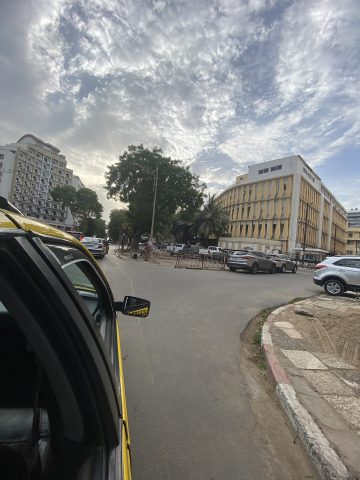
The Presidential Palace in Dakar is one of those places that doesn’t immediately demand attention, yet its significance becomes clearer once you know its story. Perched on the plateau at the heart of the city, it overlooks the Atlantic, standing among palm trees and the stern lines of government buildings. For most visitors, the palace remains more of a symbol than a tourist attraction—a quiet presence that speaks volumes about Senegal’s journey over the past century.
Built in the early 1900s, when Senegal was still part of French West Africa, the palace originally served as the governor’s residence. Its architecture reflected the colonial vision of grandeur and authority: thick walls, soaring ceilings, and vast halls designed to project the power of the metropole. After Senegal gained independence in 1960, the building transitioned into the hands of the new nation’s leaders, becoming the official residence of the president. Since then, it has witnessed pivotal moments—foreign dignitaries arriving for state visits, treaties being signed, and decisions made that would shape the country’s future.
The palace’s design blends European traditions with subtle local influences. The neoclassical facade, with its columns and symmetrical windows, is unmistakably colonial, yet there’s an undercurrent of African aesthetics in the materials and decorative details. Inside, traces of the original decor remain: marble staircases, crystal chandeliers, and antique furniture. While most of the interior is off-limits to the public, the exterior alone offers a glimpse into the building’s layered history.
The surrounding Plateau district is Dakar’s administrative and financial hub, where ministries, banks, and corporate offices line the streets. On weekdays, the area buzzes with activity as officials and businesspeople rush between meetings. But step away from the main thoroughfares, and the pace slows. Quiet squares appear, flanked by old mansions and unhurried cafés where locals sip strong coffee and watch the city go by. Here, the rhythm of the capital feels both deliberate and alive.
For Senegalese people, the Presidential Palace is more than just a building—it’s a symbol of statehood. Official ceremonies take place here, foreign leaders are received within its walls, and decisions that affect millions are made behind closed doors. Yet for many Dakar residents, the palace is simply part of the cityscape, something they pass by daily without much thought. It exists as a quiet reminder of the country’s past and present, a fixture in the urban landscape.
Gaining access to the palace’s interior is rare unless you’re part of an official delegation or a high-ranking guest. Still, the building’s imposing presence is undeniable. Guards in ceremonial uniforms stand watch, and the grounds are meticulously maintained. Occasionally, small groups of tourists gather to take photos in front of the facade, but more often than not, the palace serves as a backdrop to the everyday life of the city.
In recent years, efforts to beautify Dakar have brought more greenery to the area around the palace. Trees have been planted, and flowerbeds added, part of a broader initiative to make the capital more livable. Yet the palace itself remains unchanged—a monument to the era when Senegal first began forging its identity as an independent nation.
If you find yourself in Dakar, a stroll through the Plateau district is worth your time, if only to see the palace from a distance. It’s not a place to linger for hours, but it offers a deeper understanding of the city and the country. There are no crowds, no souvenir stalls, no pushy vendors—just a sense of quiet history and the unspoken weight of what happens behind those walls.