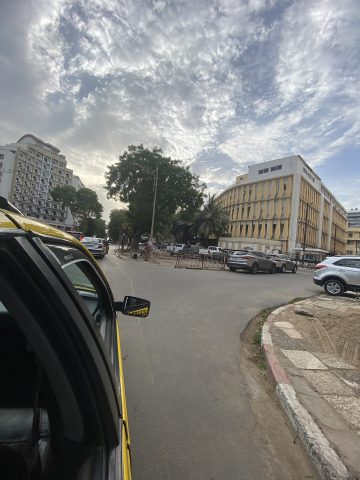
The Museum of African Civilizations in Dakar is one of those rare places where the continent’s history doesn’t just sit behind glass—it breathes, unfolds, and invites you to step inside. Tucked into the Plateau district, the heart of Senegal’s capital, the museum stands where colonial-era life once pulsed, now surrounded by the country’s cultural and administrative institutions. The building itself is part of the story. Its sweeping curves and airy galleries don’t just house artifacts; they create a space where the past feels immediate, where the context of Africa’s civilizations isn’t just observed but experienced.
The museum opened in 2018, but its origins stretch back decades. The idea of a pan-African institution dedicated to telling the continent’s story on its own terms emerged in the mid-20th century, as newly independent nations grappled with how to preserve and present their heritage. For years, the project stalled—financial hurdles, political shifts, and competing priorities delayed its realization. When it finally came to life, it was with the support of China, a partnership that reflected Africa’s evolving place in the world. That collaboration wasn’t just about funding; it was a statement, a recognition that Africa’s narrative could no longer be sidelined.
Inside, the museum spans millennia, from ancient archaeological finds to contemporary art. The exhibits pull from digs across the continent—rock paintings from the Sahara, bronze sculptures from Ife that once upended European notions of African artistry. There are textiles woven with centuries-old techniques, pottery shaped by hands long gone, metalwork that speaks to advanced craftsmanship. Each piece is more than an object; it’s evidence of complex societies, belief systems, and technologies that thrived long before colonialism. The museum doesn’t just display these artifacts; it lets them tell their own stories, unfiltered.
What sets this museum apart is its approach to storytelling. Instead of dividing history into rigid eras or regions, the exhibits weave together themes that cut across time and geography—trade, migration, spirituality, humanity’s relationship with the land. One gallery focuses on trans-Saharan trade, where salt, gold, and ideas flowed across the desert for centuries. Here, you’ll find coins from ancient kingdoms, Mediterranean luxuries, even Chinese porcelain unearthed in West African tombs. It’s a reminder that Africa was never isolated; it was always part of a global exchange, shaping and being shaped by the world beyond its borders.
The museum also bridges past and present through its contemporary art collection. It doesn’t just preserve history; it engages with the living artists, musicians, and craftspeople who are shaping Africa’s future. Temporary exhibitions tackle urgent themes—urbanization, climate change, the lingering effects of colonialism. Workshops, lectures, and performances turn the museum into a dynamic space, one that evolves alongside the society it serves. Dakar has long been a cultural hub for West Africa, drawing creators from across the continent, and the museum reflects that energy. It’s not a static archive but a place where ideas are debated, traditions are reimagined, and new voices are amplified.
The architecture reinforces this sense of movement and connection. The building’s high ceilings and natural light create an openness that feels almost weightless. Courtyards and passageways echo the layout of traditional African settlements, where space isn’t linear but fluid, designed for interaction. Even the staircases and ramps guide visitors not just from one room to another but through layers of time and meaning. The design isn’t just functional; it’s part of the narrative, a physical manifestation of how history isn’t a straight line but a web of connections.
For many Africans, the museum is more than a tourist attraction. It’s a corrective to centuries of narratives that framed the continent as either exotic or backward. Here, history is told with dignity and complexity—no embellishments, no apologies. That’s especially powerful for younger generations, who are navigating a world where globalization often flattens cultural differences. The museum offers a counterpoint, a place where they can see their heritage not as something static or distant but as a living, evolving force.
What lingers after a visit isn’t just the memory of artifacts but the sense that Africa’s story is still being written. There’s no romanticizing of the past, no reduction of its people to stereotypes. Instead, the museum presents history as it is—messy, resilient, full of both triumphs and setbacks. It doesn’t just show you the past; it asks you to think about what it means for the present. And perhaps that’s the most important role a museum can play: not just to preserve, but to provoke. To remind us that history isn’t just something we learn—it’s something we’re part of.