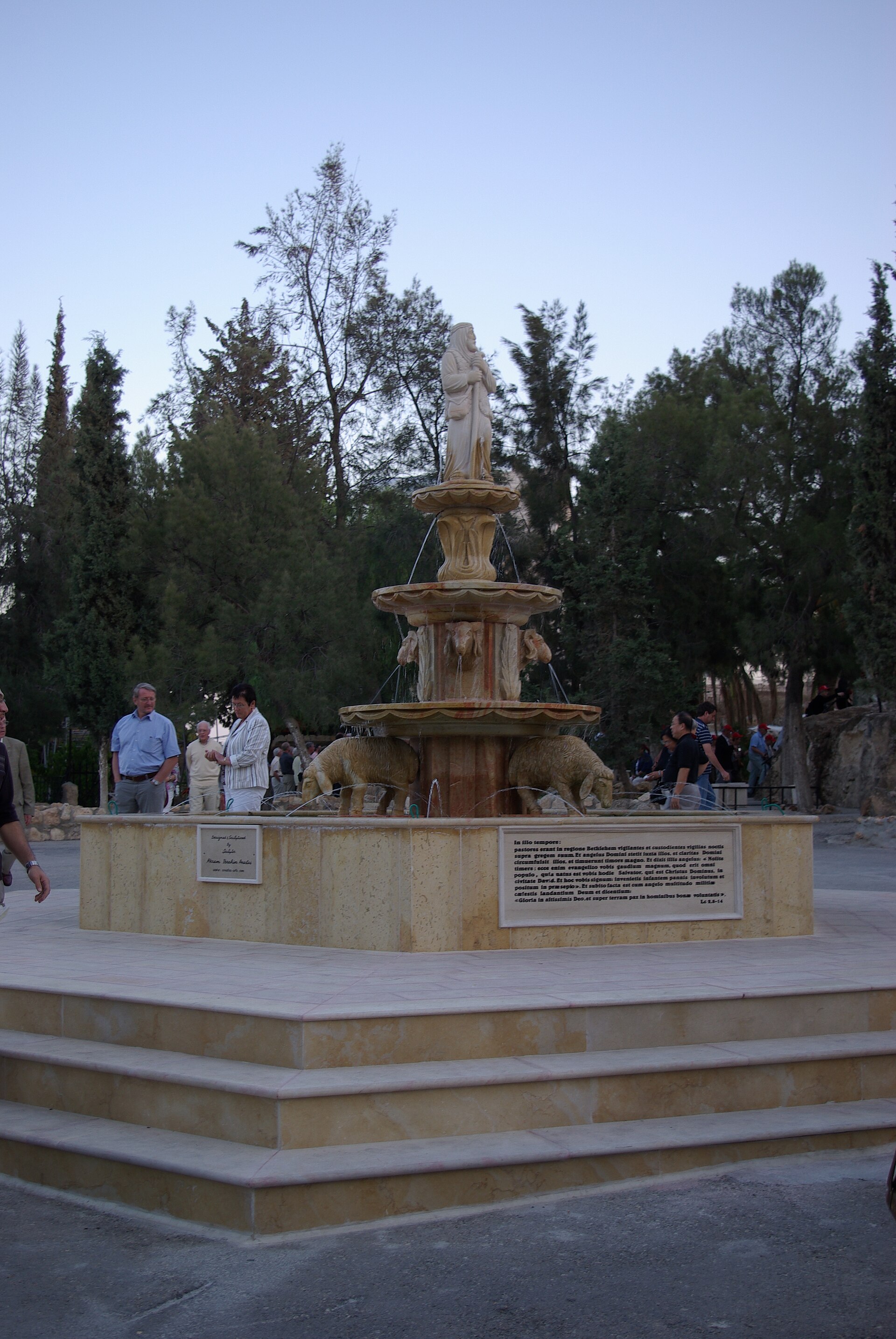
Shepherds’ Field lies on the quiet outskirts of Beit Sahour, a small town east of Bethlehem. Christian tradition says angels appeared here to announce Jesus’ birth. The area stays peaceful even when Bethlehem’s streets are crowded. Rolling hills with olive groves and low stone walls look much as they did two thousand years ago. No fences mark the field—just open land where shepherds once watched their flocks.
Several churches and chapels stand here, each belonging to different Christian denominations. The Catholic church, designed by Italian architect Antonio Barluzzi, has a circular shape with a conical roof like a shepherd’s tent. Inside, mosaics show scenes of the Annunciation. A smaller Greek Orthodox chapel nearby also holds significance. Both blend into the landscape without disrupting its simplicity.
Early Christian pilgrims mentioned this site as far back as the 4th century. Back then, shepherds used caves for shelter—no churches existed. Later, these caves became places of prayer. Archaeologists found evidence of a Byzantine monastic community here. Crusaders built a church, but only fragments of its foundation remain.
For Beit Sahour’s people, Shepherds’ Field is part of daily life. The town is called the "City of Shepherds," and many residents still raise livestock. Sheep and goats graze on the hills, their bells ringing in the morning. This tradition has continued for generations. Even those who move away often return to spend time on their ancestors’ land.
Visiting isn’t about following a set path. You can wander among olive trees, explore caves where shepherds sheltered, or sit on a rock and look out. On clear days, Bethlehem and Jerusalem appear in the distance. This quiet spot, far from noise, became the setting for one of Christianity’s key moments.
Christmas here is especially moving. On December 24th, pilgrims gather for outdoor services lit by torches and candles. Choirs sing carols in different languages. Even non-Christians come to experience the night’s magic—music, prayer, and light filling the stillness.
For the rest of the year, the field remains a place of reflection. Monks walk in quiet contemplation. Locals pray in the chapels. Unlike other holy sites, there are no strict rules. Visitors can take photos, talk, or sit in silence.
That’s what makes this place special. It doesn’t tell you how to experience it. Instead, it offers a chance to connect with something beyond the ordinary.
A small museum near the Catholic church shows archaeological finds—pottery fragments, coins, and everyday objects. The collection is modest but helps explain life here over centuries. You can also learn about Palestine’s shepherding traditions and how they shape the region today.
Shepherds’ Field isn’t just a relic. Monks, locals, and pilgrims keep it alive. There’s no grandeur, just authenticity. That’s why people keep coming, even those who don’t believe in miracles. Sometimes, you only need a moment to pause and feel that history isn’t distant—it’s right here, now.