Place du Vieux-Marché in Rouen is one of those rare spots where history isn’t just remembered—it lingers in the air, in the worn cobblestones underfoot, in the quiet hum of daily life that still carries the echoes of centuries past. Tucked into the heart of the old city, this modest square was once the bustling center of medieval commerce, where merchants haggled over goods, craftsmen displayed their wares, and the rhythms of trade dictated the pace of life. Today, it’s a place where time seems to slow, where the past and present coexist without fanfare, and where the details—the way the light catches the timbered facades, the scent of coffee drifting from a café—feel more vivid than in the rush of a larger city.
Rouen in the Middle Ages was one of the most important trading hubs in northern France, and this square was its beating heart. For hundreds of years, it thrived as a marketplace where everything from fresh fish and meat to exotic spices and fine fabrics changed hands. Back then, the square was surrounded by wooden stalls and tall, narrow houses, their steep roofs jutting toward the sky. The streets were muddy, cluttered with the detritus of daily trade, and the air must have been thick with the shouts of vendors and the clatter of hooves. Little of that physical chaos remains, but the square still carries the weight of its history, a quiet testament to the generations who once crowded its space.
The most infamous moment in its long story unfolded here in 1431, when Joan of Arc was burned at the stake. Accused of heresy, the young woman who had rallied France’s armies was executed in the center of the square, her ashes scattered into the Seine. Today, the spot is marked by a simple cross embedded in the pavement, easy to miss if you’re not looking for it. Nearby stands the modern Church of Saint Joan of Arc, built in 1979. Its architecture is striking—its roof curves like the hull of an upturned ship, and its stained-glass windows bathe the interior in a soft, diffused light, creating a space that feels both solemn and serene. The church doesn’t dominate the square; instead, it blends into the surroundings, as if acknowledging that the real monument to Joan’s life is the place itself.
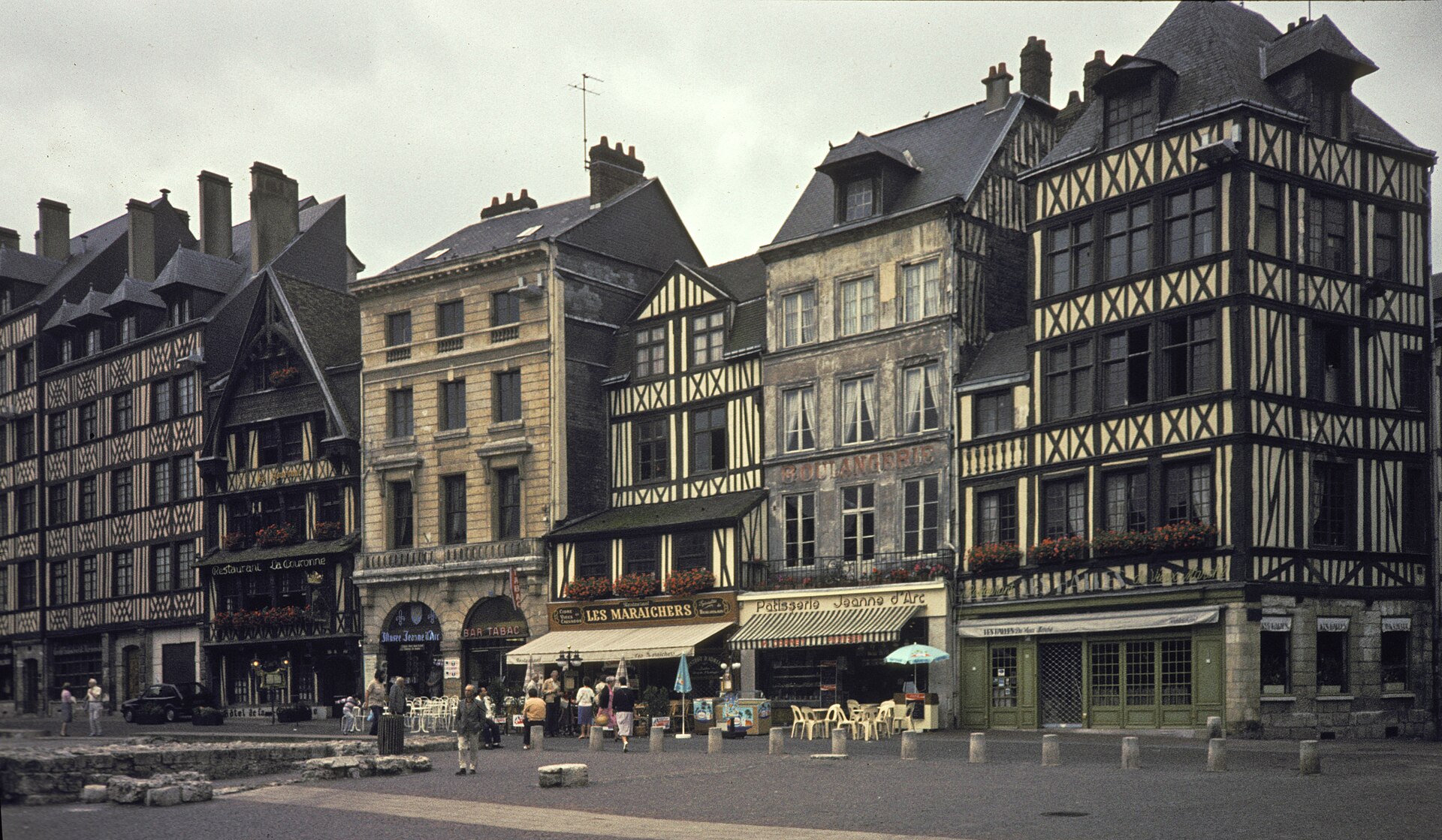
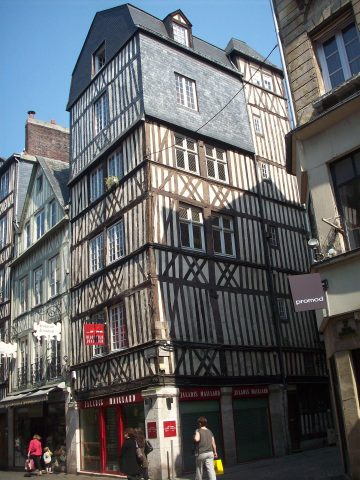
The buildings around the square tell their own stories, each one a layer of Rouen’s history. The oldest date back to the 16th century, when the city was rebuilt after fires and wars had ravaged its medieval core. Many of the facades are half-timbered, a hallmark of Norman architecture, with dark wooden beams crisscrossing pale plaster. The ground floors are often occupied by cafés and small shops, their large windows inviting passersby to linger. One of the most distinctive is the house at number 31, known as the Maison de Tanguy Duchâtel. Its facade is adorned with intricate carvings—figures, patterns, and flourishes that hint at the wealth and tastes of its former owners. These details aren’t grand in the way of palaces or cathedrals, but they’re the kind of small, human touches that make the square feel lived-in rather than preserved.
Life here moves at an unhurried pace. In the mornings, the square transforms into a market, where local farmers set up stalls piled with fresh produce, cheeses, and crusty bread. Shoppers weave between the rows, chatting with vendors or pausing to sample a slice of Camembert. By midday, the market gives way to a different crowd—students from the nearby university, office workers grabbing a quick lunch, tourists sipping coffee at outdoor tables. The square doesn’t empty out; it simply shifts, adapting to the rhythms of the day. As evening falls, the atmosphere softens. The streetlights cast a warm glow over the cobblestones, and the hum of conversation from the cafés blends with the occasional clink of glasses. There’s no grand spectacle, just the quiet pleasure of a place that has seen centuries of ordinary life unfold.
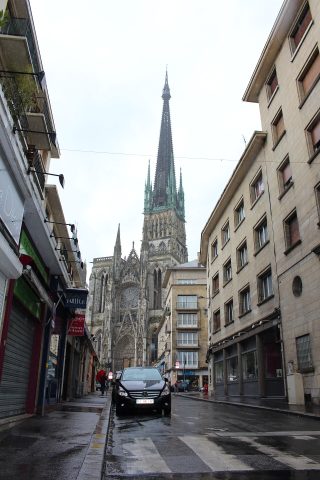
What makes Place du Vieux-Marché special is that it hasn’t been turned into a stage set for tourists. There are no crowds jostling for photos, no guides shouting over one another to be heard. Instead, it remains a working part of the city, where history isn’t something to be gawked at but something that’s still being written. You can spend an hour at a café table, watching how the light changes on the old facades, or wander down the narrow streets that branch off from the square, each one leading to another corner of Rouen’s past. The city has plenty of grand monuments, but this is where you get a sense of its soul—not in the sweeping narratives of kings and battles, but in the small, everyday moments that have accumulated over time.
If you want to dig deeper into the square’s character, the little shops around its edges are a good place to start. Some sell antiques—old postcards, yellowed maps, or prints of Rouen as it once was. Others offer local specialties: bottles of Calvados, wheels of Norman cheese, or jars of apple jam. One shop might have a stack of vintage postcards showing the square in the early 1900s, its stalls and buildings almost unchanged from today. It’s a reminder of how little some things shift, even as the world around them moves on. The square doesn’t announce its history; it lets you discover it, piece by piece, if you’re willing to look.
There’s no need to romanticize Place du Vieux-Marché. It’s not a perfectly preserved relic, nor is it a place where every stone has a dramatic tale to tell. What makes it compelling is its ordinariness—its refusal to be anything other than what it is. It’s a square where people still go about their lives, where the past isn’t cordoned off but woven into the fabric of the present. You might come here because of Joan of Arc or the half-timbered houses, but you’ll stay because of the way the light falls on the cobblestones in the late afternoon, or the way the scent of baking bread mixes with the damp Norman air. Rouen has many places worth visiting, but this is one of the few where you can feel the city breathing.