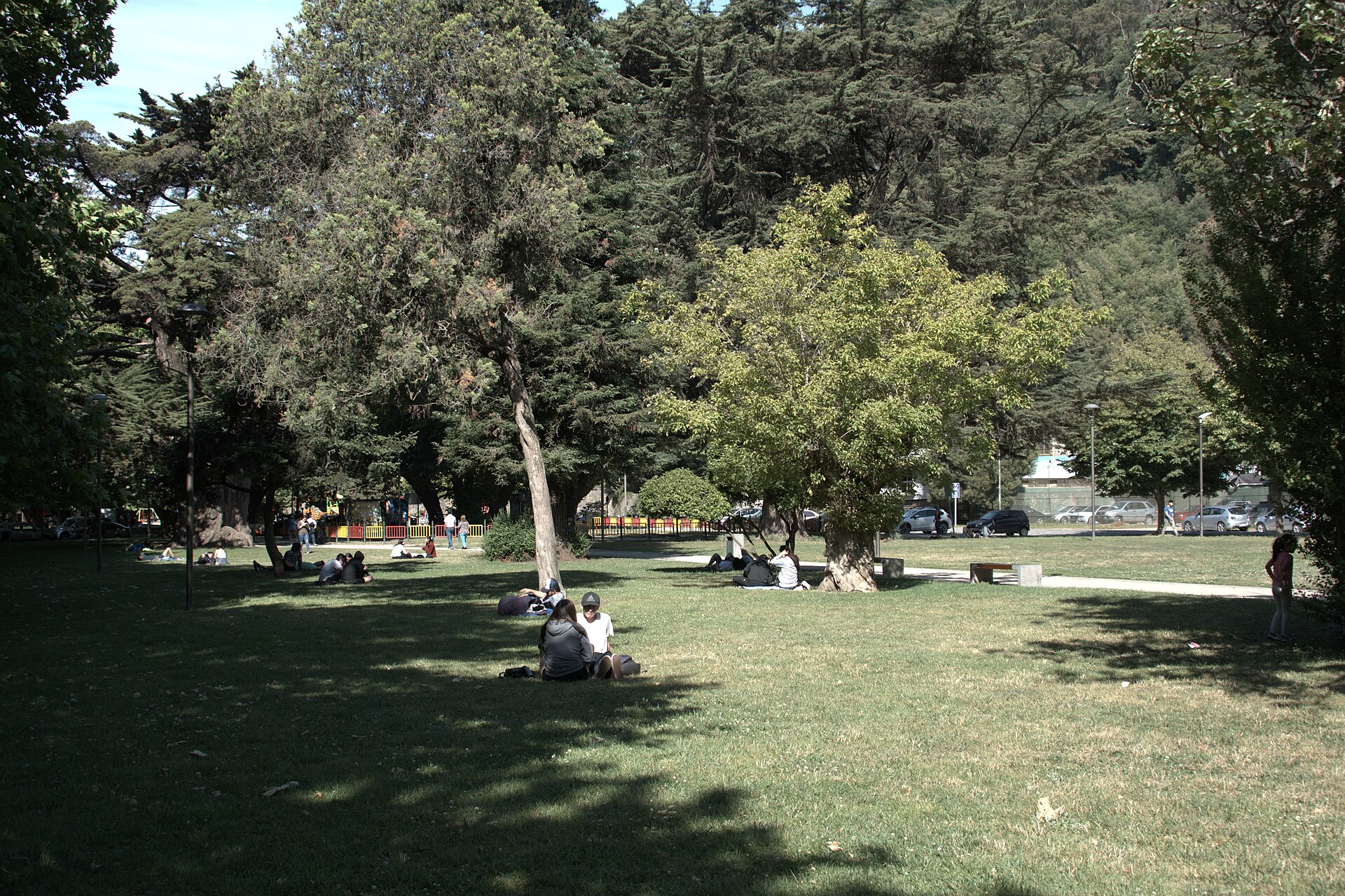
Talcahuano’s Parque Ecuador sits quietly on a gentle hill in the heart of the city, offering a view that stretches across Concepción Bay and the bustling port below. It’s the kind of place that doesn’t announce itself at first glance—no flashy attractions or crowds, just the slow rhythm of everyday life unfolding under the shade of old trees. Families spread out picnic blankets on the grass, elderly couples stroll along the winding paths, and children chase each other across the open lawns. The park feels like a pause button in a city that’s always moving, a space where time seems to soften just enough to let people breathe.
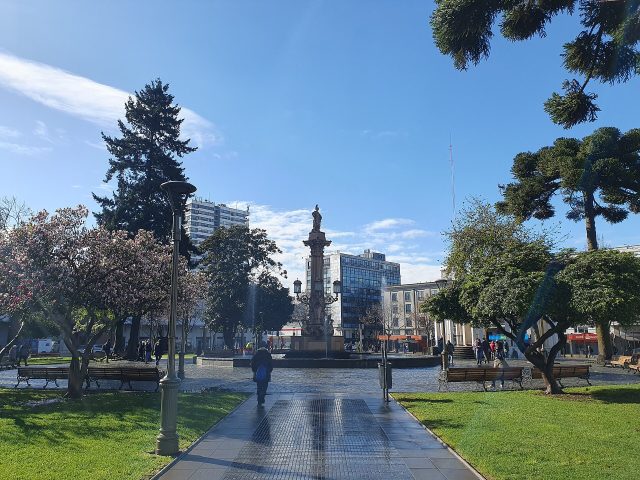
The park’s origins trace back to the early 1900s, when Talcahuano was growing into a key industrial and maritime hub. As the city expanded, so did the need for public spaces where residents could step away from the noise of docks and factories. Parque Ecuador emerged as an answer to that need, and over the decades, it has changed very little. The same towering plane trees and araucarias planted generations ago still cast their dappled shade over the walkways, their roots intertwined with the original stone paths. At the center, a modest fountain serves as a gathering spot, its gentle trickle a constant backdrop to conversations and quiet moments.
There’s nothing grand about the park’s design, and that’s part of its charm. Instead of elaborate monuments or ornate structures, it offers simple pleasures: wooden benches tucked under leafy canopies, small pavilions where local artists sometimes display their work, and an open-air amphitheater with stone steps leading down to a stage. On weekends, the amphitheater comes alive with music or community events, but even on ordinary days, it stands as a reminder of the park’s role in the city’s cultural life. The architecture here is functional, built for comfort rather than spectacle, and that unpretentiousness makes it feel like a place meant for people, not postcards.
Scattered throughout the park are a handful of memorials, each telling a piece of Chile’s history. One of the most poignant is a tribute to the sailors lost in the 2010 earthquake and tsunami, a disaster that left deep scars on Talcahuano. The memorial is understated—a few plaques, a low wall—but it carries weight for those who remember. Nearby, a stele honors the soldiers who fought for Chile’s independence, its presence a quiet nod to the past. These monuments don’t demand attention, but they’re woven into the park’s fabric, offering moments of reflection amid the greenery.
What makes Parque Ecuador special is how it brings together people from all walks of life. On any given day, you might see students sprawled on the grass with books, young parents pushing strollers along the paths, or groups of friends strumming guitars under the trees. In the mornings, the park belongs to joggers and dog walkers; by afternoon, it’s filled with the laughter of children and the clatter of chess pieces as retirees settle in for long games. Weekends add a layer of energy—street musicians set up near the entrance, vendors sell ice cream and empanadas, and impromptu soccer matches break out on the lawns. The park adapts to whoever shows up, absorbing their stories without fuss.
The view from the top of the hill is one of the park’s best-kept secrets. From here, the port unfolds below—cranes standing like sentinels over the water, ships coming and going, and the bay shifting from deep blue to silver depending on the light. On clear days, the distant mountains rise like a mirage on the horizon. But it’s at sunset that the park truly comes into its own. As the sky turns shades of pink and gold, locals and visitors alike gather on the grass, spreading out blankets and sharing thermoses of tea. The city fades into the background, and for a little while, it’s just the water, the sky, and the quiet hum of conversation.
Beyond its role as a green space, Parque Ecuador is a stage for the city’s smaller celebrations. Throughout the year, it hosts craft fairs, folk music festivals, and children’s events, each one drawing crowds without ever feeling overrun. In December, strings of lights transform the trees into a glittering canopy, and the park becomes the heart of Talcahuano’s holiday festivities. For many residents, it’s more than just a place to visit—it’s where first dates happen, where birthdays are celebrated, and where memories accumulate like the layers of leaves underfoot.
In recent years, the city has made efforts to maintain the park, repairing walkways and planting new trees, but its real value lies in something less tangible. Parque Ecuador isn’t about perfection or grandeur; it’s about the way it makes people feel. There’s no rush here, no pressure to do or see anything in particular. You can sit on a bench and watch the tide roll in, or wander the paths without a destination in mind. For outsiders, it might seem like just another park, but for those who call Talcahuano home, it’s a small refuge—a place where the city’s relentless energy softens, if only for a little while.