Slavutych is a town that feels unlike any other in Ukraine, and its Independence Square lies at the heart of that difference. Built in the 1980s to house workers from the Chernobyl nuclear power plant after the disaster, the town was designed as a model Soviet settlement—planned, modern, and intended to offer a better life. Independence Square reflects that vision. It’s not an ancient plaza with centuries of layered history, nor is it a grand imperial square lined with palaces. Instead, it’s a place shaped by necessity and optimism, a public space that was meant to foster community in a town created almost overnight.
The square itself is spacious and open, framed by low-rise buildings that blend functionality with a touch of architectural ambition. The structures around it are a mix of Soviet modernism and subtle nods to traditional Ukrainian motifs, though the latter are understated—more about suggestion than ornamentation. Wide pedestrian paths radiate outward, connecting the square to the town’s residential districts, while a central fountain adds a sense of movement and life. In summer, the water catches the light, and in winter, the basin often freezes over, turning the square into a quiet, reflective space.
What makes Independence Square interesting is how it functions as both a gathering place and a symbol. For the people of Slavutych, it’s where festivals, markets, and public events take place—ordinary moments of town life that contrast with the extraordinary circumstances of the town’s founding. There’s a certain resilience in how the square is used. After the 2022 Russian invasion, it became a site for rallies and vigils, a place where the community reaffirmed its identity in the face of uncertainty. That duality—between everyday life and historical weight—is what gives the square its character.
The architecture around the square tells its own story. The buildings are practical, designed to serve rather than impress, yet there’s a thoughtfulness in their layout. The central administrative building, for instance, stands slightly apart, its lines clean and uncluttered, a reminder of the town’s origins as a planned settlement. Nearby, a cultural center and a cinema offer spaces for leisure, their facades simple but welcoming. The overall effect is one of quiet dignity, a place that doesn’t demand attention but earns it through its purpose.
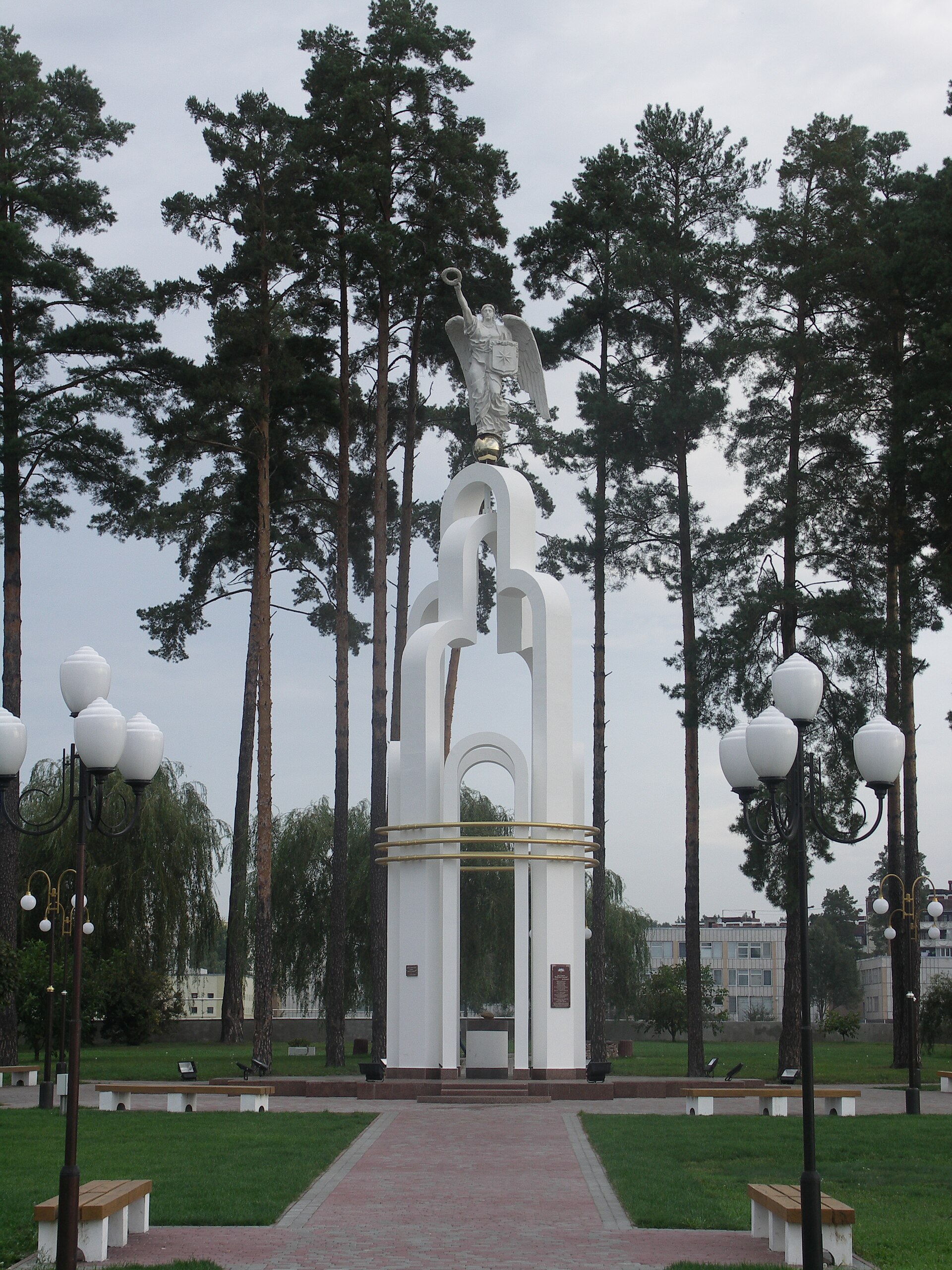
Slavutych was built for people who had lost their homes, and Independence Square was meant to be the town’s living room—a place where neighbors could meet, children could play, and the rhythms of daily life could unfold. That intention is still visible today. On weekends, families stroll along the paths, and in the evenings, the square is often filled with the sounds of conversation and laughter. There’s no grand monument here, no towering statue to commemorate a battle or a ruler. Instead, the square commemorates something more subtle: the idea of starting over.
The town’s connection to Chernobyl is never far from the surface. Slavutych was designed to be a safe, self-sufficient community for those who continued to work at the plant after the accident, and that legacy lingers in the way the town is organized. Independence Square, with its open design and emphasis on accessibility, reflects a belief in transparency and order—values that were especially important in the aftermath of the disaster. Even now, the square feels like a space that was built with care, as if every detail was considered to make life here a little easier.
Over the years, the square has seen changes, though none as dramatic as the town’s founding. The fountain has been renovated, benches have been replaced, and the landscaping has evolved, but the essential character of the place remains. It’s not a tourist destination in the traditional sense, and that’s part of its appeal. There are no crowds here, no souvenir stands or guided tours. Instead, it’s a place where the people of Slavutych go about their lives, where the past and present coexist without fanfare.
For visitors, Independence Square offers a glimpse into a town that was shaped by history but refuses to be defined by it. It’s a reminder that even in places born from tragedy, life finds a way to take root. The square doesn’t tell a single story; it holds many—the stories of those who built Slavutych, those who live here now, and those who pass through. In that sense, it’s not just a public space but a kind of living archive, one that changes with each season and each generation.