Pripyat was meant to be a city of the future. Built in 1970 to house the workers of the Chernobyl Nuclear Power Plant, it was designed as a model Soviet settlement—spacious, modern, and self-sufficient. Architects envisioned wide boulevards, parks, schools, and even a river port, all laid out with precision to serve the families of engineers and scientists. The city was planned for growth, for prosperity, for a long and stable existence. But history had other plans.
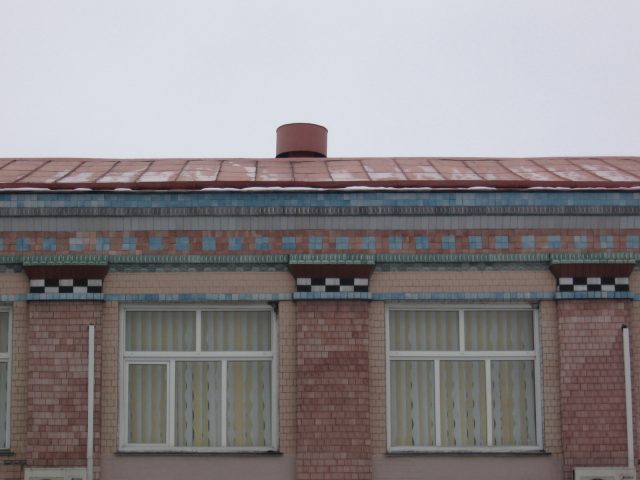
The architecture of Pripyat reflects a moment frozen in time, a snapshot of Soviet modernism at its peak. Unlike the uniform apartment blocks found across the USSR, the buildings here were experimental, blending functionality with aesthetics. Nine-story residential towers featured balconies, public spaces were adorned with mosaics and sculptures, and kindergartens had expansive playgrounds. Everything was designed with the assumption that the city would thrive. Even now, decades after its abandonment, traces of that intended life remain—faded wallpaper, children’s drawings on windowsills, forgotten toys left behind in haste.
Construction moved quickly because the power plant demanded a workforce. By the time of the 1986 disaster, nearly 50,000 people lived here, making Pripyat one of Ukraine’s youngest and most vibrant cities. The average resident was barely 26 years old, and the atmosphere felt more like a university campus than a typical Soviet town. People knew each other, socialized, and made plans for the future. The city had cinemas, sports complexes, restaurants, and even an amusement park that never fully opened. There was a sense of impermanence, as if Pripyat was still finding its identity, but the promise of what it could become was undeniable.
Then, in a matter of hours, everything changed. On the morning of April 26, 1986, the residents of Pripyat had no idea their lives were about to be upended. The first signs of trouble came later in the day, but the official evacuation didn’t begin until the following morning. Authorities told people it was temporary, that they would return in three days. No one imagined the city would be left empty forever. Within hours, buses carried away the entire population, leaving behind abandoned cars, half-eaten meals on tables, and streets that would never again hear the sounds of daily life. Pripyat became a symbol not just of technological failure, but of human tragedy—a place where time stopped without warning.
Today, Pripyat is a ghost town slowly being reclaimed by nature. Trees push through cracked pavement, bushes overtake courtyards, and buildings crumble under the weight of decades. Yet even in its decay, the city retains a haunting presence. There are no tourists in the usual sense, only visitors who come to witness a place where time stood still. A trip to Pripyat isn’t an outing; it’s a journey into history, one that still carries the weight of loss and disbelief.
Most tours begin at the central square, where life once bustled. Now, the only sounds are the rustling of leaves and the distant hum of cars on the highway. Nearby stands the city council building, its Soviet emblem still visible on the facade, while inside, documents, posters, and even a stopped clock remain as they were left. Not far away is the Prometheus cinema, where Soviet films once played to full houses. Now, its windows are shattered, and the auditorium is overgrown with weeds. In the amusement park, a Ferris wheel rusts in place, never having welcomed its first riders.
One of the most striking sights is School No. 1. Classrooms still hold scattered textbooks, notebooks, and school uniforms, as if the children had just stepped out for recess. The gym has basketball hoops, the auditorium a piano, and the walls are covered in Soviet-era slogans and children’s drawings. It feels less like a place that died and more like one that simply paused, though it’s clear no one will ever return.
Pripyat isn’t just an abandoned city; it’s a monument to an era that ended abruptly and tragically. There are no heroic legends here, no romanticized ruins—just silence and the echoes of lives interrupted. The city stands as a reminder of how fragile human plans can be in the face of nature and technology. Officially, Pripyat is still a city, but in reality, it’s an open-air museum where every object, every building, tells a story.
Visiting Pripyat isn’t like visiting other places. There are no photo ops, no entertainment, no bright distractions. It’s a place that forces reflection—on how quickly the familiar can collapse, on how even the most carefully laid plans can be undone by chance. Pripyat isn’t for everyone, but those who come leave with something deeper than memories. They carry away a sense of having touched history, one that hasn’t yet faded into the past.