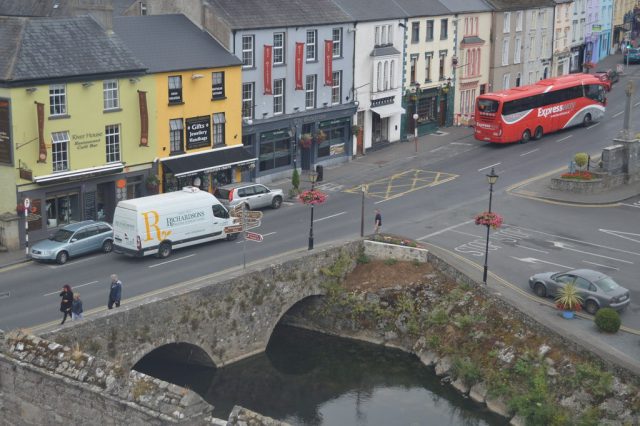
Nelson’s Square in Clonmel is one of those places that doesn’t demand attention at first glance, but slowly reveals itself if you take the time to look. Tucked in the heart of the town, where several old streets converge, it’s an unassuming space today—a patch of open ground with a few parked cars and a handful of cafés. Yet this quiet corner was once the pulse of a very different Clonmel. The square takes its name from Admiral Horatio Nelson, a figure whose legacy in Ireland is as layered as the country’s own history. To some, he remains the naval hero who defeated Napoleon at Trafalgar; to others, he’s a symbol of British rule, a reminder of centuries under foreign dominion. In Clonmel, that tension lingers. The town has always been caught between loyalties—first to the English crown, then to the rebellions that shaped modern Ireland—and Nelson’s Square has stood witness to it all.
The architecture around the square doesn’t impress with grandeur, but it has a quiet charm of its own. The low, stone-built houses from the 18th and 19th centuries, with their narrow windows and steeply pitched roofs, feel like they’ve been here forever. Some still bear the faded signs of old shops or workshops, their wooden doors worn smooth by time. In the centre of the square once stood a monument to Nelson, erected in 1809, just four years after his death. It was a typical column of the era, crowned with a statue of the admiral, but by 1966 it had fallen into disrepair and was dismantled—not out of political protest, but simply because it had become unsafe. Today, the empty space where it once stood is part of the square’s story, a silent marker of how the past fades into the present.
Clonmel wasn’t always the quiet market town it is now. In the 17th century, it was one of the most important fortified settlements in southern Ireland, and Nelson’s Square lay just inside the old city gates. Armies, merchants, and travellers passed through here, leaving their mark on the town. During the Williamite War in 1690, the square saw troops loyal to William of Orange march through, while a century later, in the 1798 Rebellion, it became a battleground between Irish insurgents and British forces. Though no major battles were fought here, the square absorbed the tension of those times—public proclamations were read from its steps, crowds gathered, and justice was sometimes meted out in haste. Today, only old maps and scattered records hint at those days, but if you listen closely, the echoes of the past aren’t hard to imagine.
Nowadays, Nelson’s Square is more about everyday life than history. On weekday mornings, it fills with the cars of locals heading to work or the shops, while on weekends, families stop for coffee at the corner café. In summer, the square occasionally hosts small fairs or concerts, briefly becoming the town’s social hub. But in winter, it’s quiet, the wind sweeping across the open space as people hurry past, their collars turned up against the cold. At first glance, it could be any Irish square—unremarkable, even forgettable. But linger a little longer, and the details start to emerge: the old gas lamp that’s somehow survived a century of change, the uneven cobblestones underfoot, the faint grooves in the stone where cartwheels once wore down the surface.
What’s interesting about Nelson’s Square is how it reflects Ireland’s shifting identity. Clonmel has begun to attract more visitors in recent years, and the town is slowly adapting to this new reality. Signposts now point to local landmarks, and one of the buildings houses a small museum dedicated to the town’s history. It’s not a grand affair—more like a private collection curated by local enthusiasts—but that’s part of its appeal. There’s no attempt to dazzle or entertain, just a quiet sharing of stories and memories. It feels like the kind of place where history isn’t performed for tourists but simply exists, woven into the fabric of daily life.
A short walk from the square leads down to the River Suir, which cuts through Clonmel. The river is narrow but deep, and its banks were once the town’s bustling commercial heart. Today, the quayside is peaceful, with only the occasional boat drifting past and fishermen casting their lines in the evenings. The contrast between the square and the river is striking—just a few minutes’ walk separates the hum of town life from the stillness of the water. It’s this balance that makes Clonmel special: a place that can be both a centre of activity and a retreat into quiet.
Nelson’s Square won’t be the reason most people visit Ireland, but if you find yourself in Clonmel, it’s as good a place as any to start exploring. There are no crowds here, no tour guides shouting over each other, no souvenir shops selling plastic leprechauns. Just a quiet corner of the country where history isn’t put on display but lives on in the background, shaping the present in subtle ways. You could sit on a bench with a cup of tea, watching the light change on the old stone walls, or simply observe the rhythm of the town—the way people come and go, the way the wind moves through the square. And if you’re lucky, you might catch that fleeting sense of connection, the thing that makes travel worthwhile: the feeling that the past isn’t really gone, just waiting to be noticed.