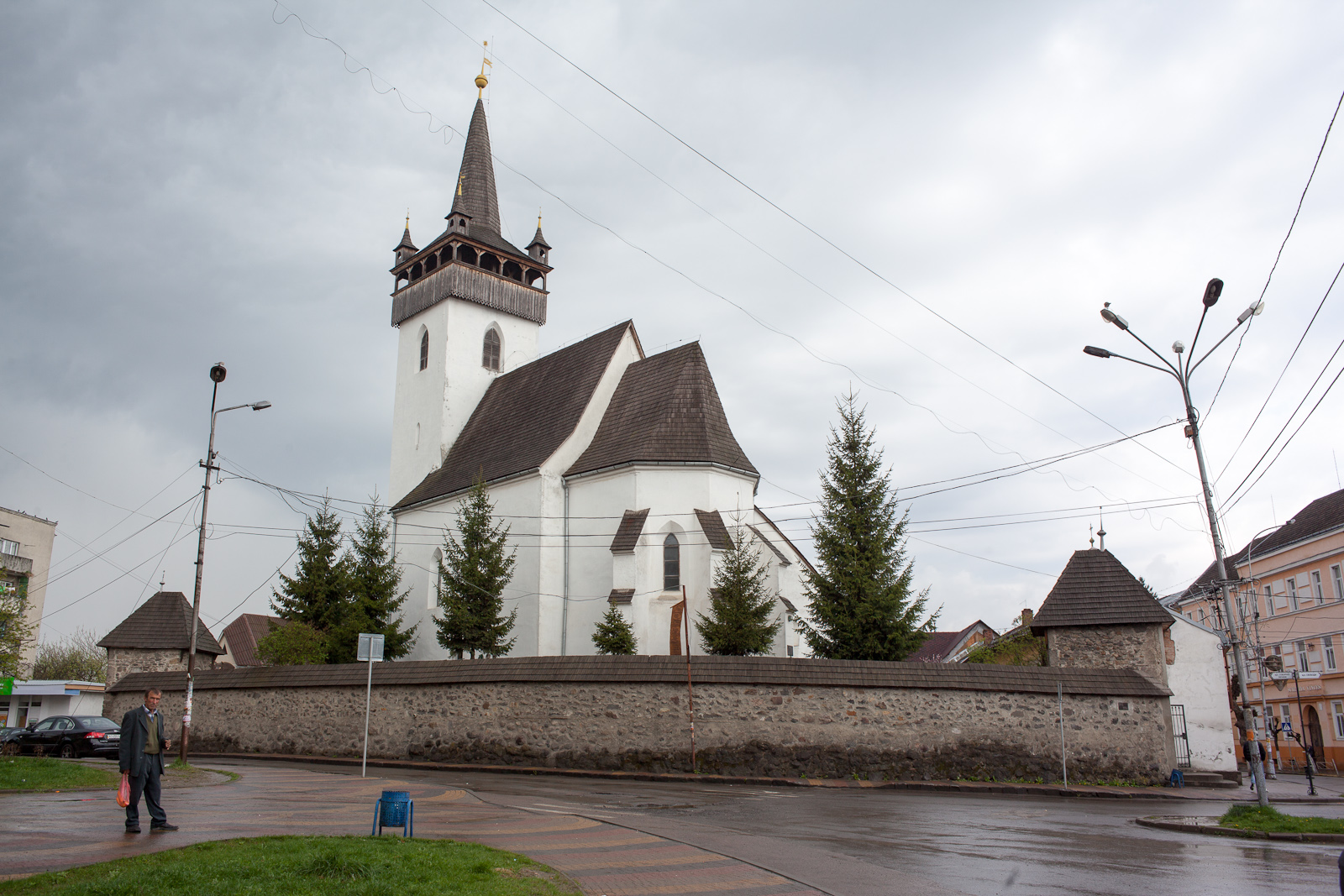
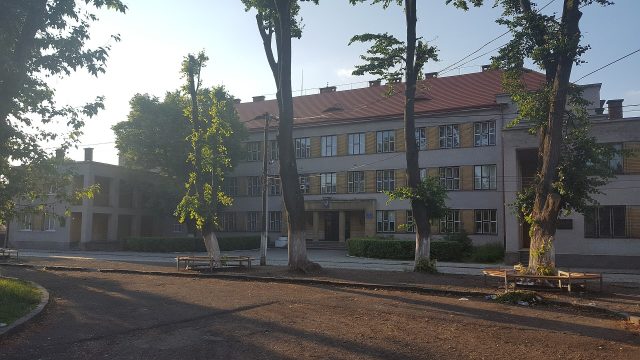
Peace Square in Khust is one of those places that doesn’t announce itself at first glance. It’s not the kind of spot that demands attention with grand monuments or tourist crowds, but rather one that quietly reveals its character over time. This isn’t just the geographical center of the city—it’s where Khust’s past and present intersect in subtle, everyday ways. The square is surrounded by low-rise buildings with tiled roofs, their facades telling stories of different eras: the delicate details of Austro-Hungarian architecture blending with the more utilitarian lines of Soviet-era construction. There’s no fanfare here, just the quiet rhythm of a town that has seen centuries pass without losing its sense of itself.
Khust, like much of Transcarpathia, has always existed at a crossroads. For centuries, it was a stop on trade routes, a place where merchants, travelers, and sometimes conquerors passed through. Peace Square likely began as a natural gathering point—a place where people traded goods, exchanged news, and shaped the life of the town. Over time, it may have had different names, but its purpose remained the same: a space where the community came together. Today, that role hasn’t changed. The square is still where people hurry to work, where elderly locals chat on benches, and where children play near the fountain when it’s running. There’s no grand spectacle, just the unhurried pulse of daily life.
The architecture here isn’t dramatic, but that’s part of its charm. The buildings are modest—two or three stories at most—with the kind of details that feel distinctly Transcarpathian: wooden balconies, carved window frames, and facades painted in soft, muted colors. Some structures still bear traces of Hungarian influence, visible in the shape of windows or the occasional faded sign in a language that isn’t Ukrainian. During the Soviet period, the square saw changes, with new buildings erected in the typical style of the time, but even these couldn’t erase the older layers of history. Now, the square is a mix of old and new: small shops selling smoked cheese and homemade wine sit alongside modern cafes, and the occasional street vendor offers traditional sweets.
At the heart of the square stands the city council building, an unassuming structure that has witnessed decades of Khust’s transformations. It’s not an imposing edifice, but its presence is a quiet reminder of the town’s governance through changing times. Next to it, temporary stages are often set up for local events—concerts, festivals, or fairs. On those days, the square comes alive in a different way: music fills the air, the scent of grilled sausages and fresh pastries drifts from stalls, and people gather to celebrate. For a few hours, the usual quiet gives way to something livelier, but even then, it never feels overwhelming.
What makes Peace Square special isn’t just its history or architecture, but the way it reflects the everyday life of Khust. In the mornings, shopkeepers open their doors, office workers hurry past, and retirees take their time strolling with dogs. By evening, the square empties slightly, but the glow of streetlights and shop windows keeps it warm and inviting. On weekends, families come to walk, while groups of young people gather near the fountain or on the steps of a café. There’s no rush here, no pressure to perform for visitors. It’s a place for slow conversations, for watching the world go by, for simply being.
Khust isn’t the kind of town that makes it onto must-see lists, and that’s precisely why it feels authentic. There are no crowds of tourists, no souvenir shops hawking trinkets, no guides shouting over one another. Peace Square is where you can experience the real pace of life in Transcarpathia. Visit in early autumn, when the air smells of apples and woodsmoke, or in winter, when a light dusting of snow softens the cobblestones and the windows glow with warm light. It’s in these moments that the square’s quiet beauty becomes clear. This isn’t a place for grand revelations, but for small, intimate discoveries.
Like many Ukrainian towns, Khust has seen efforts in recent years to improve its public spaces. Peace Square has changed too—new benches have appeared, facades have been refreshed, and occasional festivals bring a bit of energy. But these updates haven’t erased the square’s essence. If anything, they’ve highlighted it. The changes are subtle, respectful of the space’s character. What remains is a sense of unhurried simplicity, a place that doesn’t try to be anything other than what it is.
If you ever find yourself in Khust, don’t leave too quickly. Take a walk around Peace Square, step into one of the small cafes, and sit on a bench to listen to the conversations around you. You won’t find towering monuments or dramatic historical events here, but you might find something more meaningful: the spirit of the place. It’s the kind of quiet charm that’s hard to put into words, the kind that lingers long after you’ve left. That’s the real Transcarpathia—not flashy, but deeply felt.