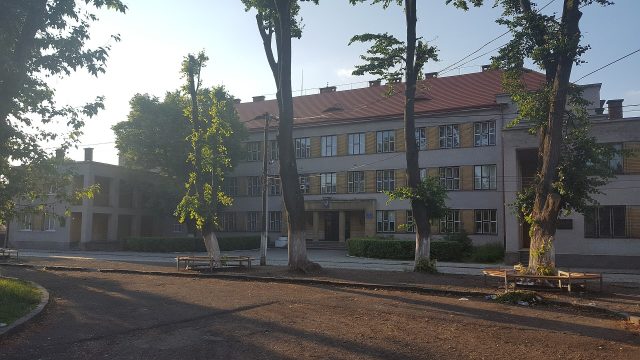
Khust Town Hall is one of those buildings that seems frozen in time, preserving not just architectural value but the very memory of the city’s past. Constructed at the dawn of the twentieth century, it became a symbol of Khust’s administrative life when the town was still part of the Austro-Hungarian Empire. Those were years of rapid growth for Khust, and the town hall, built in the Neo-Renaissance style, was meant to emphasize its importance as a trade and cultural hub in Transcarpathia. Today, the building looks much as it did a century ago—tall windows, sturdy stone and brick walls, arched doorways, and decorative facade elements that echo the European urban traditions of the era.
The architecture of the town hall isn’t merely a nod to the fashion of the early 1900s; it also reflects the pragmatism typical of administrative buildings of the time. The structure isn’t overloaded with ornamentation, yet it conveys a sense of solidity and prestige. The main facade, with its symmetrically arranged windows and a central entrance topped by a small pediment, exudes an air of order and permanence. Inside, the spacious halls with high ceilings have retained their original layout, though the interiors have changed over the years. Once the meeting place for city officials, the building now occasionally hosts exhibitions or cultural events, offering a glimpse into the bustling life of early twentieth-century Khust.
Khust Town Hall has weathered its share of historical upheavals. After the collapse of the Austro-Hungarian Empire, the town found itself under Czechoslovak rule, then Hungarian, and after World War II, it became part of the Soviet Union. Each change of power left its mark on the building—new signs, altered interiors, and sometimes even new functions for its rooms. During the Soviet era, it housed various state institutions, and the town hall gradually lost some of its original character. Yet even then, it remained one of Khust’s most recognizable landmarks, a silent witness to the town’s layered and complex history.
Today, the town hall is more than just an administrative building; it’s part of Khust’s cultural heritage. It stands in one of the city’s central squares, surrounded by other historic structures that together create the unique atmosphere of old Transcarpathia. Locals and visitors often gather around it—some on official business, others simply strolling, admiring the architectural details, or taking photographs. While the building isn’t a museum in the traditional sense, its history and appearance tell the story of Khust’s past more vividly than many curated exhibits ever could.
What makes Khust Town Hall particularly interesting is its role as a witness to an era when architecture wasn’t just functional but symbolic. In the early 1900s, buildings like this were constructed not only to house officials but to assert a town’s status and its connection to European traditions. The town hall in Khust is a prime example of how even provincial cities could produce structures that rivaled those in capital cities in significance. Now, as Transcarpathia attracts more travelers, the town hall has become one of those places that help visitors understand the spirit of the region—its history, culture, and the way different eras and influences have intertwined here.
For those with an interest in architectural history, the town hall offers a fascinating study. It blends Neo-Renaissance features with local building traditions, making it distinct from similar structures elsewhere. The use of stone in the facade, for instance, wasn’t just a stylistic choice but a reflection of the materials available in Transcarpathia. At the same time, the building’s proportions, layout, and decorative elements reveal the influence of European architectural schools, which isn’t surprising given Khust’s long history under Austro-Hungarian rule. Even today, as modern buildings rise around it, the town hall holds its own, its uniqueness undiminished.
Though the town hall isn’t Khust’s main tourist attraction, it fits seamlessly into the cityscape, enhancing it in subtle ways. Visitors often find themselves drawn to the building, even if they hadn’t planned to stop. It invites you to pause, examine the details, and reflect on the countless events that have unfolded here over the past century. In this sense, the town hall is more than just an architectural landmark—it’s a living part of the city, still playing a role in its life, even if not as prominently as it once did.
In recent years, Ukraine has placed greater emphasis on preserving its historical heritage, and Khust Town Hall is one of those sites that could benefit from such efforts. Restoring the building to its original appearance or transforming it into a small museum or cultural center could not only attract more visitors but also restore its role as a gathering place for the community. For now, it remains a quiet witness to change, a reminder that a city’s history isn’t just about grand events but also the everyday life that has unfolded within its walls over decades.