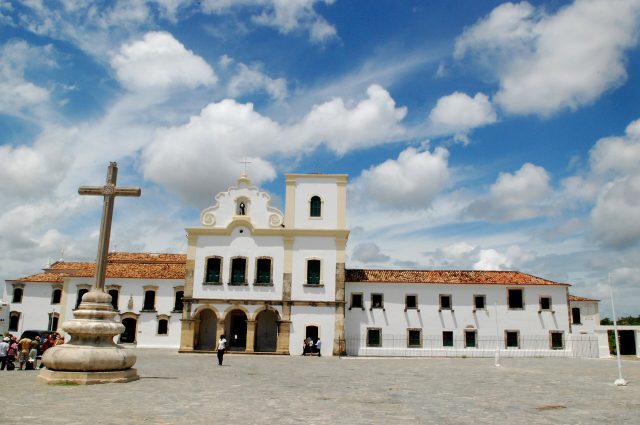
Nossa Senhora do Socorro isn’t the kind of place that makes it onto postcards. It lacks the dramatic beaches of Rio or the colonial grandeur of Salvador, and that’s why it feels real. Tucked away in Sergipe, this small city moves to its own rhythm, far from tourist crowds and the pace of Brazil’s famous destinations. At its heart lies Praça do Matador—a square that doesn’t announce itself but quietly draws you in, showing everyday life beyond clichés.
The square is unassuming: worn cobblestones surrounded by low-slung buildings. Nossa Senhora do Socorro, one of Sergipe’s oldest settlements, was founded by Portuguese colonists in the 16th century. Though now overshadowed by Aracaju, its history lingers in the details. The square sits in the historic center, where time has settled into the cracks of old houses. Peeling facades and sagging balconies tell stories of generations past. Here, colonial roots meet the present—not in monuments, but in the persistence of ordinary life.
The buildings around the square are one or two stories high, with high ceilings, wooden shutters, and terracotta roofs. Some date back to the colonial era, when the town was a waypoint between the coast and the interior. A few retain original facades; others have been patched up over the years. The effect is understated, local. In the center, trees provide shade over benches where people gather to talk or watch the world go by.
Praça do Matador means "Killer’s Square." The name sounds ominous, but it’s not. One theory ties it to colonial-era bullfights, where *matador* referred to the fighters. Another legend claims it comes from a fearless resident. The name has lost its edge, becoming just another thread in the city’s fabric.
This isn’t a square for grand gestures. There are no museums, no statues, no guided tours. It’s a place for slowing down.
In the mornings, vendors sell fresh fruit and pastries. By midday, children kick soccer balls, elderly men debate politics, and teenagers laugh. Street musicians play guitars. As the sun sets, families stroll, savoring the cooler air. The rhythm is unhurried, as if the square itself is breathing.
Nossa Senhora do Socorro rarely appears on tourist itineraries. That’s part of the charm. Sit on a bench, buy coffee or juice from a vendor, and watch. The city moves at its own pace, and for a while, you can too. There’s a sense of timelessness here, rare in a world that spins faster every day.
The square isn’t always tidy. After market days, you might see stray trash or crumpled cups. Some buildings have chipped paint. But these imperfections are part of what makes it real. This isn’t a polished version of Brazil. It’s a living space, flawed and alive.
For travelers used to grand landmarks, Praça do Matador might seem modest. But that’s its strength. It doesn’t try to impress. It simply exists, offering a quiet corner where life unfolds without pretense. Maybe that’s why visitors return—drawn by the promise of stillness, of a place where time lingers.