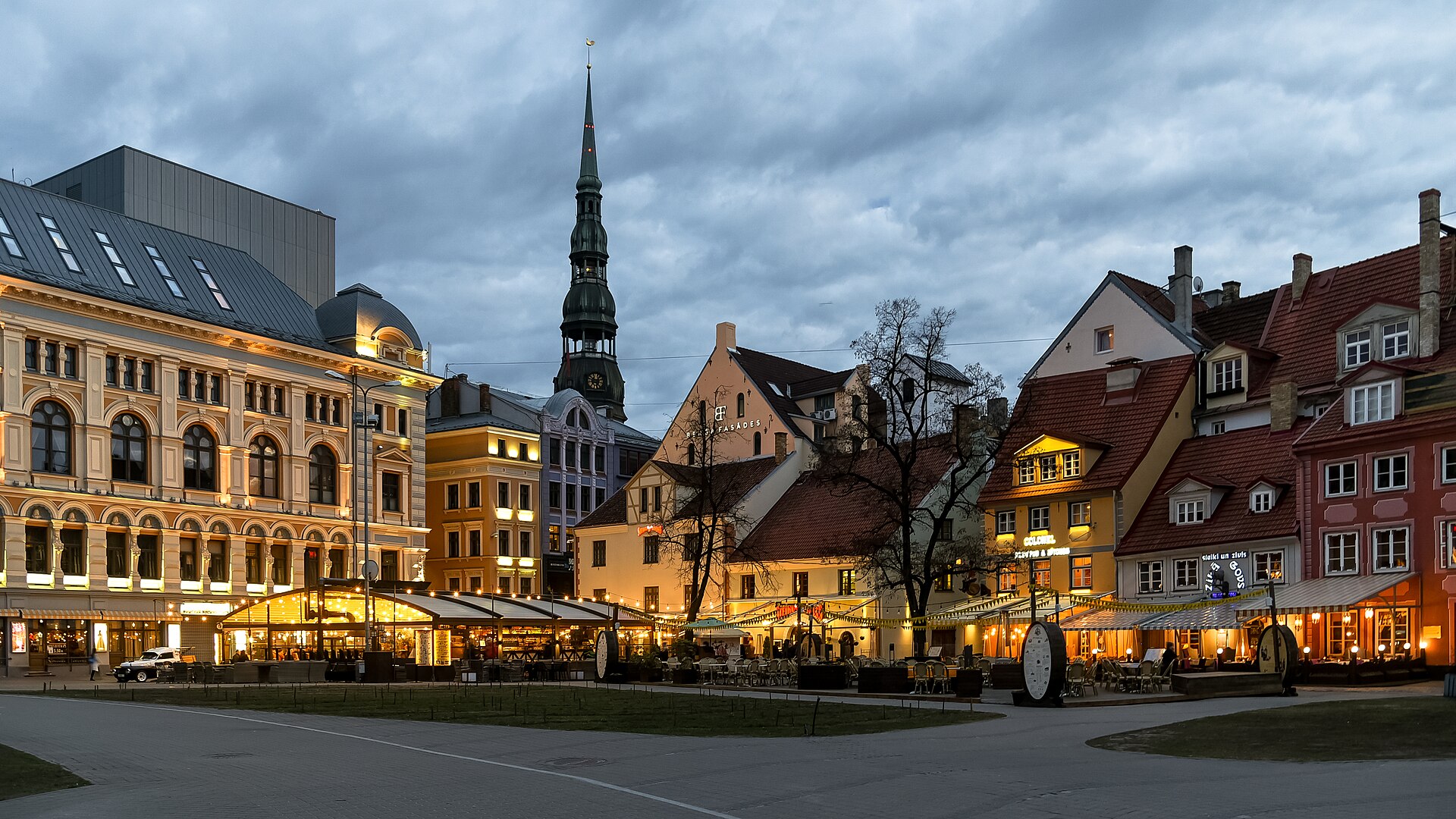
Jelgava’s Līvu Square is one of those places where the past and present coexist without fuss, where the rhythm of daily life moves to the quiet beat of history. Tucked in the heart of the old town, it’s a small but significant space where streets converge and eras overlap. For centuries, this square has been the stage for the city’s most important moments—whether as a marketplace, a gathering spot for locals, or a crossroads for travelers passing through. It may not be grand in size, but its role in Jelgava’s story is impossible to ignore.
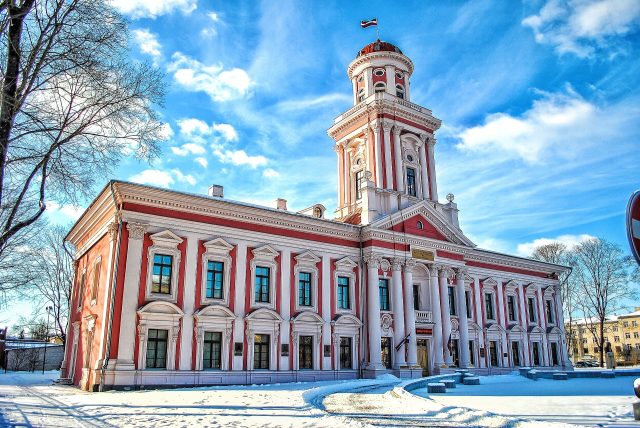
The square’s architecture tells a layered history, with buildings that reflect the tastes and needs of different periods. The most imposing of these is Jelgava Palace, once the residence of the Dukes of Courland. Its Baroque façade, designed by the renowned architect Bartolomeo Rastrelli in the mid-18th century, still dominates the square, a reminder of the time when Jelgava was the capital of the Duchy of Courland. Though fires and wars have altered its interiors over the years, the palace’s exterior remains largely true to Rastrelli’s vision. Today, it houses the Latvia University of Life Sciences and Technologies, yet it continues to serve as the city’s most recognizable landmark.
Beside the palace stands Jelgava Town Hall, a building that offers a stark contrast in style. Constructed in the early 19th century, its neoclassical lines and symmetry provide a counterpoint to the palace’s more ornate design. Like many structures in the city, the town hall has been rebuilt multiple times after fires, with its current appearance dating to mid-20th-century renovations. The surrounding buildings—residential houses with steep Baltic roofs, small shops, and cafés—add to the square’s charm, offering glimpses into the city’s more modest, everyday life.
The square hasn’t always been known as Līvu Square. Over the centuries, it has gone by many names—Market Square, Town Hall Square, Palace Square—depending on which building held prominence at the time. Its current name, adopted in the 20th century, pays homage to the Livonians, one of the ancient peoples who inhabited these lands long before the arrival of the Balts and Germans. The Livonians, a Finnic people, once lived along the Baltic coast, and though their cultural influence has faded, their legacy lingers in place names and historical records.
Jelgava, like much of the Baltic region, has seen its share of upheaval. In the Middle Ages, it was a thriving trade hub, later becoming the seat of the Duchy of Courland. By the 19th century, it had settled into the role of a provincial Russian imperial town. World War II brought devastation, with much of the city, including parts of the square, reduced to rubble. Post-war reconstruction restored some of the area’s former character, though not every building was returned to its original state. Still, the square retains a sense of continuity, as if the layers of history are still visible beneath its surface.
Today, Līvu Square is more than just a historical site—it’s a living part of the city. In the summer, small fairs pop up, selling local produce, handmade crafts, and traditional foods. Winter brings festive decorations, turning the square into a cozy gathering place in the weeks leading up to the New Year. The cafés and restaurants around the square serve up Latvian staples like smoked fish, dark rye bread, caraway cheese, and homemade beer. Locals often stop by to meet friends, take a leisurely stroll, or simply sit on a bench and watch the world go by.
The square is also tied to some of Latvia’s cultural figures. One of the houses nearby was once home to Jānis Rainis, a prominent Latvian writer and political thinker whose work shaped the country’s early 20th-century identity. Though he’s best remembered today through a museum and a street named in his honor, his presence still feels tangible in Jelgava, a city that values its intellectual and artistic heritage.
Walking through Līvu Square is a chance to experience Jelgava as it truly is—a city that doesn’t try to impress with grand tourist attractions but instead offers something more subtle. There are no crowds here, no flashy entertainment, just the quiet hum of provincial life. The streets are narrow, the pace is unhurried, and time seems to move a little slower than in Riga or other larger cities. For those who want to see Latvia beyond its capital, Jelgava and its main square provide a perfect starting point, a place where history isn’t just preserved but lived.