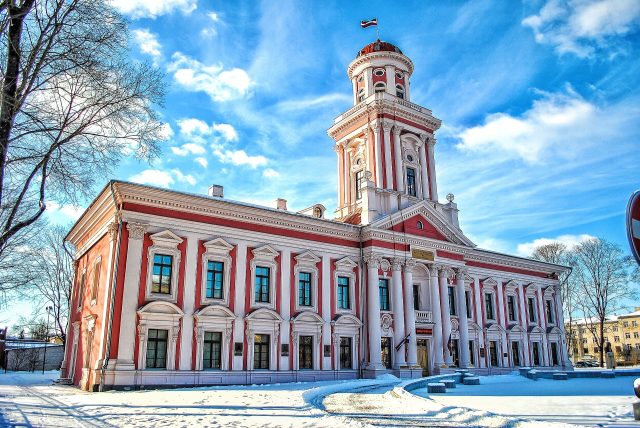
Jelgava Palace stands as one of Latvia’s most imposing architectural landmarks, a building deeply woven into the history of the Kurzeme region and the country as a whole. Designed in the 18th century by the Italian architect Bartolomeo Rastrelli, the palace was conceived as the grand residence of the Dukes of Courland, one of the most influential noble families in the Baltic. Today, it remains not just a monument to past grandeur but a living cultural space where history and modernity coexist.
Construction unfolded in stages, with the palace’s appearance evolving alongside the ambitions of its patrons. What began as a modest estate expanded into a full-fledged Baroque masterpiece under Duke Ernst Johann Biron, a favorite of the Russian Empress Anna Ioannovna. Rastrelli, already renowned for his work in St. Petersburg and Tsarskoye Selo, brought his signature style to Jelgava—elaborate facades, symmetrical compositions, and rich ornamentation. Yet by the time the palace neared completion, tastes had shifted; neoclassicism was rising, and some elements of the design appear more restrained than in Rastrelli’s earlier works.
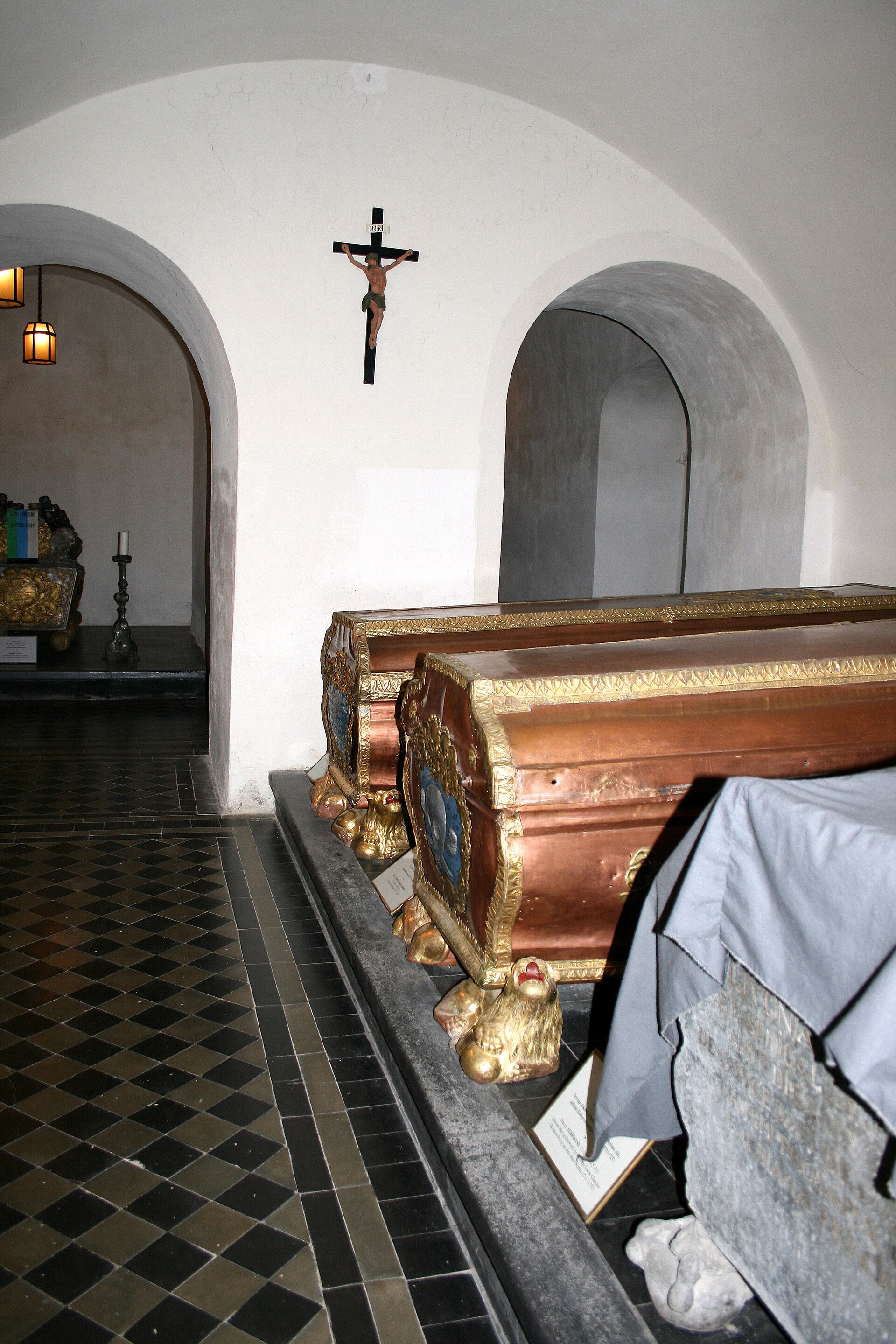
The interiors once dazzled with opulence. Grand halls were adorned with marble, gilding, and intricate stucco, while walls featured frescoes and portraits of the dukes. The Golden Gallery, where balls and receptions were held, was particularly magnificent. Much of this splendor was lost to war and fire, but surviving details—like the Italian marble staircases or carved doors—offer a glimpse of the palace’s former glory. Now, the building houses exhibitions of the Latvia University of Life Sciences and Technologies, which has owned it since the mid-20th century.
Jelgava Palace is inseparable from the fate of the Duchy of Courland, a small but strategically important state that spent centuries balancing between Polish, Swedish, and Russian influence. In the 18th century, the duchy flourished, and the palace became its political and cultural heart. Foreign envoys were received here, lavish hunts and festivities were held, and the surrounding park buzzed with courtiers. After Courland was absorbed into the Russian Empire in 1795, the palace lost its status as a royal residence but remained an important administrative site. In the 19th century, it served as a provincial courthouse and later as a cadet school.
The palace park is a destination in its own right. Designed in the English style, it features winding paths, ponds, and artificial hills. In the 18th century, a small menagerie even housed deer and exotic birds. Today, the park is a favorite spot for locals. Open-air concerts take place in summer, and in winter, the ponds freeze over for skating. Ancient trees, some dating back to the ducal era, lend the place a sense of timeless tranquility.
Despite surviving wars and fires, the palace retains its monumental presence. World War II inflicted severe damage—roofs were destroyed, facades scarred, and interiors gutted. Soviet-era restoration prioritized functionality over opulence, yet the building still commands attention. Its long facades, tall windows, and massive columns evoke the grandeur of its past. Visitors can explore not only university lecture halls but also a museum displaying archaeological finds, old maps of Courland, and portraits of the dukes.
More than just an architectural monument, Jelgava Palace is a living testament to the region’s complex history. It has witnessed rises and falls, changing hands and eras, yet remains a symbol of Kurzeme. For locals, it’s a point of pride, a reminder that their city was once the capital of a small but influential state. For travelers, it offers a chance to step into history—felt in the cool halls where music once played, in the park where courtiers strolled, and even in the university corridors where students now gather.
A visit to the palace pairs well with a walk through Jelgava itself. The city is small but carries a distinct atmosphere—unhurried, provincial, with echoes of its former significance. Nearby stands St. Anne’s Church, another Baroque gem, while the bridge over the Lielupe River offers views of the water and old quarters. Jelgava sees few tourists, which only adds to its charm. Here, you can wander streets at leisure, admire historic facades, and linger in cozy cafés, feeling like part of the everyday rhythm.
Jelgava Palace is a place where history isn’t just preserved in exhibits but lingers in the air. It lacks the pomp of Rastrelli’s St. Petersburg palaces or the tourist crowds of Europe’s famous castles, and that’s precisely what makes it special. There are no bustling tour groups or overbearing guides—just the quiet of old halls, the rustle of leaves in the park, and the sense that time moves a little slower here. For those interested in Baltic history, it’s an essential stop; for everyone else, it’s simply a beautiful, unusual place to step briefly into the past.