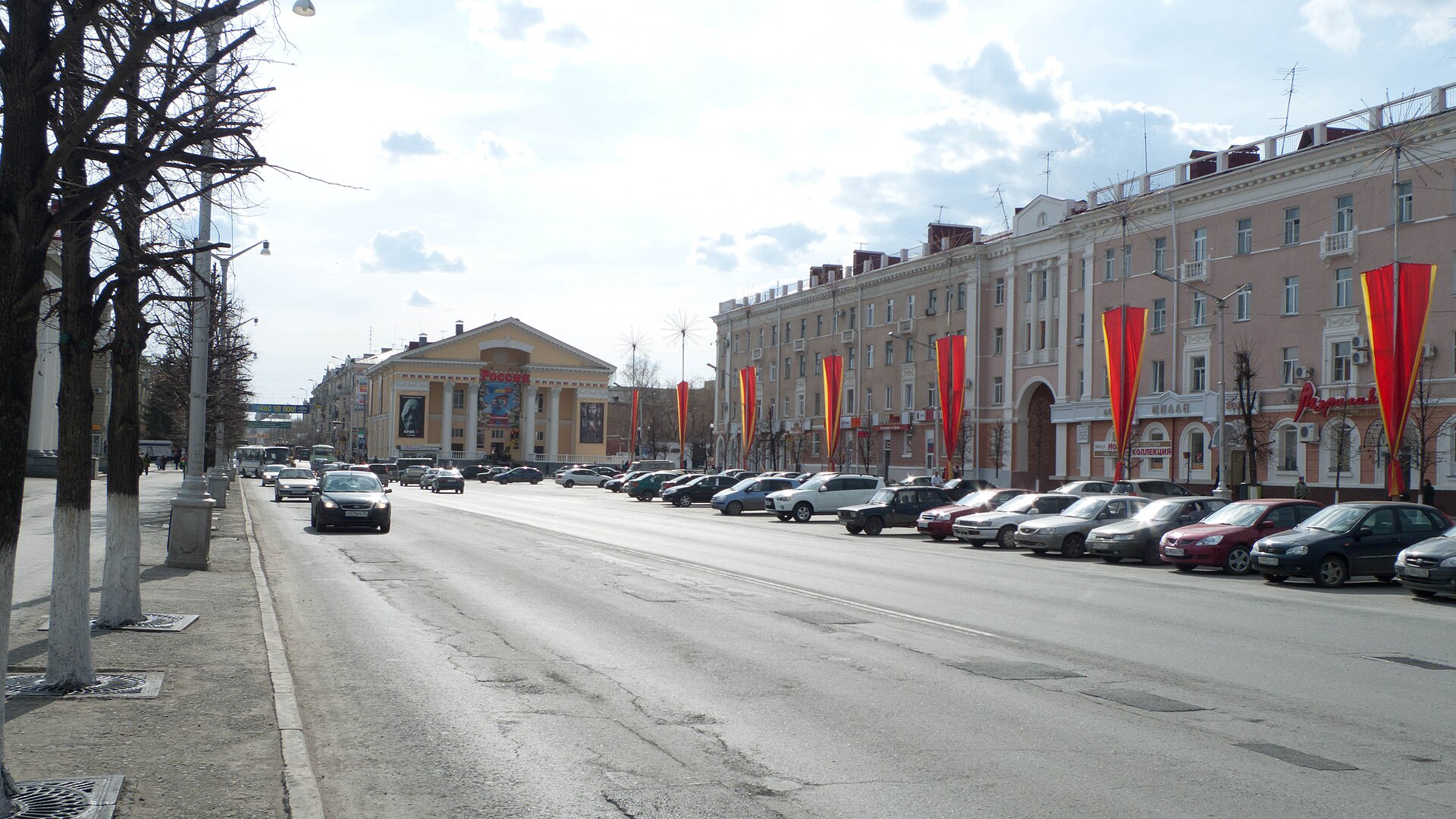
Lenin Square doesn’t stand out immediately. It lacks grand monuments or tourist crowds. Instead, it reveals itself gradually—a quiet conversation that deepens the longer you stay. This is the center of a small Belarusian town, where history, daily routines, and provincial rhythms blend without fuss.
The architecture is straightforward: two- or three-story buildings with shops on the ground floors, offices above, and modest cafés. At the square’s heart, a Lenin statue faces the road, as if observing the flow of life. The design isn’t meant to impress; it’s practical, lived-in, and cared for.
Gorodishche’s modern identity took shape in the 20th century. The square became a symbol of that era, marking the town’s growth from a settlement into a district center. In Soviet times, it hosted parades and rallies, but it was also where people met after work, strolled with friends, or celebrated holidays. That role hasn’t vanished. Summer brings occasional concerts; winter turns it into an ice rink. On ordinary days, it’s where you sit on a bench, drink coffee, or wait for the bus.
The square isn’t Gorodishche’s historic core. That lies near the Ptich River, where an ancient fortress once stood. But here, at the intersection of main roads, modern life converges. Buses arrive from Minsk and Slutsk. You can find what you need quickly. It’s the town’s unassuming hub—reliable, familiar, and always there.
For some, it’s a stop on the way to work. For others, a meeting spot. School ceremonies happen here. Veterans gather. Fairs bring the community together. These moments make the square more than just a space—it’s part of the town’s living fabric.
Gorodishche changes slowly. New shops open. Facades get fresh paint. Public spaces are tidied. Lenin Square sees small renovations—repaved paths, new lampposts—but its character stays the same. That’s its strength: it doesn’t pretend to be anything else.
To an outsider, it might seem ordinary. But spend half an hour here, and you’ll notice the details. Locals greeting each other. People hurrying to work. Parents walking with children. A shopkeeper pulling a chair outside to catch the sun. These small moments paint a portrait of provincial life—unhurried, unpolished, but full of quiet charm.
This isn’t a place for dramatic photos or instant impressions. But if you’re in Gorodishche, pause here. You might catch something intangible—the spirit of Belarusian provincial life, which lingers in memory. A place where time moves at its own pace, where history isn’t just in the past but in the everyday.