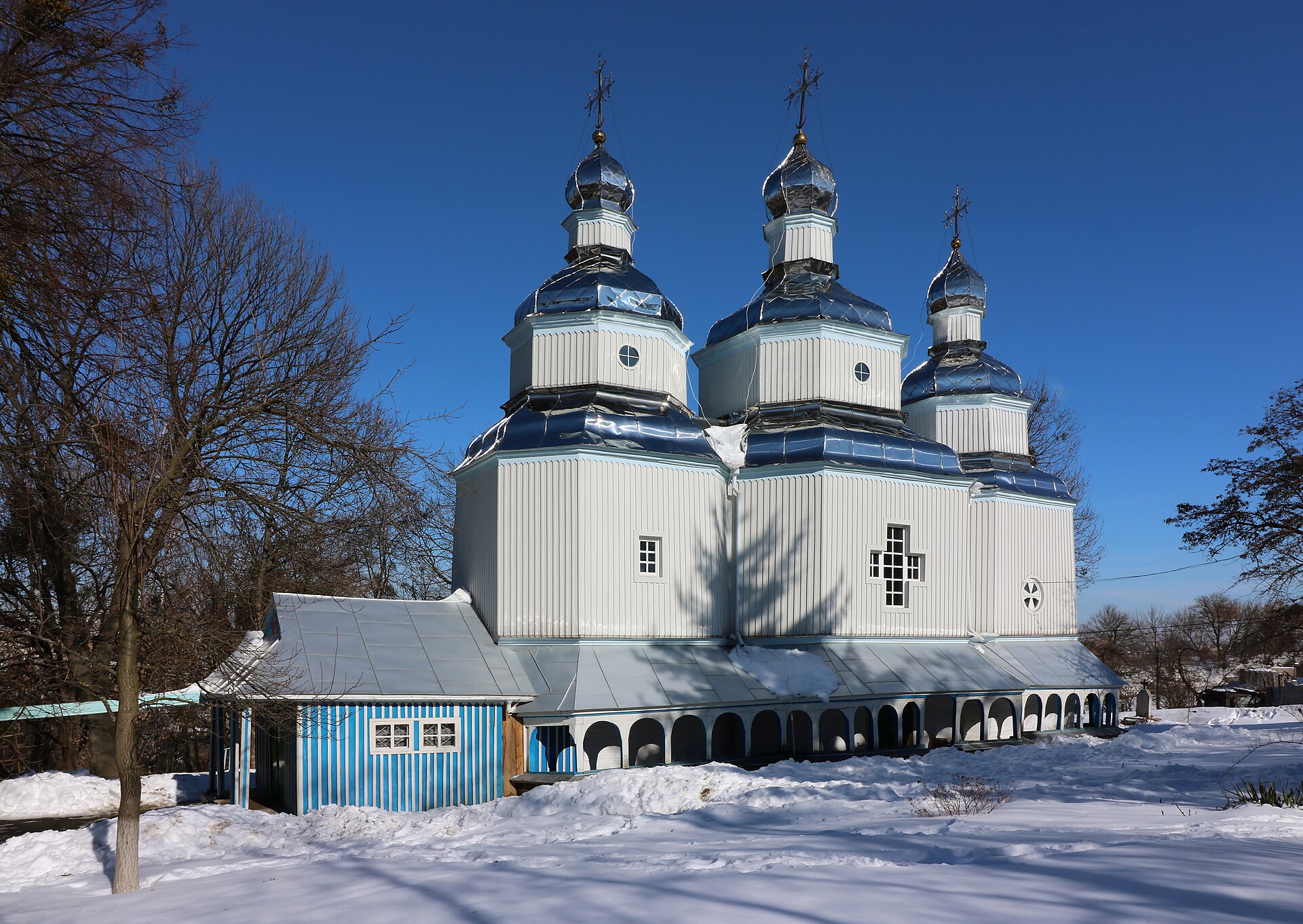
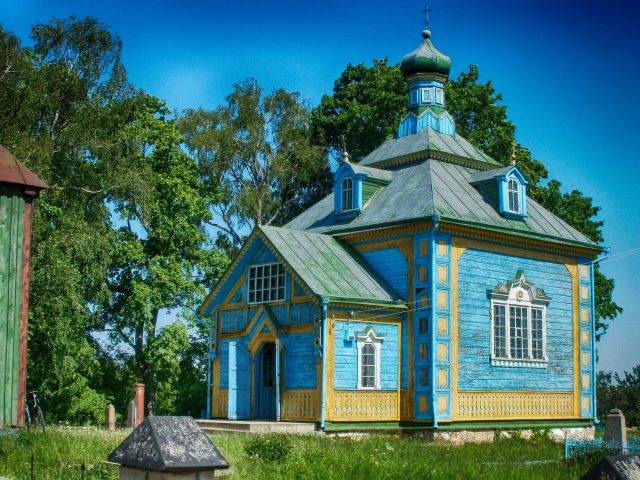
St. Nicholas Church in Haradzishcha is one of those rare places that seem untouched by time, where the past lingers in the quiet dignity of old architecture. Built in the early 20th century, it stands on a gentle hill in the center of the village, its white walls and traditional Orthodox dome visible from afar. Yet the true charm of this place isn’t in its outward appearance—it’s in the details, in the stories that seem to float in the air around it.
Haradzishcha itself is a small settlement with deep roots. First mentioned in chronicles as far back as the 16th century, it was once part of the Grand Duchy of Lithuania, a crossroads for trade routes that shaped its early history. By the 19th century, it had become part of the Russian Empire, and it was during this quieter period that the church was built. Dedicated to St. Nicholas the Wonderworker, the patron saint of travelers and seafarers, the church reflected the local way of life—one tied to the land, to rivers, and to the hard work of farming. For generations, people here turned to St. Nicholas for protection, whether on long journeys or in daily struggles.
The church’s architecture blends elements of the Neo-Russian style with traditional Orthodox design. Though modest in size, the building is harmonious—its tall central dome flanked by four smaller ones, a slender bell tower with a pointed roof, and arched windows framed by delicate wooden carvings. Inside, the space is simple but bright, with an iconostasis in the classic style. The frescoes on the walls, painted by local artisans, are unpretentious yet sincere, adding a warmth to the interior that feels almost personal.
Unlike grand cathedrals, St. Nicholas Church was never wealthy or famous, but it has always been a spiritual anchor for the community. Even during the Soviet era, when many churches were closed or repurposed, this one survived. Perhaps because Haradzishcha was too small to draw much attention, it escaped the fate of being turned into a warehouse or a cultural center. Services continued quietly, with baptisms, weddings, and funerals held discreetly, as if the village itself was protecting its sacred place.
Today, the church remains active, drawing not just locals but also the occasional traveler or pilgrim. There’s no tourist bustle here, no crowds snapping photos—just the quiet hum of devotion. On Sundays, the sound of bells calls people to service, while on weekdays, the doors stay open for those who seek a moment of solitude, reflection, or prayer. The scent of incense and candle wax lingers in the air, and the flickering light from the icons creates a sense of timelessness.
Just beyond the church lies an old cemetery, where generations of Haradzishcha’s residents rest beneath weathered gravestones. Some markers are simple wooden crosses, others are stone slabs with faded names and dates. A few are so old that the inscriptions have nearly worn away, while others are more recent. The cemetery isn’t fenced or guarded, but locals tend to it—raking leaves, repairing fences—keeping it as much a part of the village as the church itself.
Haradzishcha isn’t a place you’ll find on most travel itineraries, and that’s part of its appeal. There are no souvenir shops, no tour guides with megaphones, no overpriced cafes. Instead, there’s a chance to see Belarus as it once was: unhurried, unpolished, and deeply human. St. Nicholas Church isn’t just a historical monument—it’s a living piece of the past, where the rhythm of life moves at its own pace.
If you ever find yourself in this part of the country, take a moment to stop. Walk up the hill, step inside, and listen to the silence. You won’t find golden domes or ancient relics here, but you might feel something far more meaningful—the quiet strength of faith that has sustained people in these lands for centuries, and the rare sense of authenticity that’s so hard to come by in the modern world.