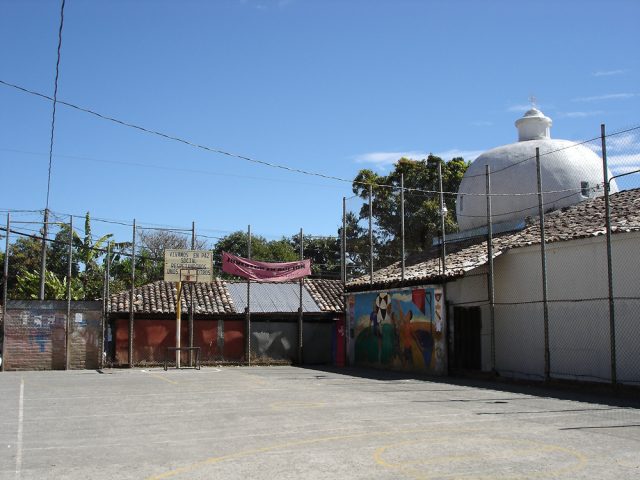
Las Americas Square in San Francisco Gotera is one of those quiet places where a town reveals its true character. It’s not grand or flashy, but it has a way of making you slow down without even realizing it. The square is small, just enough space for a few trees, a handful of benches, and the kind of open-air conversations that happen when people aren’t in a hurry. There’s no rush here, no tourist crowds, just the easy rhythm of daily life unfolding under the shade of low-hanging branches.
San Francisco Gotera isn’t the kind of place most travelers seek out. It sits off the main routes, overshadowed by El Salvador’s more famous destinations. But those who do stop here often find themselves surprised by its unassuming charm. The town has a way of feeling lived-in, the kind of place where people know each other’s names and time moves at its own pace. Las Americas Square is the heart of that feeling. In the mornings, you might see older men hunched over domino games, their laughter mixing with the clatter of tiles. By afternoon, children take over, chasing soccer balls across the pavement or darting between the trees. And as evening falls, the square fills with the murmur of young people gathered around the fountain, sharing stories or just watching the day slip away.
The architecture of the square is simple, almost understated. The pavement is laid in clean, geometric patterns that lead the eye toward the center, where a modest fountain bubbles quietly. The buildings around it are low and unremarkable—small shops, a café or two, the occasional municipal office—nothing that would draw a second glance. But that’s part of its appeal. There’s no grand design here, just a space built for people, not for show. The trees provide shade when the sun is high, and the benches are always occupied, whether by someone reading a newspaper or just watching the world go by.
The history of Las Americas Square is woven into the history of San Francisco Gotera itself. The town was founded in the late 19th century as a small settlement along the route between San Salvador and the eastern regions of the country. Over time, it grew into a regional hub, a place where farmers, traders, and officials would gather. The square became the town’s public living room, the spot where festivals were held, deals were struck, and news was shared. Today, it’s no longer the center of grand events, but it still plays its role. On weekends, you might stumble upon a local festival, a live band, or a community gathering, the kind of small-town happenings that don’t make it into guidebooks but give a place its soul.
The fountain at the center of the square is easy to overlook. It’s not particularly grand—just a shallow basin with a few streams of water—but it has a way of drawing people in. On hot afternoons, children wade in its edges, splashing water on their faces. Adults sometimes sit on the rim, dipping their hands in to cool off. And when the lights come on at dusk, the water takes on a soft glow, turning the square into something almost magical, if only for a moment. It’s the kind of detail that makes a place feel alive, not just a backdrop for photos.
Las Americas Square isn’t the kind of place you visit for landmarks or Instagram-worthy shots. There are no towering monuments here, no museums or historic plaques. What it offers instead is something harder to find in bigger cities: a sense of real life. It’s a place where you can sit and watch the world go by—the way the light filters through the leaves, the sound of a vendor calling out from a nearby stall, the laughter of kids playing tag. Sometimes, those quiet moments leave a deeper impression than the most famous sights.
If you find yourself in San Francisco Gotera, don’t just pass through. Take a detour to the square, grab a cold drink from one of the little shops nearby, and find a bench. You won’t find anything extraordinary here, and that’s exactly the point. Las Americas Square isn’t about what it has, but about how it feels. It’s a reminder that sometimes the best places aren’t the ones you plan to visit, but the ones that make you want to stay a little longer.