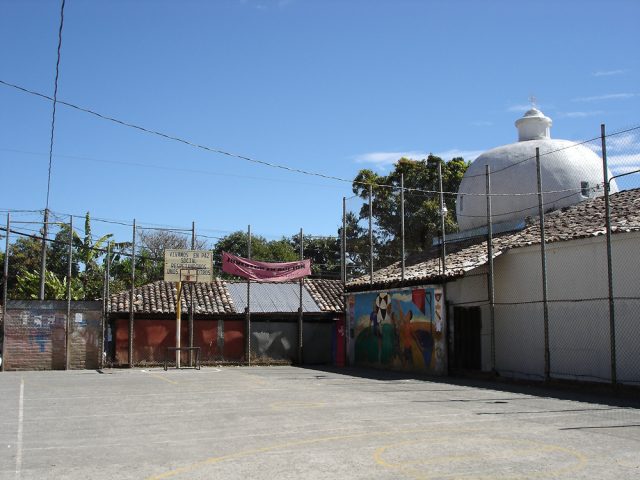
Balboa Park in San Francisco Gotera is the kind of place that doesn’t announce itself at first glance. It isn’t one of those manicured urban plazas or tourist hotspots designed for quick visits and Instagram shots. There are no crowds, no vendors hawking souvenirs, no sense of urgency. Instead, the park unfolds quietly—dappled shade from old trees, the murmur of leaves, the feeling that time moves just a little slower here than it does beyond its borders.
San Francisco Gotera is a small city in eastern El Salvador, tucked away in the department of San Miguel. It isn’t a name that appears on most travel itineraries, and that might be why the park has retained its unpolished charm. The town moves at its own pace, and Balboa Park has become its unofficial heart. Locals come here in the mornings with their children, arrange meetups under the trees, or simply sit on a bench with a cup of coffee. For visitors, it’s a rare chance to see El Salvador without the gloss of tourism—a place where life isn’t performed for an audience but simply lived.
The park itself is modest but well-kept. Its main feature is a network of paths lined with tall trees, some native, others brought from distant places long ago. Their canopies offer relief from the heat, even on the warmest days. At the center, a small fountain draws children who splash in its shallow basin, while on weekends, musicians sometimes set up nearby or artisans display handmade goods. There’s nothing grand about it, but that’s precisely what makes it feel welcoming.
The park’s history is woven into the fabric of the city. San Francisco Gotera was founded in the late 18th century, and while there’s no exact record of when the park first took shape, it likely emerged as a public space during the town’s growth. In those days, such parks weren’t just for leisure—they were symbols of progress, an attempt to bring a touch of European refinement to provincial life. The name Balboa honors Vasco Núñez de Balboa, the Spanish explorer who first crossed the Isthmus of Panama and reached the Pacific. For El Salvador, as for much of Latin America, his name is part of a colonial legacy that still lingers in architecture, street names, and everyday rhythms.
There’s nothing ornate about the park’s design. No towering statues or grand monuments, just a few subtle details that hint at its past. Old lampposts from the mid-20th century still stand along the paths, and wooden gazebos recall the days when local bands played here. In recent decades, the park has seen some updates—new benches, a playground, paved walkways—but these changes haven’t erased its quiet character. It remains a place where the pace of life feels unhurried, where the biggest event of the day might be an elderly couple playing dominoes under the trees.
For locals, Balboa Park is more than just green space. It’s where the town gathers for festivals and celebrations. In December, Christmas festivities fill the air with fireworks and the scent of traditional foods. In August, during the festival of San Francisco de Asís, the city’s patron saint, the park becomes the center of lively street fairs. Music plays, the smell of grilled plantains and pupusas drifts through the air, and children chase balloons. For outsiders, these moments offer a glimpse of authentic Salvadoran life, far from the curated experiences of tourist zones.
This isn’t the kind of place you’d cross the country to see. But if you find yourself in San Francisco Gotera or exploring eastern El Salvador, it’s worth a visit. There are no luxury hotels or fine-dining restaurants here, no crowds of tourists. Instead, there’s the chance to step into the rhythm of a small Salvadoran town—to watch how people spend their free time, to sit in the shade and listen to the hum of everyday life.
Around the park, a few small cafés and shops serve local food. You can try pupusas, the thick corn tortillas stuffed with cheese, beans, or pork, or order a cup of strong Salvadoran coffee, which locals drink at all hours. On lucky days, a small market sets up nearby, selling fresh fruit, spices, and handmade crafts. These simple pleasures are part of what makes the park feel alive, tied to the town’s daily routines.
Balboa Park isn’t just about the past—it’s a reflection of El Salvador’s present. There are no grand declarations of importance here, just the quiet certainty that life goes on, no matter what. In a country that has endured civil war, natural disasters, and economic struggles, places like this park become symbols of resilience. They remind you that even in difficult times, people find ways to live, to celebrate, to savor small moments. That might be the park’s real value—not in its history or design, but in the sense of calm it offers to anyone who wanders in.