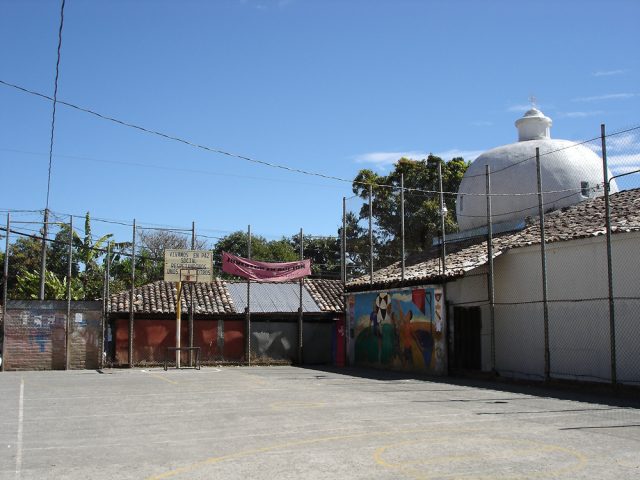
San Francisco Gotera’s Church of Saint Francis is one of those quiet places where time seems to slow down. Tucked in the heart of this small eastern Salvadoran town, surrounded by rolling hills and coffee plantations, it stands as more than just a place of worship. For the people here, it’s a symbol of endurance, a building that has witnessed the highs and lows of the region’s history. From the outside, the church appears unassuming, its simple lines belying the stories held within its walls.
The architecture blends colonial influences with local craftsmanship. Thick walls of volcanic stone, a hallmark of the era, give the structure both solidity and resilience, a necessary feature in a country prone to earthquakes. The facade is modest, with a small portal and a single bell tower, while inside, the nave opens up into a spacious, high-ceilinged space. Light filters through narrow windows, casting a soft glow over the wooden figures of saints carved by local artisans. The walls are adorned with faded frescoes depicting scenes from the life of Saint Francis, their details worn but still visible.
The church’s history is intertwined with that of the town itself. San Francisco Gotera was founded in the late 16th century by Spanish settlers, and the church was among the first stone buildings erected here. In those early days, the region was a remote outpost of the Spanish Empire, and the church served as more than just a religious center. It was a gathering place where colonists met to settle disputes, conduct business, and mark the milestones of life. During the wars for Latin American independence, it became a refuge for locals, its walls bearing witness to both the joy of liberation and the sorrow of loss.
By the 19th century, as El Salvador gained independence, the church remained a cornerstone of the community. The town grew around it, with new homes, roads, and schools shaping its character. The church continued to be the backdrop for baptisms, weddings, and funerals, its role in daily life unchanged. Even during the civil war of the 20th century, it never closed its doors. For many, it became a place of solace, a reminder that faith and hope could endure even in the darkest times.
Today, the Church of Saint Francis is both an active place of worship and a piece of El Salvador’s cultural heritage. Visitors come not only to pray but also to explore the layers of history preserved within its walls. Inside, you can find yellowed church records and artifacts from centuries past, offering glimpses into the town’s evolution. Religious festivals bring the church to life, filling it with music, flowers, and the scent of candles. Locals in traditional dress gather in the square outside, their celebrations a vivid contrast to the quiet of everyday life.
San Francisco Gotera itself is a town that moves at its own pace. Unlike the bustling tourist hubs of San Salvador or Santa Ana, it offers a slower, more intimate experience. The streets are narrow and winding, lined with small cafes serving traditional Salvadoran dishes. The central park is a place to sit and watch the world go by, to soak in the rhythm of local life. The church, with its central location, is a natural starting point for exploring the town, its square a perfect spot to pause and take in the surroundings.
For those interested in history, the Church of Saint Francis is a window into El Salvador’s past. It tells the story of a nation shaped by struggle and resilience, of people who found strength in their faith. There’s no grand opulence here, no gilded altars or towering spires. Instead, there’s something far more enduring: authenticity, a sense of place, and a connection to the generations who came before. It’s a place that invites reflection, not just on matters of faith, but on what truly matters in life.