Visoko is one of those Bosnian towns where history doesn’t just linger in museums or plaques—it breathes in the streets, in the way sunlight falls on old stone, in the quiet conversations of people who have lived here for generations. At the heart of it all lies King Tvrtko Square, a place where the layers of Bosnia’s past are visible in every corner, every building, every worn cobblestone. This isn’t a town that shouts its significance; it simply exists, carrying the weight of centuries with quiet dignity.
The square takes its name from Tvrtko I, the first king of an independent Bosnian state in the 14th century. Under his rule, Visoko flourished as a political and economic hub, a place where medieval Bosnia’s ambitions took shape. It was here that kings were crowned, where merchants traded, and where the foundations of a nation were laid. Today, the square doesn’t feel like a relic of that era—it feels like a living extension of it. The past isn’t preserved behind glass; it’s woven into the fabric of daily life. You might not find grand monuments or flashy exhibits, but if you look closely, the echoes are there: in the way the buildings lean slightly with age, in the names of streets that haven’t changed in centuries, in the way locals still gather where their ancestors once did.
The architecture around the square tells a story of shifting powers and cultures. Ottoman influence is unmistakable in the low-slung stone houses with their wooden eaves and latticed windows, built for a climate where summers are hot and winters cold. Later, under Austro-Hungarian rule, the town acquired a different aesthetic—more structured, more imposing. The former town hall, with its thick walls and arched windows, stands as a reminder of that era, its solidity contrasting with the lighter, more organic forms of the Ottoman buildings. The two styles don’t clash; they coexist, as if each period simply added its own chapter to the same story.
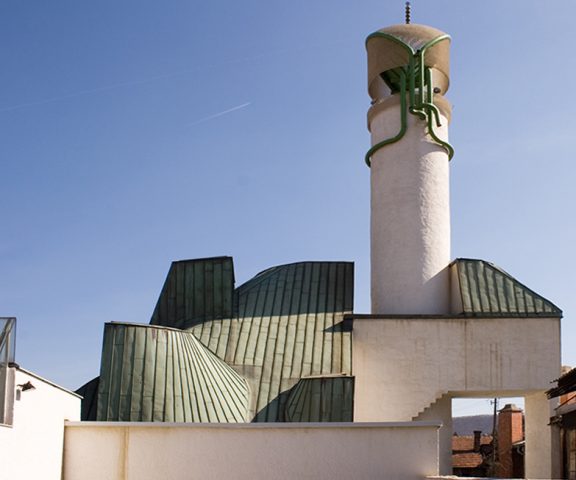
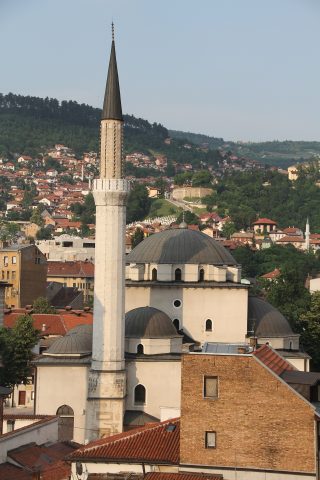
At the center of the square is a small fountain, its water trickling softly into a basin. It’s not an ornate or particularly striking feature, but it serves as a natural gathering point. In the mornings, when the air is still cool, you might see an elderly man sipping coffee on one of the benches, watching the world wake up. By midday, the square fills with the hum of conversation—friends meeting, children playing, the occasional vendor setting up a stall. In the evenings, the sound of the fountain blends with the distant call to prayer from the nearby Šerefudin White Mosque, its minaret rising above the rooftops like a silent sentinel.
The mosque itself is worth a visit, not just for its history but for its understated beauty. Built in the 16th century, it has been restored over the years but retains a sense of harmony in its design—white walls, graceful arches, and a courtyard that invites quiet reflection. Even if you’re not familiar with Islamic traditions, there’s something peaceful about the way the space is arranged, the way light filters through the trees in the courtyard. It’s a place that doesn’t demand attention but rewards those who take the time to notice it.
Visoko isn’t a town that caters to tourists. There are no souvenir shops lining the square, no guided tours with rehearsed scripts, no crowds jostling for the best photo. That’s part of its charm. Here, you can sit on a bench and watch life unfold at its own pace. In the summer, the shade of the buildings offers respite from the heat, and the scent of fresh bread drifts from nearby bakeries. In the winter, the square is strung with lights, and the air carries the warmth of woodsmoke and spiced tea. The rhythm of the town is unhurried, as if it has all the time in the world.
For a few hours each morning, the square transforms into a market. Farmers from the surrounding villages arrive with their produce—bright red peppers, plums still dusted with morning dew, jars of honey, sacks of walnuts. The goods are spread out on blankets or makeshift tables, and the air fills with the sounds of bargaining and laughter. By noon, the market disappears as quickly as it arrived, leaving the square to return to its usual quiet. It’s a reminder that life here is still tied to the land, to the seasons, to the simple act of growing and sharing food.
If you wander away from the square, down the narrow streets that slope toward the river Bosna, you’ll find another side of Visoko. The river cuts through the town, its banks lined with willows that dip their branches into the water. In medieval times, this was where craftsmen worked—blacksmiths, weavers, potters—shaping the materials that kept the town running. Today, the workshops are gone, but the river remains, its current steady and unchanging. There’s a small promenade along the bank, a place where locals come to walk, to fish, or simply to sit and listen to the water.
What makes King Tvrtko Square special isn’t any single feature or landmark. It’s the way the place feels alive, not just with history but with the people who call it home. The old men playing chess in the shade, the women chatting as they carry groceries, the children kicking a ball across the cobblestones—these are the threads that hold the town together. Visoko doesn’t try to impress; it doesn’t need to. It’s a place where the past and present coexist without fanfare, where the weight of history is carried lightly, like a story passed down through generations. To visit is to step into that story, if only for a little while.