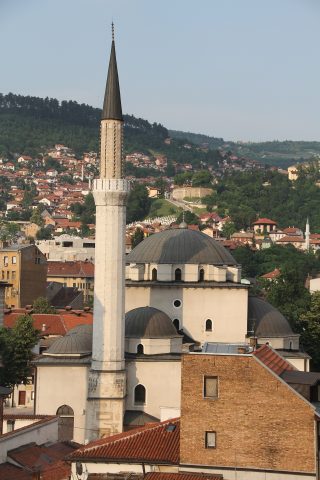
Visoko is a quiet town in Bosnia and Herzegovina. It’s known for pyramid-shaped hills that divide archaeologists. But the town also holds spaces that tell other stories—of faith, community, and daily life. One of them is the Šerefudin White Mosque, or the White Mosque, as locals call it. It stands on the edge of town, where narrow streets open into residential neighborhoods, houses clustered close together.
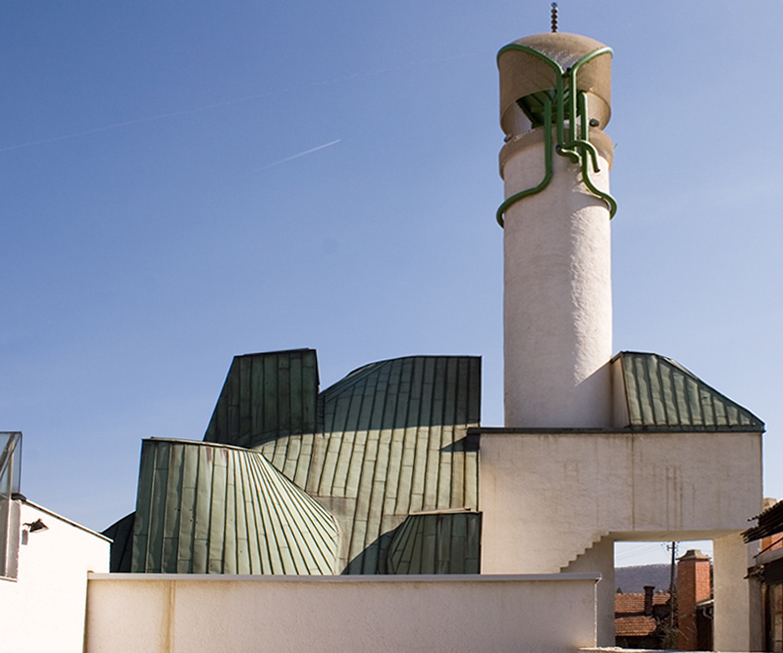
The White Mosque isn’t old. It was finished in the late 20th century. Its architect, Zlatko Ugljen, was already well-known in Bosnian design. His work here became a key example of modern Islamic architecture in the region. Ugljen didn’t copy the past or follow trends. He wanted to create something rooted yet forward-looking, a balance that made the mosque stand out—not just in Visoko, but in the country.
The mosque is white. Built from pale stone, it glows in sunlight. The design avoids the usual cubes and domes of traditional mosques. Instead, it uses fluid lines and asymmetry. The main entrance has a portico with slender columns. The minaret, tall and graceful, doesn’t stand apart. It feels like part of the building, as if they were always meant to be together.
Inside, the space feels open. No forest of columns. Geometric shapes on the ceiling and walls create an airy atmosphere. The mihrab, pointing toward Mecca, is made of white marble. It blends traditional motifs with a contemporary look. Stained-glass windows cast shifting patterns of light and shadow. The carpets are simple, their neutral tones fitting the modern aesthetic. Every detail feels intentional, making the space familiar yet unexpected.
The mosque isn’t just for prayer. It hosts lectures, exhibitions, and gatherings. In warmer months, the courtyard fills with children and teenagers. Visoko has a Muslim majority, and the mosque is central to daily life. It preserves traditions while staying connected to the present. That balance is its strength—it doesn’t choose between past and future but holds both.
Architects and critics call the White Mosque one of Europe’s finest examples of modern Islamic architecture. It doesn’t copy old styles or chase trends. It reimagines tradition in a way that feels relevant. Ugljen’s design avoids nostalgia and cold minimalism. The building doesn’t feel out of place. It belongs, as much a part of Visoko as the people who visit it.
For travelers, the mosque is often unexpected. Many come to Visoko for pyramids or fortresses. The White Mosque offers something else—a reminder that Bosnia blends eras and cultures. You don’t need preparation. Walk in, look around, and let the quiet settle over you.
Visoko isn’t crowded with tourists. The White Mosque isn’t a place for dramatic photos or grand stories. It’s for those who want to see how people live here today—how faith, tradition, and modernity coexist. There are no crowds, no guides. Just the stillness of the space and the play of light. Maybe that’s the appeal. It doesn’t ask anything of you. It offers a moment to reflect, to see how a community shapes its own sense of place.