Visoko is a quiet town in Bosnia and Herzegovina that has quietly become one of the country’s most talked-about destinations. Nestled among rolling green hills, it’s home to the Archaeological Park of the Bosnian Pyramid of the Sun—a place that has sparked curiosity, debate, and even controversy. The idea that these hills might not be natural formations but ancient man-made structures has drawn researchers, travelers, and the simply intrigued. Whether you’re a skeptic or a believer, the site offers a rare chance to step into a mystery that refuses to be easily dismissed.
The story of the Bosnian pyramids began in the early 2000s when local researcher Semir Osmanagić proposed a radical theory: the hills around Visoko were not shaped by nature alone but by human hands thousands of years ago. The most prominent of these is the Pyramid of the Sun, a hill that, from certain angles, bears a striking resemblance to the pyramids of Egypt or Mesoamerica. Osmanagić and his supporters argue that beneath the surface lie tunnels, stone blocks, and artifacts pointing to an advanced ancient civilization. Geologists, however, remain unconvinced, citing natural geological processes as the more likely explanation. Yet the debate continues, and the park thrives as a place where visitors can form their own conclusions.
The park itself is open to the public, with the main entrance at the base of the Pyramid of the Sun. A well-marked trail leads to the top, a steady but manageable climb that takes about half an hour. Along the way, the landscape unfolds in layers—lush hills, the winding Bosna River, and the town of Visoko itself. On clear days, the view is particularly striking, offering a sense of why this place might have held significance for people in the past. The summit doesn’t have the polished grandeur of Giza or Teotihuacán, but there’s something undeniably compelling about standing on a hill that so many believe could be something more.
One of the park’s most intriguing features is the network of tunnels beneath the hills. The most famous is the Ravne Tunnel, which researchers claim was part of an ancient underground system. A section of it is open to visitors, with wooden walkways and soft lighting guiding the way. Inside, the air is cool and damp, and the walls bear markings that some interpret as deliberate carvings. Skeptics see these as natural cracks or later additions, but the atmosphere is undeniably eerie. Whether you view it as evidence of an ancient civilization or a fascinating geological quirk, the tunnel adds another layer to the mystery.
Beyond the tunnels, the park includes a small museum displaying artifacts uncovered during excavations. Stone blocks, pottery fragments, and tools are presented as proof of a lost culture, though mainstream archaeology remains skeptical. The museum is modest but thoughtfully arranged, offering a glimpse into how people might have lived in this region millennia ago. It’s not a grand institution, but it serves as a quiet counterpoint to the larger questions the site raises—questions without easy answers.
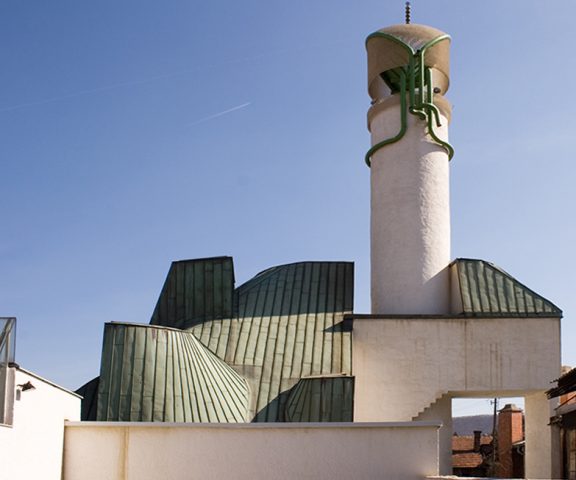
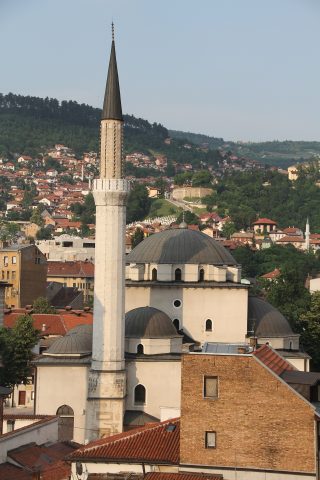
Visoko itself is more than just the pyramids. The town has a long and layered history, from its medieval roots to its time as a key trading hub under Ottoman rule. Later, it became part of the Austro-Hungarian Empire, leaving behind a mix of architectural influences. The old town still holds traces of its past: stone bridges, Ottoman-era mosques, and traditional Bosnian houses with their distinctive wooden balconies. Nearby, the ruins of Visoki Fortress stand as a reminder of the town’s former importance. Built in the 14th century, the fortress once served as a residence for Bosnian rulers, and though little remains today, its presence lingers in the landscape.
What makes the Archaeological Park of the Bosnian Pyramid of the Sun so unusual is its refusal to fit neatly into any category. It’s not a conventional tourist attraction with neatly packaged history, nor is it a place where the answers are clear. Instead, it invites visitors to engage with uncertainty—to walk the trails, explore the tunnels, and decide for themselves what they believe. That ambiguity is part of its appeal. There’s no pressure to accept one narrative over another, just the chance to experience a place where history, myth, and modern inquiry intersect in unexpected ways.
Visiting the park doesn’t require much preparation. Comfortable shoes, water, and a sense of curiosity are all you need. Visoko is an easy trip from Sarajevo, accessible by bus or car, and the park is straightforward to find. The town is small, and locals are usually happy to point the way. Whether the hills turn out to be pyramids or not, the experience of walking among them, exploring the tunnels, and taking in the views is memorable in its own right. For those traveling through Bosnia, it’s a detour that offers something different—a reminder that not all mysteries need to be solved to be worth exploring.