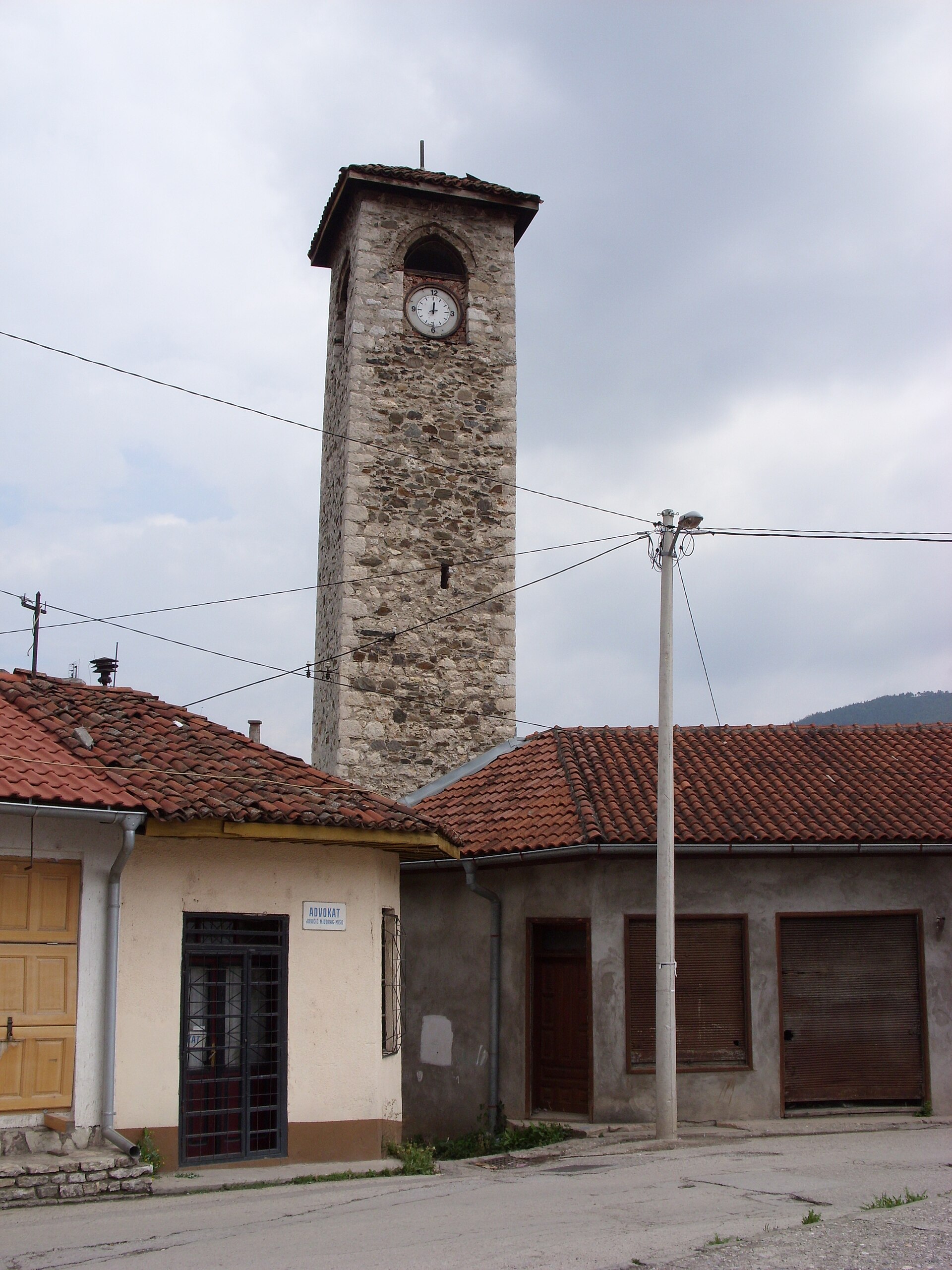
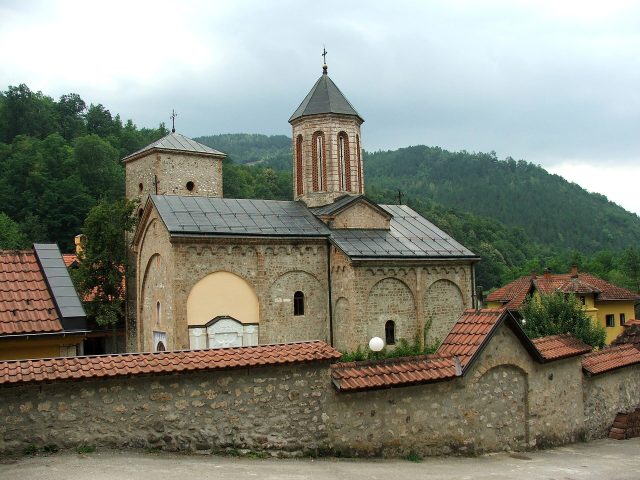
Bajina Bašta is one of those small Serbian towns where time seems to move at its own unhurried pace, and King Peter’s Square sits at its quiet heart. Unlike the grand, bustling squares of Belgrade or Novi Sad, this one feels more like a living room for the town—a place where people gather not for spectacle, but for the simple rhythm of daily life. The square is modest in size, framed by low-rise buildings that wear their age with dignity, their facades a patchwork of pastel hues and weathered stone. Here, the past isn’t preserved behind glass; it’s woven into the cracks of the pavement and the stories told over coffee at the nearby cafés.
The square takes its name from King Peter I of Serbia, a figure who looms large in the country’s history. He ruled during a turbulent period, steering Serbia through the Balkan Wars and the early years of World War I, and his legacy is still felt in places like this. There’s no grand monument to him here, no towering statue—just a quiet acknowledgment in the name of the square, a reminder that even in small towns, the echoes of national history are never far away. The architecture around the square reflects this layered past: some buildings date back to the late 19th century, when Bajina Bašta was still finding its footing as a town, while others bear the marks of mid-20th-century Yugoslavia, their socialist-era designs blending into the older fabric without fanfare.
At the center of the square, a small fountain trickles water into a shallow basin, its sound barely rising above the hum of conversation. It’s not the kind of fountain that draws crowds of tourists, but it’s the kind that locals might pause beside on a warm afternoon, letting the cool air brush against their faces. Around it, benches are scattered in no particular order, some shaded by the broad leaves of plane trees, others exposed to the sun. In the mornings, older men gather here to play chess or backgammon, their games unfolding in silence broken only by the occasional clink of coffee cups. By midday, the square fills with the chatter of schoolchildren cutting through on their way home, their laughter mixing with the distant clatter of dishes from the restaurants nearby.
The buildings lining the square tell their own stories. The one-story structures, with their arched doorways and wooden shutters, might have once housed shops or workshops, their interiors now repurposed as cafés or small businesses. A few steps away, a slightly taller building stands out—not because it’s grand, but because its facade is adorned with a faded mural, its colors softened by decades of sun and rain. It’s hard to make out the details now, but it might have been a political slogan or a celebration of some long-forgotten local achievement. These small details give the square its character, a sense that it’s not just a place, but a palimpsest of the lives that have passed through it.
What makes King Peter’s Square special isn’t any single landmark, but the way it feels like a natural extension of the town itself. There’s no tourist office here, no souvenir stalls, no signs pointing visitors toward the "must-see" sights. Instead, the square is simply where life happens. In the evenings, when the heat of the day begins to fade, families stroll along the perimeter, stopping to greet neighbors or to let children chase each other in the open space. The cafés spill out onto the sidewalks, their tables crowded with people sipping espresso or rakija, the conversation flowing as easily as the drinks. There’s no rush, no agenda—just the quiet pleasure of being in a place where time doesn’t demand anything of you.
Beyond the square, Bajina Bašta stretches out toward the Drina River, its presence a constant backdrop to life here. The river is why the town exists in the first place, a natural boundary that shaped its growth over centuries. From the square, you can’t see the water, but you can feel its influence in the way the town orients itself, the way the streets slope gently downward as if pulled by the current. The Drina is also a reminder of the town’s resilience—it’s flooded before, reshaping the landscape and the lives of those who live here, but the square has always remained, a steady point in the midst of change.
King Peter’s Square isn’t the kind of place that makes it onto postcards, and that’s part of its charm. It doesn’t need to be grand or dramatic to matter. For the people of Bajina Bašta, it’s a place of small, everyday rituals: the first coffee of the day, the quick stop on the way to work, the slow walk home in the evening. It’s where news is shared, where arguments are settled, where children learn the unspoken rules of community. And for visitors who take the time to sit on one of its benches, it offers something rare—a glimpse into the quiet, unassuming beauty of a town that doesn’t need to shout to be heard.
If you find yourself in Bajina Bašta, don’t expect fanfare. The square won’t announce itself with fanfare or flashy lights. Instead, it will reveal itself slowly, in the way a stranger’s face becomes familiar after a few days of passing them on the street. You might start by noticing the way the light falls across the cobblestones in the late afternoon, or the way the scent of grilled meat drifts from the nearby restaurants as dusk settles in. You might linger over a drink at one of the cafés, watching the world go by at its own pace. And if you’re lucky, you’ll leave with the sense that you’ve touched something real—not just a place on a map, but a corner of the world where life is lived simply, and well.