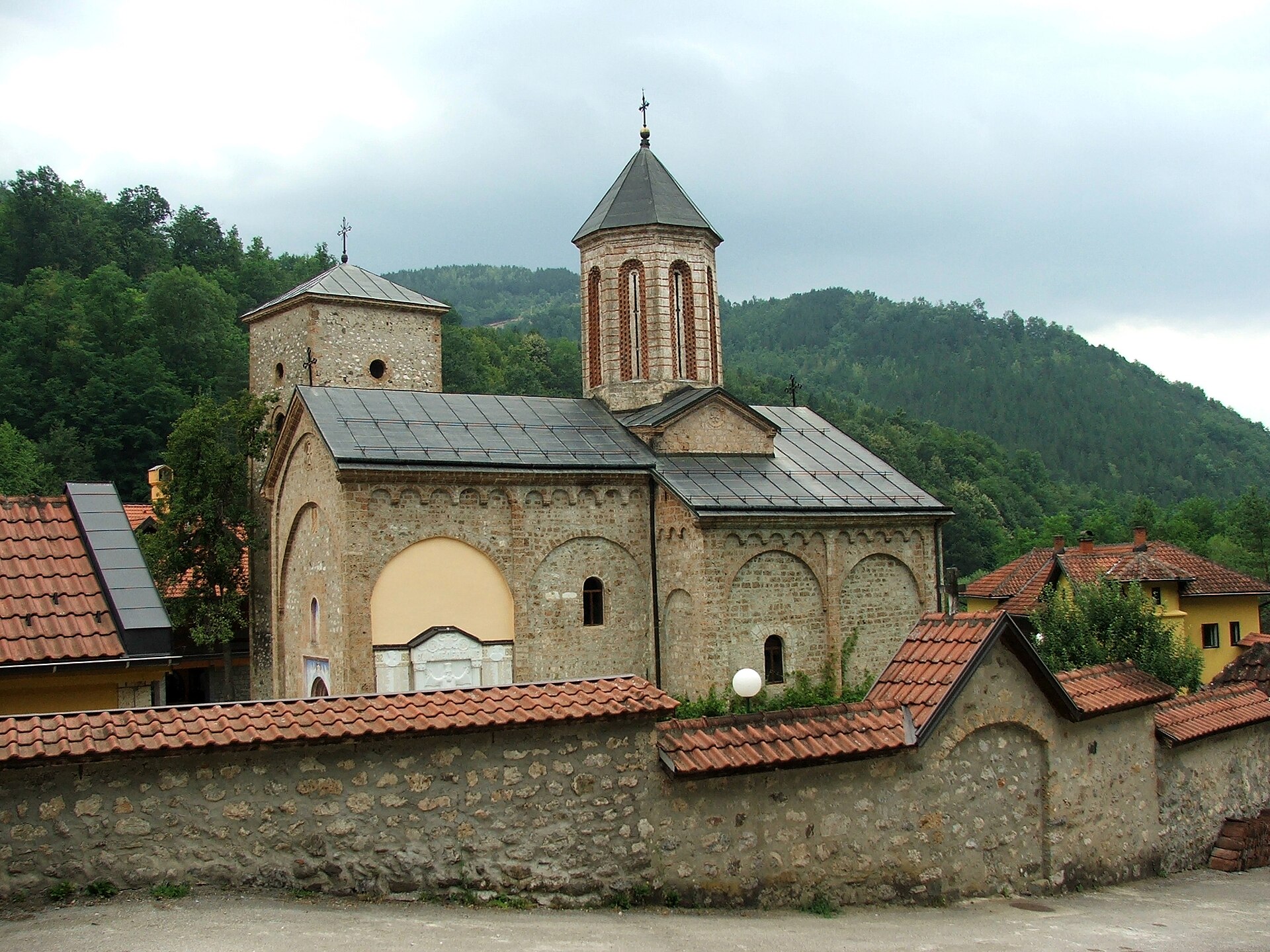
Nestled in the lush folds of western Serbia, where the Drina River carves its way through the rugged landscape, the Monastery of Rača stands as a quiet witness to centuries of history. The surrounding forests, dense with beech and pine, seem to cradle the stone walls of this Orthodox sanctuary, creating a sense of seclusion that feels almost timeless. The monastery’s location, about ten kilometers south of Bajina Bašta, was chosen not just for its natural beauty but for its strategic remoteness—a place where faith and survival could intertwine away from the turmoil of the outside world.
The origins of Rača Monastery are shrouded in the mists of medieval Serbia, with the first written records dating back to the late 13th century. It was founded during the reign of King Dragutin, a ruler whose legacy is often overshadowed by the more celebrated figures of Serbian history, yet whose contributions to the spread of Orthodox Christianity in the region were significant. The monastery quickly became a center of spiritual life, its scriptorium producing some of the most exquisite illuminated manuscripts of the time. These works, painstakingly copied and decorated by monks, were not just religious texts but also a means of preserving Serbian culture during periods of foreign domination.
The architecture of Rača reflects the layered history of the Balkans, where Byzantine influences merged with local traditions. The original church, dedicated to the Ascension of the Lord, was built in the Raška style, characterized by its simple yet sturdy stone construction and a single nave topped with a dome. Over the centuries, the monastery underwent several reconstructions, particularly after the Ottoman invasions that left much of Serbia in ruins. The most devastating blow came in the 17th century when the monastery was burned to the ground by the Turks, forcing the monks to flee. It wasn’t until the early 19th century, during the Serbian Revolution, that Rača was restored to its former glory, this time with a more fortified appearance to withstand future threats.
One of the most fascinating chapters in the monastery’s history is its role as a refuge for the *Rača School*, a group of monks who became legendary for their resistance to Ottoman rule. In the 17th and 18th centuries, these monks traveled across the Habsburg Empire, establishing Serbian Orthodox communities in what is now Hungary, Austria, and even as far as Russia. They carried with them not just religious texts but also the spirit of Serbian identity, ensuring that the culture survived even when the homeland was under foreign occupation. The monastery’s scriptorium, which had once produced manuscripts for local use, now became a hub for disseminating knowledge across borders.
Today, Rača Monastery is a place of pilgrimage for those who seek not just spiritual solace but also a connection to Serbia’s past. The church’s interior, though modest in size, is rich in detail. The frescoes, though faded in places, still tell stories of saints and biblical scenes, their colors muted by time but no less evocative. The iconostasis, a wooden screen adorned with icons, separates the nave from the altar, a common feature in Orthodox churches that symbolizes the divide between the earthly and the divine. The monastery’s library, though not as extensive as it once was, still holds a collection of old manuscripts and printed books, some of which date back to the 18th century.
The atmosphere at Rača is one of quiet resilience. The thick stone walls, the creaking wooden floors, and the scent of incense lingering in the air all speak of a place that has endured. The surrounding forest adds to the sense of tranquility, its rustling leaves and distant birdsong creating a natural soundtrack that contrasts with the silence inside the church. Visitors often remark on the feeling of stepping back in time, as if the monastery exists in its own pocket of history, untouched by the modern world just beyond the trees.
For those who make the journey to Rača, the experience is as much about the landscape as it is about the monastery itself. The road from Bajina Bašta winds through rolling hills and past small villages where life moves at a slower pace. The Drina River, visible in the distance, adds a sense of grandeur to the scene, its waters reflecting the changing seasons. In autumn, the forests turn shades of gold and crimson, while in spring, wildflowers carpet the meadows around the monastery. Even in winter, when snow blankets the ground, Rača takes on a serene, almost mystical quality, its stone walls standing stark against the white landscape.
The monastery is not just a relic of the past but a living part of Serbian Orthodox tradition. Services are still held here, drawing locals and visitors alike, particularly during major religious holidays. The sound of chanting fills the church on these occasions, a reminder that Rača is not just a monument but a place of active worship. The monks who reside here today continue the work of their predecessors, maintaining the buildings, tending to the gardens, and preserving the manuscripts that have survived for centuries.
Rača Monastery is more than just a historical site; it is a symbol of endurance. It has weathered wars, occupations, and the passage of time, yet it remains a place where the past is not just remembered but lived. For those who take the time to visit, it offers a glimpse into the soul of Serbia—a country where faith, history, and nature intertwine in ways that are both profound and deeply human. Whether you come for the architecture, the history, or simply the peace of the forest, Rača leaves an impression that lingers long after you’ve left its stone walls behind.