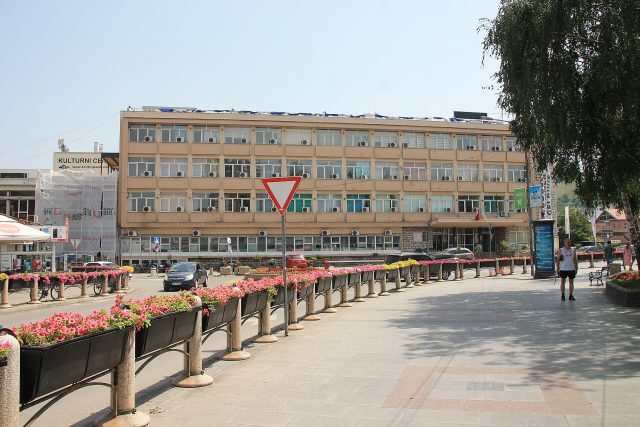
King Alexander Square in Novi Pazar is one of those places where the city reveals itself slowly, without fanfare. There are no crowds rushing toward the next must-see attraction, no tour groups following a guide’s raised umbrella. Instead, life unfolds at its own unhurried pace. Old men play chess under the shade of ancient plane trees, vendors arrange their goods on wooden stalls, and the air carries the scent of freshly baked bread mingling with thick Turkish coffee. The square is less a landmark than a living organism, where different eras and cultures intertwine without effort.
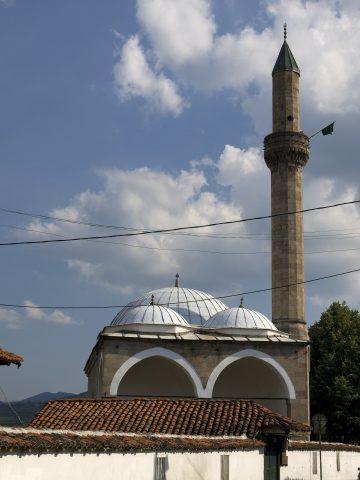
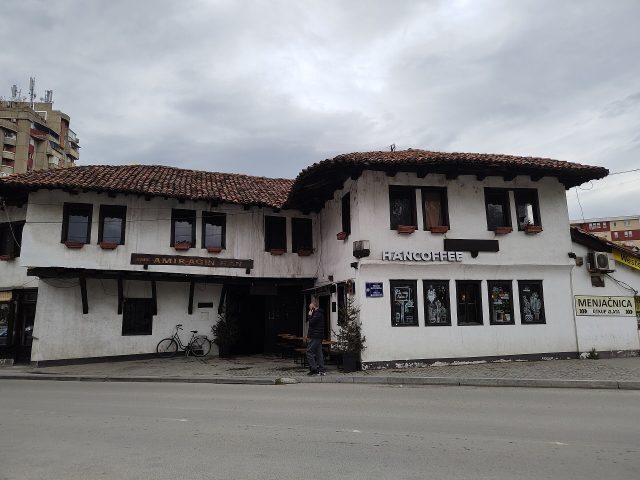
Novi Pazar has always been a crossroads. Perched on ancient trade routes between East and West, the city absorbed influences from Byzantium, the Ottoman Empire, and Austro-Hungarian traditions. The buildings around the square each tell their own story. The old caravanserai, once a resting place for merchants carrying goods from distant lands, now houses small cafés and souvenir shops. The Altun-Alem Mosque, one of the oldest in Serbia, stands with its minaret reaching toward the sky—a silent witness to the Ottoman past. Nearby, the former Turkish bath, though no longer in use, still hints at the luxury of another time.
At the center of the square stands a monument to King Alexander I Karadjordjevic, a figure who bridges the city’s many layers. The king, who ruled Yugoslavia in the first half of the 20th century, played a key role in Serbia’s history. Though Novi Pazar sat on the fringes of the state, it was always a vital point of exchange between Serbian and Muslim communities. The statue serves as a reminder that the city has long been a meeting place, a bridge between worlds.
The buildings here are modest, mostly two or three stories tall, with narrow windows, wooden shutters, and wrought-iron balconies. Many date back to the late 19th and early 20th centuries, when Novi Pazar experienced an economic boom as a center for wool, leather, and metal trade. Some facades are adorned with delicate stucco work, while others remain plain, their simplicity lending them a quiet dignity. There’s a harmony in their unpretentiousness, a sense that they were built to last rather than impress.
The market is the square’s beating heart. It doesn’t operate daily, but when it does, the space transforms. Stalls overflow with fresh produce from the surrounding hills—tomatoes still warm from the sun, peppers with a faint dusting of earth, herbs bundled in newspaper. Spices from Turkey, local cheeses aged in wooden barrels, and jars of ajvar line the tables. Vendors call out to passersby, offering tastes of their goods, sharing recipes passed down through generations. The market isn’t just a place to shop; it’s a way to step into the rhythm of the city, to understand what matters to the people who live here.
As evening falls, the square takes on a different character. The heat of the day dissipates, and locals emerge to stroll, meet friends, or linger over coffee or a glass of rakija. The glow of streetlamps reflects off the cobblestones, and time seems to slow. Novi Pazar doesn’t rush. It doesn’t need to. The history here isn’t confined to museums or plaques; it lives in the worn steps of the mosque, in the laughter spilling from a café, in the way the light catches the edges of the old buildings.
There’s no pressure to perform, no expectation to dazzle. The square simply exists, as it has for centuries. Sit on a bench, listen to the mix of Serbian and Bosnian drifting through the air, breathe in the scent of grilled ćevapi from a nearby restaurant. This is where the city’s pulse is strongest—not in grand gestures, but in the quiet moments that accumulate over time.
Novi Pazar doesn’t fit neatly into the image of Serbia that most travelers expect. It’s neither entirely Serbian nor entirely something else, but a place where identities overlap. King Alexander Square, named for a ruler who sought to unite different peoples, remains a symbol of that coexistence. It’s a reminder that history isn’t just about monuments and dates; it’s in the way a city breathes, in the conversations over coffee, in the rustle of leaves overhead.