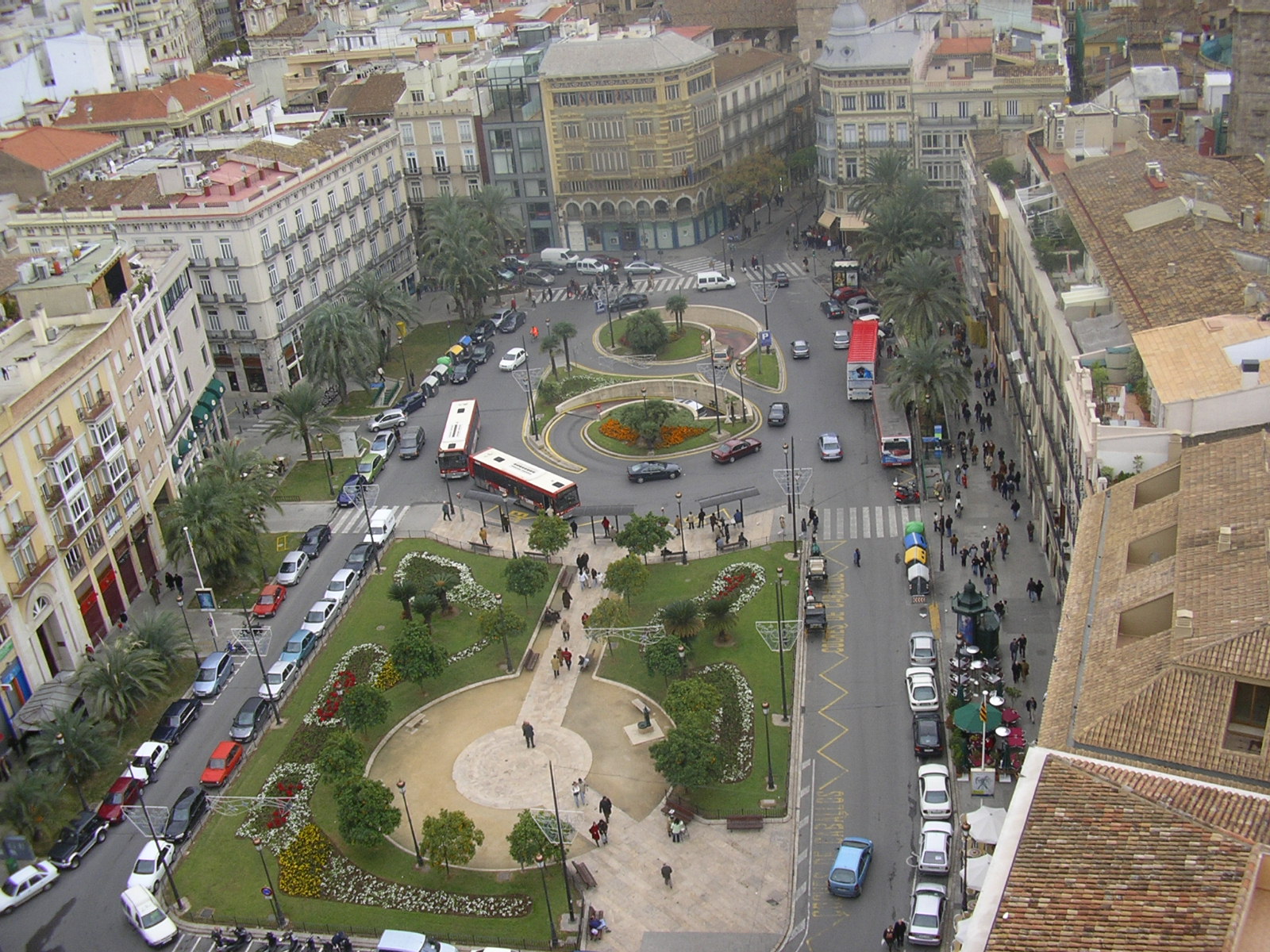
Plaza de la Reina is one of those places in Valencia where the city unfolds at its own unhurried pace, like a well-worn book with pages softened by time. It doesn’t sit on the usual tourist trail, though the city’s main sights are just a short walk away. Instead, the square feels suspended in another era, preserving the spirit of old Spain, when streets weren’t just thoroughfares but gathering places for conversation, commerce, and quiet moments over coffee.
The architecture here tells a story in stone and plaster. The buildings encircling the square span different periods, yet together they form a harmonious whole. Wrought-iron balconies, tall windows with wooden shutters, and decorative flourishes in the Modernista style all hint at Valencia’s past as a wealthy trading hub, where craftsmanship and artistry were as valued as business. One corner building stands out with its ceramic-tiled tower in shades of blue and white—a classic example of early 20th-century Valencian Modernism.
At the heart of the square is a fountain, its water flowing gently rather than spraying high into the air. On warm evenings, locals gather around it, the sound of the water adding to the sense of calm. Benches line the edges, offering a place to sit with a newspaper or simply watch the city go by. In summer, the square stays cool even at midday, while in winter, strings of lights make it feel even more inviting.
The square hasn’t always been known as Plaza de la Reina. Over the years, it has gone by other names, including Plaza de la Constitución and Plaza del Caudillo, the latter honoring a local figure. Its current name dates to the late 19th century, when it was renamed in honor of Queen Maria Cristina, wife of Alfonso XII. This was a time of transformation for Valencia, as the city expanded and its historic center took on the character it has today.
There are no grand cathedrals or museums here, and that’s precisely what makes the square special. It doesn’t try to impress; it simply exists, a quiet refuge in the middle of a bustling city. In the mornings, small cafés open their doors, serving fresh pastries and strong coffee. By day, students from the nearby university hurry past on their way to class, while in the evenings, groups of friends gather to chat over glasses of wine.
Plaza de la Reina is where Valencia reveals its most human side. There’s no pretension, just authenticity. You could spend hours on a bench, watching the light shift across the building facades, children playing by the fountain, or elderly men debating politics over a game of chess. Moments like these remind you that a city isn’t just its monuments and museums—it’s the people, their routines, their conversations, and the quiet in between.
If you find yourself in Valencia, don’t rush straight to the cathedral or the City of Arts and Sciences. Start here instead. Sit for a while, listen to the rhythm of Spanish being spoken around you, breathe in the scent of orange trees from nearby streets. This is where you might begin to understand the real Valencia—the one that doesn’t shout for attention but simply lives, breathes, and waits to be discovered.